

 ar
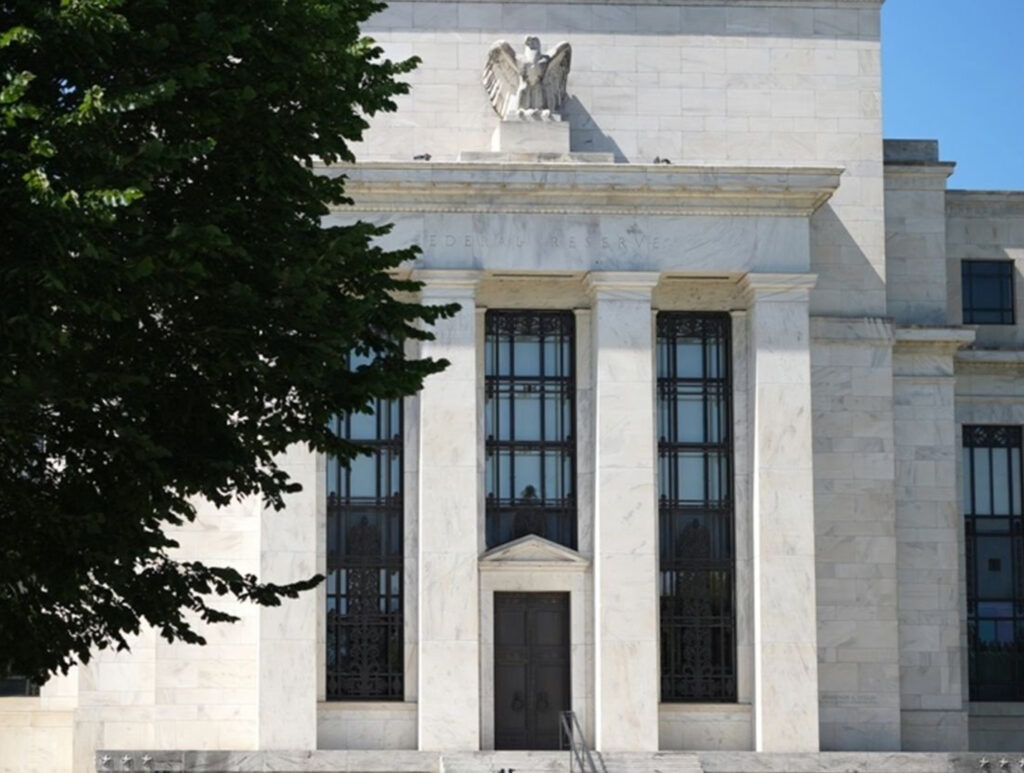
- The FOMC is expected to cut interest rates at their upcoming meeting despite divisions over a weak labor market and high inflation.
- Officials remain split, with some pushing for another cut while others warn that policy should remain restrictive to control inflation.
- The decision may see three or four dissenters, keeping volatility high ahead of January’s shift in the voting lineup.
The Federal Reserve is set to cut interest rates on Wednesday at 23:00 (GMT+4), despite divided opinions among FOMC officials on the trajectory of the US economy.
Financial markets are expecting the Fed to cut rates for the third time this year, set to reach their lowest level in three years. Concerns are rising as Americans face affordability pressures due to higher costs while the job market continues to weaken.
Debate Over Labour Market and Inflation Risks
FOMC members have spent the entire year debating whether to focus on a weakening labor market or on inflation that has stayed stubbornly above the Fed’s 2% target since 2021.
Several policymakers at the Federal Reserve have recently signaled support for another rate cut, citing signs of cooling in the labor market. Christopher Waller, a Fed Governor, said the labor market is still weak, arguing that the Fed should cut rates in December given mounting risks to jobs. ⁽¹⁾
Cleveland Federal Reserve President Beth Hammack said last week that monetary policy needs to remain restrictive in order to bring down inflation, suggesting her opposition against the Fed cutting interest rates again in the future. ⁽²⁾
New York Fed President John Williams signaled he and other FOMC members would support another 25-basis point rate cut as a contingency against a further labor market slowdown. ⁽³⁾
Rising Dissent and Internal Fed Divisions
The Fed hasn’t seen dissenting votes since 2019, when two members broke from the majority. Before that, the last instance was in 1992, when more than three members dissented.
During the October meeting, two of the 12 voters dissented, one preferring no cut, another favoring a larger cut. Since then, both voting and non-voting members have strongly advocated differing views. ⁽⁴⁾
The most likely candidate to vote against a rate cut is Kansas City Fed President Jeff Schmid, who has remained a dissent since October. Boston Fed President Collins and Chicago Fed President Goolsbee could join Schmid in the dissent.
Fed governor Michael Barr has signaled limited room for further cuts. Stephen Miran could possibly remain supportive of his 50-basis-point cut vote. Miran, a close ally of Trump, shares the US President’s desire to lower interest rates rapidly.
Despite unexpectedly strong gains for jobs in September, unemployment has edged up, and private sector data showed more layoffs. Many economists’ polls agreed with hawks that inflation should remain a priority. ⁽⁵⁾
Fed Struggles with the “Neutral Rate”
After cutting interest rates by more than a percentage point, FOMC officials are now wondering where to stop. Expectations for where rates should end up are the most split since 2012, fueling the debate about a possible cut in the upcoming meeting and future moves.
Fed Chair Jerome Powell has acknowledged widely differing views across the committee about prioritizing stable prices against maximum employment. Policymakers are also divided over where the neutral rate (the interest rate level that is neither stimulating nor restricting the economy) should be set.
Most Likely Outcome for the December Meeting
The December 10th meeting is one of the most significant in recent years. Equity valuations are high, volatility remains elevated, tariff effects are unclear, economic data is still missing, and political pressure continues to rise. A misstep could negatively impact financial markets and the economy.
A unanimous vote would send a strong message but appears unlikely. The most likely outcome seems to be a decision with three or four dissenters. This would keep volatility elevated and shift investor focus to the January 28th meeting, when the voting membership changes. ⁽⁶⁾
In a worst-case scenario, the vote could result in five dissenters or even a tie. A tie has never occurred, and the FOMC Rules of Organization do not include a provision for one. Chair Powell is expected to avoid this outcome. ⁽⁷⁾
The outcome is less certain than usual because of limited economic data due to the federal government shutdown. The Bureau of Labor Statistics said it will not release October inflation and employment figures. November data is expected to land after the meeting.
The lack of data has kept markets concerned and leaves policymakers without current figures. Most members have said the shortage will factor into their deliberations.


