

 ar

- The US dollar weakened as markets await House approval of a Senate bill to end the current government shutdown.
- The yen fell on reduced safe-haven demand and rising stimulus expectations in Japan, where a stimulus package will be revealed on November 21.
- The pound declined on weaker-than-expected labor market data, fueling more dovish expectations from the BOE.
- Gold shone on rising expectations of another FOMC rate cut in December.
Global markets started the week on a cautious note, with traders tracking major policy moves, currency fluctuations, central bank commentary and signals across major economies.
US Dollar Remains Pressured Amid Shutdown Deal
The US dollar index remained pressured around 99.6 after the Senate advanced a bill to potentially end the 41-day government shutdown. The bill is now headed to the House of Representatives, where a vote could take place as soon as Wednesday, before being sent to President Donald Trump to sign it into law.
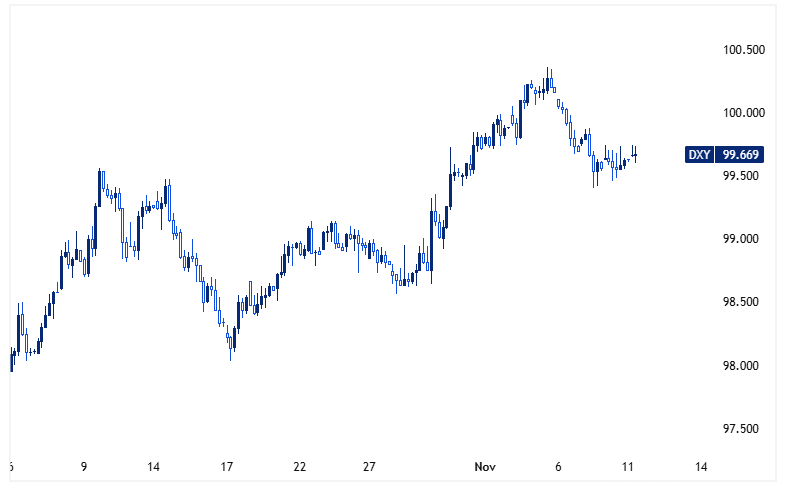
DXY Chart / Source: TradingView
The shutdown is the longest in US history and has had major impacts on the US economy, like hurting consumer sentiment, growth and jobs.
In the previous week, data showed that the US economy had cut jobs in October, where layoffs reached a 20-year high, while consumer sentiment reached a 3-and-a-half-year low, reinforcing expectations for a rate cut from the Federal Reserve in December. ⁽¹⁾
Markets are pricing in a 64% chance of a 25-basis point rate cut in December, with policymakers trying to downplay the expectations. ⁽²⁾
Yen Weakens Due to Safe-Haven and Stimulus Hopes
The Japanese yen reached 9-month lows against the US dollar around 154 due to expectations of the US government reopening and stimulus expectations in Japan.
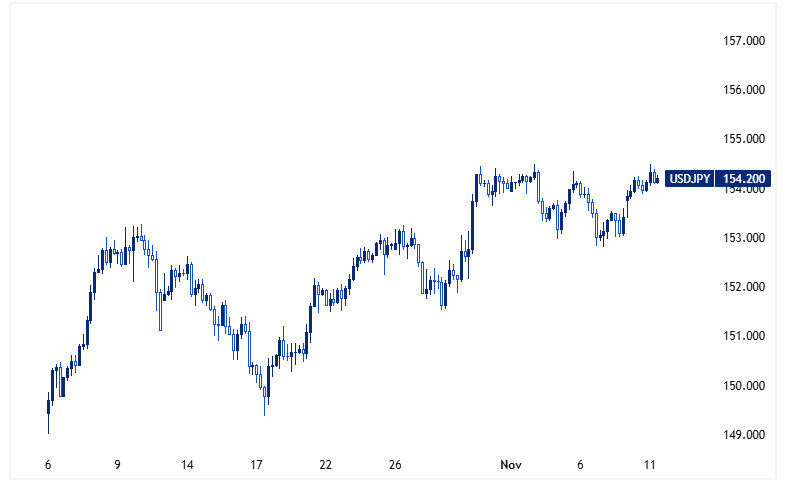
USD/JPY Chart / Source: TradingView
Prime Minister Takaichi is planning a new fiscal target over the next several years, which allows the Japanese government to become more flexible in spending and soften fiscal tightening conditions.
A draft plan of the stimulus package is expected to be unveiled on November 21, suggesting the government will urge the Bank of Japan to focus on strong growth with stable prices. The package also includes tax cuts and investment incentives for 17 key sectors. ⁽³⁾
The BOJ’s October opinions report stated that the economic outlook has become clearer now than in July, highlighting steady wage growth which helps in future decisions. However, the timing of the next rate hike remains uncertain. ⁽⁴⁾
British Pound Pressured on Weak Data
The British pound weakened as UK labor market data came in weaker than expected, reinforcing expectations for a more dovish Bank of England. Unemployment claims rose to 29k, higher than expected, while the unemployment rate reached 5%, rising to its highest level since May 2021. The average earnings index also came in softer than expected at 4.8%. ⁽⁵⁾
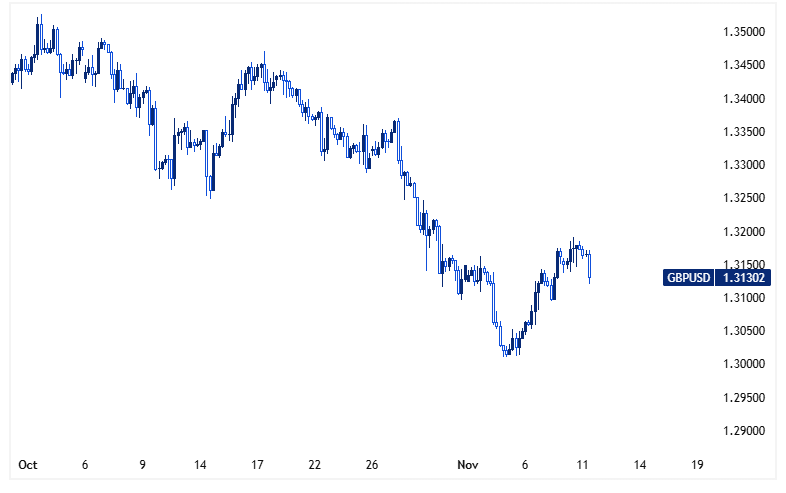
GBP/USD Chart / Source: TradingView
The Bank of England (BOE) held rates steady last Thursday, as expected, with four policymakers wanting a 25-basis point cut. Alarm bells from the labor market data could cause the BOE to cut rates in December.
Markets will wait for Thursday’s flash GDP data for insights on growth and are also anticipating the Autumn Budget, due on November 26 from Finance Minister Rachel Reeves. The budget is expected to include potential tax hikes and public debt fixes.
Australian Dollar Gains
The Australian dollar remained steady, supported by RBA Deputy Governor Andrew Hauser’s comments after highlighting tough challenges for monetary policy and the need for tighter financial conditions to fight inflation.
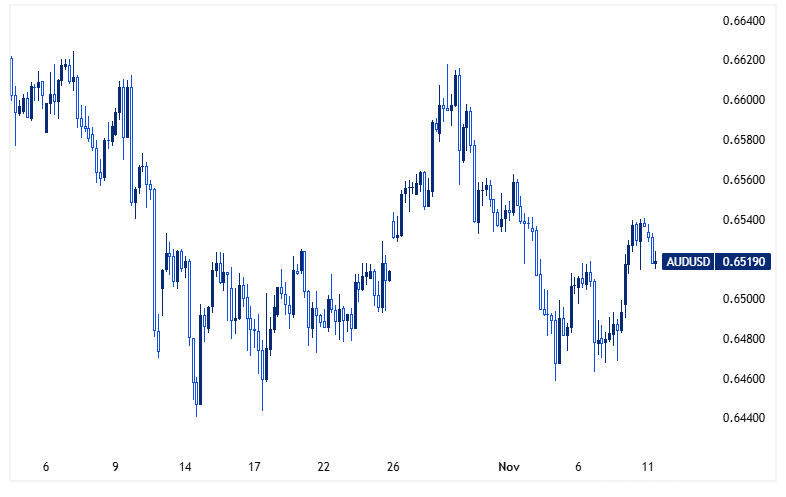
AUD/USD Chart / Source: TradingView
Hauser added that demand rose slightly when GDP growth accelerated last year, marking the tightest recovery since the early 1980s. Australia’s Westpac-Melbourne Institute Consumer Sentiment Index surged 12.8% in November 2025 to 103.8, topping 100 for the first time since February 2022. ⁽⁶⁾
The Aussie dollar also gained support from eased US-China trade tensions, where China lifted a ban on exports of key materials to the US economy. China remains Australia’s biggest trading partner.
Gold Shines on Rate Cut Expectations
Gold rose to three-week highs. The precious metal was supported by rising expectations of another FOMC rate cut in December and a potential shutdown deal.
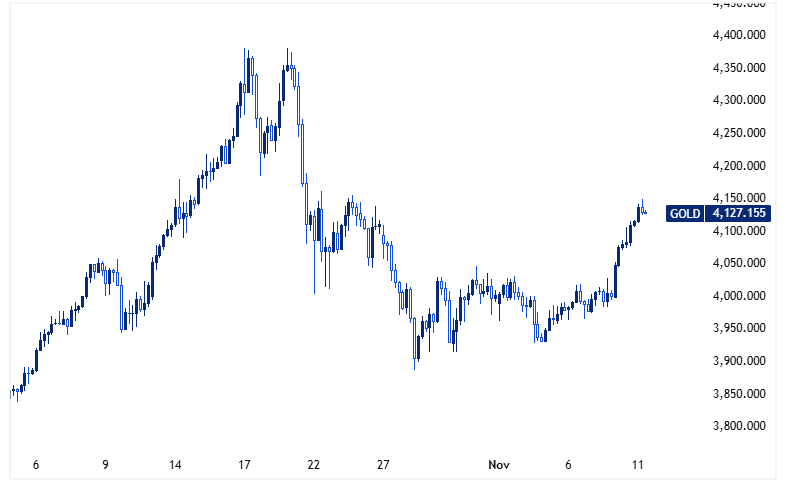
Gold Chart / Source: TradingView
Gold also gained support from data weakness in the US, where data showed job losses in October, mainly in government and retail sectors, while consumer sentiment fell to 50.3, reaching June 2022 lows. Weak data has led to growing expectations of a rate cut in December.


