ar
ar
- The ongoing US government shutdown might be near an end after the US Senate passed a key vote to advance the bill to end the shutdown.
- The shutdown has caused damages worth billions to the US economy, hurting growth, suspending federal jobs and weakening sentiment.
As the US government shutdown enters its 41st day, the US Senate passed a key vote on Sunday night to advance a new bill that could end the shutdown.
The vote paves the way for further action starting Monday and marks the strongest sign yet that the longest government shutdown in US history may soon come to an end.
Behind the Vote Details
The Senate approved the bill with exactly 60 ‘yes’ votes. This was the minimum needed to move forward, with eight Democrats joining Republicans to support it, while forty senators voted no.
Voting stayed open for over two hours on the Senate floor as officials waited for the final vote from Senator John Cornyn, Texas Republican, to arrive. He flew to Washington, D.C., to vote ‘yes’, which ultimately passed the bill. ⁽¹⁾
The final tally was 60-40, which overcame the Senate’s filibuster rule (a rule in which US senators block a vote by prolonging debate). The bill will now move to the House of Representatives. ⁽²⁾
What Does the Deal Include?
The 31-page bill will fund the government through January 30 next year, with some programs including the Agriculture Department expected to receive full-year funding.
The deal reverses all permanent layoffs of federal workers during the shutdown. All federal workers will receive their normal pay for the shutdown period, even if they cannot work.
Republicans promise a vote in December on a Democratic bill to extend Affordable Care Act tax credits. These credits help over 20 million Americans buy health insurance as they expire at the end of December. The deal does not extend them right away. ⁽³⁾
The bill needs House approval and President Trump’s signature to become approved.
Reactions to the Deal
Many Democrats criticized the deal, who were upset over no immediate vote on health care subsidies. Senator Bernie Sanders called it a “horrific mistake.” House Minority Leader Hakeem Jeffries vowed to “fight on.”
Democratic negotiators say the deal gives their party control over the December health care bill.
How the Shutdown is Affecting the Economy
Employment Effects
Almost 1.4 million federal jobs are being impacted, with 670,000 employees suspended, while 730,000 are working without pay. While back pay is expected once the government opens, many federal workers have missed multiple paychecks, which led to reduced consumer spending and more pressure on their financial conditions. The economy could lose up to $14 billion by year’s end from lost jobs. ⁽⁴⁾
In the private sector, federal contract workers are also being affected, with $800 million in federal contracts being disrupted each week. The Small Business Administration has paused over $4.5 billion in loans due to halted approvals. Jobless claims are rising in states with high federal employment exposure. ⁽⁵⁾
Private data sources, such as the ADP employment change, showed that the economy added 42,000 jobs in the private sector, way below the recent average of 188,000. Job losses rose sharply to 153,000, the highest since 2003. Labor market data releases are still being delayed, creating more complications for the Federal Reserve. ⁽⁶⁾
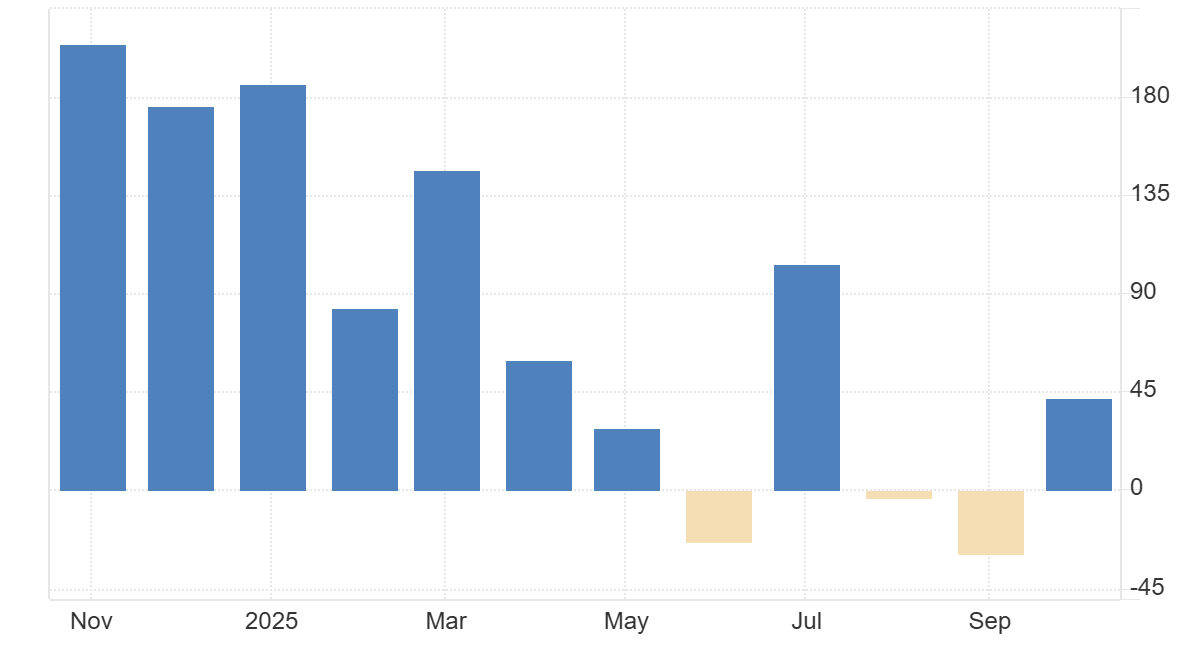
ADP Employment Change Chart / Source: Trading Economics
GDP and Economic Growth
Each week the shutdown continues, it is estimated to cost the economy about $15 billion in GDP, reducing quarterly growth by 0.05% to 0.1% per week. A four-week shutdown could trim fourth-quarter GDP by roughly 1%, with total output losses estimated between $7 billion and $14 billion. ⁽⁷⁾
Consumer and Business Confidence
The University of Michigan’s consumer sentiment index fell to 50.3 in November, down from October’s 53.6, one of the lowest readings since 1978. Americans are concerned about the shutdown’s impact on the economy. ⁽⁸⁾
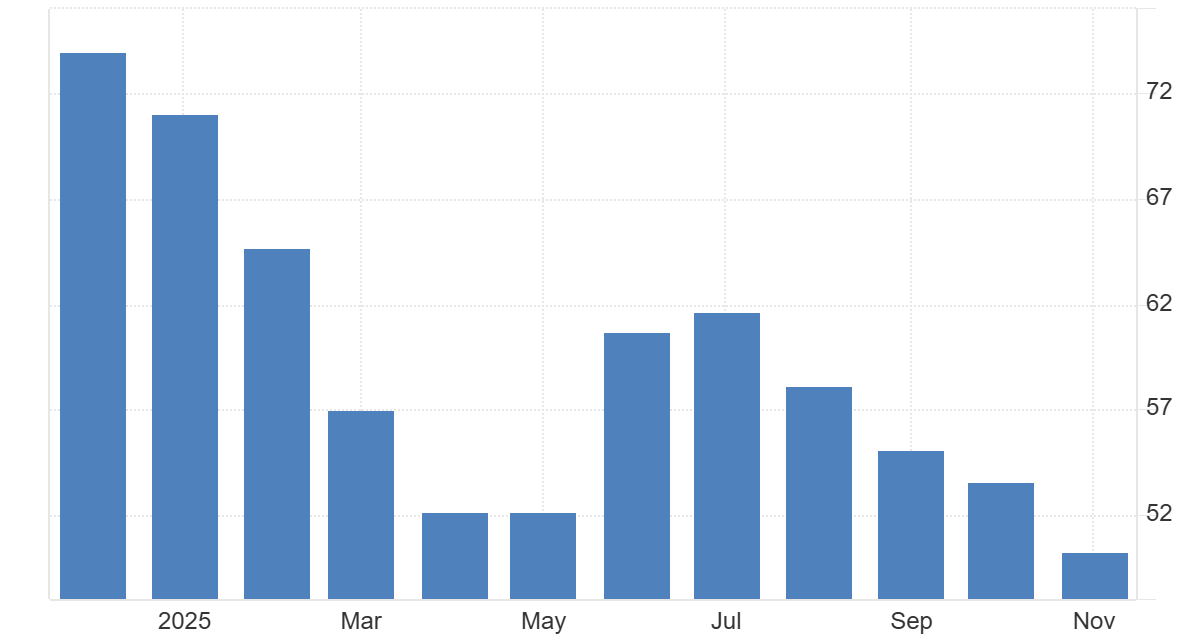
University of Michigan Consumer Sentiment Chart / Source: Trading Economics
The NFIB Small Business Optimism Index dropped to 98.8. The uncertainty index reached a 50-year high, and the Conference Board’s CEO Confidence Index dropped to 48 (below the neutral 50 mark). ⁽⁹⁾
Signs of an End, But Lasting Damage
The Senate vote brings hope that the longest shutdown in US history may finally end soon. The deal would restore pay for federal workers and keep key programs like SNAP running once approved.
However, the shutdown has already hurt the economy, which is estimated to reduce growth, jobs and confidence among consumers and businesses. Even if the government reopens, economic and emotional impact may take some time to recover.