ar

- The US dollar holds steady after the Fed cut rates by 25 basis points, while Powell removed hopes of a December cut.
- The Japanese yen weakened to nine–month lows after the Bank of Japan kept rates steady, while the Pound sterling dropped to April lows due to fiscal concerns in the UK.
- The RBA sees a resurgence in inflation, and the ECB kept rates unchanged, citing economic resilience.
As the week wraps up, global markets faced a new wave of developments, from central bank decisions to renewed fiscal concerns and trade headlines, with policymakers trying to balance inflation risks against slow growth.
US Dollar Index Stays Above 99
The US dollar index remains stable above 99 as the Federal Reserve cut rates by 25 basis points. The Fed also announced that it will end its balance sheet reduction on December 1st. Fed Chairman Powell said that a rate cut in December might not happen, citing divided opinions among the FOMC and the absence of data due to the government shutdown.
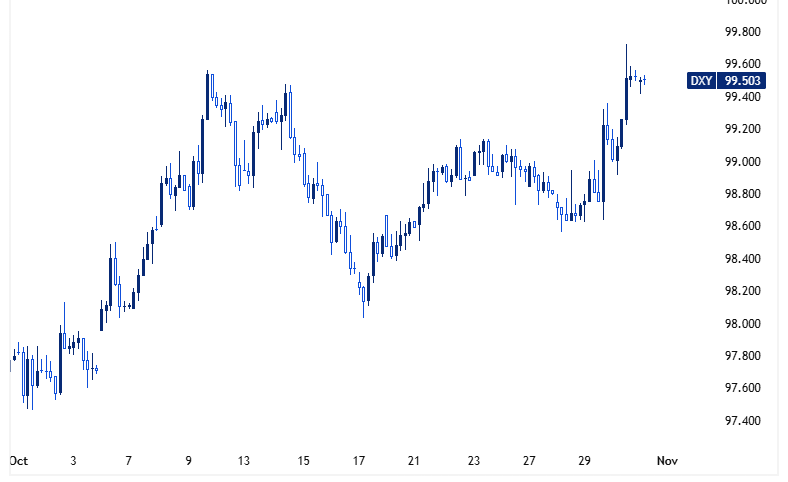
DXY Chart / Source: TradingView
Traders scaled back on bets of a December rate cut, which was previously fully priced in. ⁽¹⁾
The dollar also grabbed support from the Trump-Xi meeting. Trump said they had agreed to reduce tariffs on China in exchange for Beijing resuming US soybean purchases, keeping rare earths exports flowing and cracking down on the illicit trade of fentanyl. But details were still unclear, and China has yet to comment. ⁽²⁾
Japanese Yen Hits Nine-Month Low
The Japanese yen fell to its lowest level in nine months, trading near 154 as the Bank of Japan kept interest rates unchanged at 0.5%. The decision came to a vote of 7-2 with two members wanting to hike rates by 25 basis points. ⁽³⁾
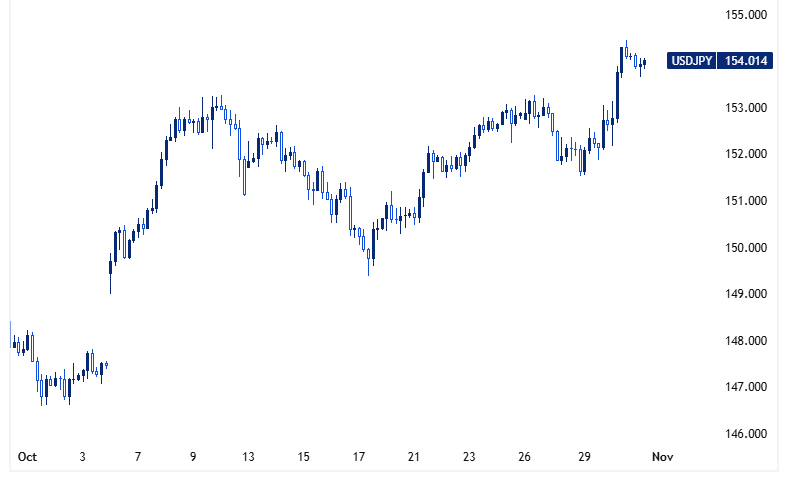
USD/JPY Chart / Source: TradingView
Bank of Japan Governor Ueda said the economy is recovering at a moderate pace, but warned that global trade developments could slow growth and hurt corporate profits. The BOJ plans to normalize policy when economic goals are met. New Prime Minister Sanae Takaichi supports easy policy. This makes further tightening harder. ⁽⁴⁾
The yen also weakened after the Fed’s rate cut and Powell’s comments that cast doubt over a December cut.
British Pound Drops to April Lows
Pound sterling traded below 1.32 against the US dollar due to fiscal concerns and dollar strength.
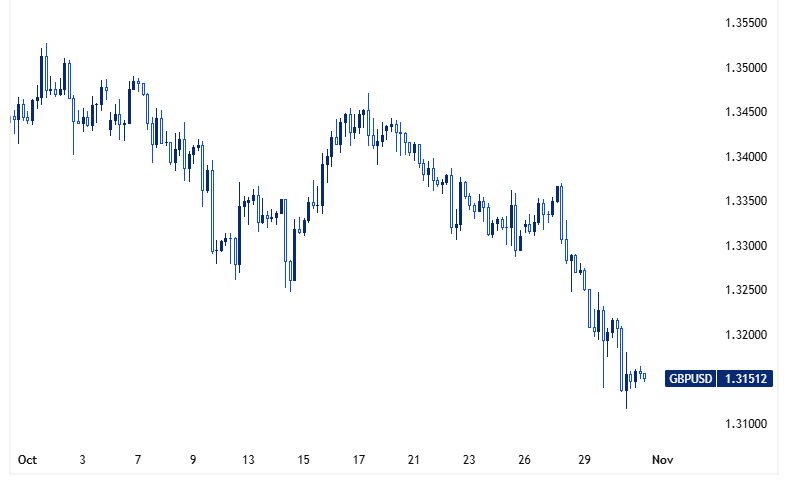
GBP/USD Chart / Source: TradingView
The Bank of England is facing pressure from weak growth and high inflation. The BOE highlighted that higher US tariffs and weak global trade could continue to hurt UK exports and growth.
The BOE is trying to manage inflation without tightening its monetary policy. Traders also raised their expectations of UK rate cuts, worrying that November’s Autumn budget could hurt growth.
UK Prime Minister Starmer did not remove tax hikes on income and national insurance. The Office for Budget Responsibility may cut productivity growth forecast by 0.3%, which could create a £20 billion gap in public finances. ⁽⁵⁾
Aussie CPI Possibly Removes Rate Cut Bets
Australia’s CPI for September came in hotter than expected at 3.2% YoY, rising at its fastest pace in more than a year. Meanwhile, core CPI came in at 3%. The rise in inflation moved beyond the Reserve Bank of Australia’s target range of 2-3%, fading hopes of rate cuts in the near future. ⁽⁶⁾
The RBA is likely to hold interest rates at 3.6% at both the upcoming November and December meetings. The RBA was cautious in its September meeting, stating that inflation for the quarter could come in higher than expected due to persistent price pressures in housing and services. ⁽⁷⁾
RBA Governor Michele Bullock faces rising unemployment and sticky inflation. She will likely focus on inflation first as the easing cycle may have ended. The RBA will meet on November 4th, where markets are expecting a rate hold.
ECB Holds Rates Steady, Citing Economic Resilience
The European Central Bank has kept rates unchanged at 2.15% as inflation remains near the ECB’s 2% target. The central bank’s outlook for inflation remains unchanged. The ECB also highlighted the resilience of the Eurozone’s economy despite a challenging environment. ⁽⁸⁾
The labor market remained strong as the ECB’s past rate cuts showed their support for the Eurozone’s economy.
However, the ECB’s economic outlook remains uncertain due to global trade developments and the Russia-Ukraine war. The ECB will follow a data-dependent path and meeting-by-meeting approach to determine the appropriate monetary policy stance, not committing to a specific rate path. ⁽⁹⁾
Gold Remain Near Two-Week Lows
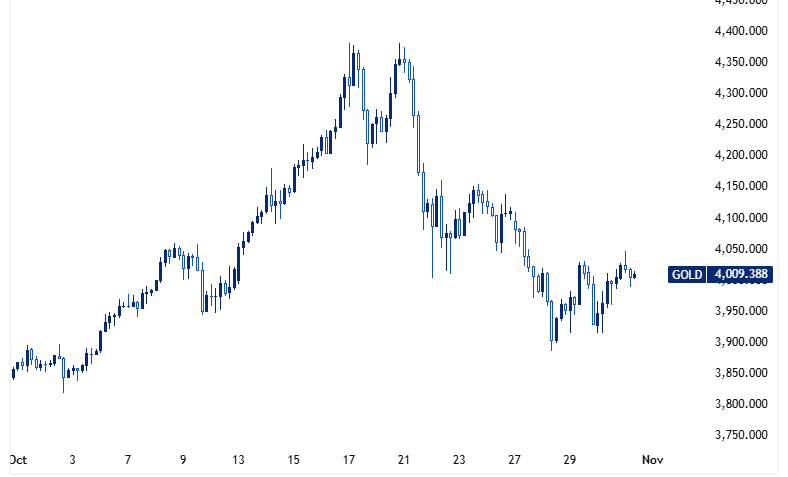
Gold remained pressured near two-week lows as traders scaled back on rate cut expectations from the Fed in December and reduced trade tensions between the US and China.
The Trump-Xi meeting in South Korea may seal a trade deal, with a response awaited from China. The deal could also reduce safe-haven demand for precious metals.