ar
ar
Three central banks. One potentially volatile week.
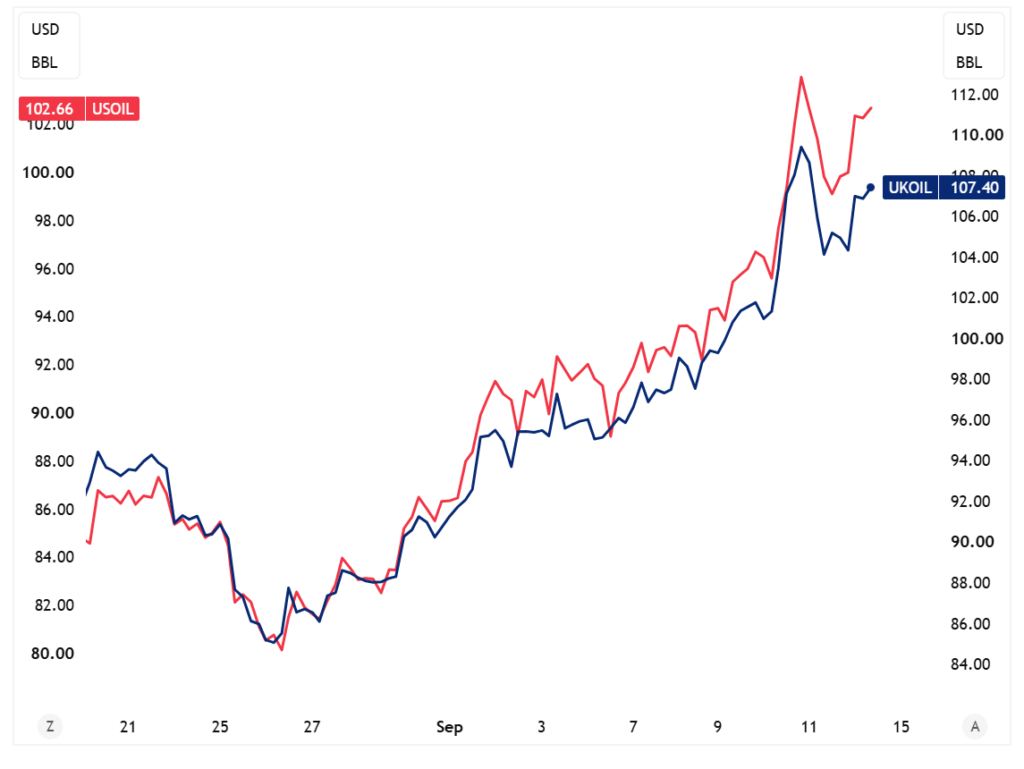
Oil is back above $100 just as three major central banks prepare to meet. Supply disruptions across the Middle East have revived energy-driven inflation concerns, reinforcing Fed hike expectations and complicating the BoE’s struggle between persistent inflation and weaker employment.
Japan completes the policy divide, with a BoJ hike already priced in. The Fed and BoJ are expected to tighten while the BoE holds, but rising oil costs now form a common challenge across all three decisions.
Calendar Events
- Canada CPI – Sep. 14
- UK Claimant Count Change – Sep. 15
- UK Unemployment Rate – Sep. 15
- UK CPI – Sep. 16
- US Retail Sales – Sep. 16
- Federal Reserve Interest Rate Decision – Sep. 16
- New Zealand Quarterly GDP – Sep. 17
- Bank of England Interest Rate Decision – Sep. 17
- Bank of Japan Interest Rate Decision – Sep. 18
Top Things to Watch
Hotter Core CPI Pushes the Fed Closer to a Hike
August’s slightly hotter monthly core CPI reading strengthened expectations for a 25-basis-point hike. The FOMC begins its two-day meeting on Tuesday and announces its decision on Wednesday, with rates currently at 3.50%–3.75% following July’s divided 9–3 hold.
With a hike now heavily priced, attention will shift to Chair Warsh’s press conference and the first updated dot plot since June. These will provide a clearer picture of how policymakers expect interest rates, inflation and economic growth to develop.
Saudi Pipeline Shutdown Deepens Oil Supply Risk
Saudi Arabia shut its East–West pipeline following drone attacks, disrupting a route carrying 4–5 million barrels per day to the Red Sea. Tensions near the Bab el-Mandeb strait have added further pressure to alternative export routes.
Brent is trading around $107 and WTI at $102, with both benchmarks extended their gains made last week. The IEA expects global oil supply to fall by 5.7 million barrels per day in 2026.
Tokyo Inflation Raises the Stakes for a BoJ Hike
For the Bank of Japan, the rate decision may be the least surprising part of the meeting. Markets have fully priced a 25-basis-point increase to 1.25% on Friday.
The pressure to tighten is building. Tokyo’s core inflation reached 1.8% in August, while the measure excluding fresh food and fuel reached 2.0%. Producer prices also surged 7.6% annually as import costs climbed sharply. The yen recently reached a seven-month high near 153 per dollar.
With an increase widely expected, attention will be on how Governor Ueda describes the future pace of tightening and the conditions required for further policy adjustments.
BoE Faces a Tough Inflation–Jobs Trade-Off Ahead of its Rate Decision
Two critical releases will arrive before the Bank of England’s decision on Thursday: the labor market report on Tuesday and August CPI on Wednesday.
The signals are pulling policymakers in opposite directions. Headline inflation rose to 2.9% in July, while services inflation eased to 3.4%. Payrolled employment also fell by 78,000 annually through June, with the provisional July estimate showing a larger decline of 94,000.
Despite three policymakers supporting a hike in July, all 65 economists surveyed by Reuters expect Bank Rate to remain at 3.75%. The decision will show how the MPC balances persistent inflation against continued weakness in employment.