

 ar
- The US labor market report for January showed resiliency, with NFP, the unemployment rate and average hourly earnings all exceeding expectations.
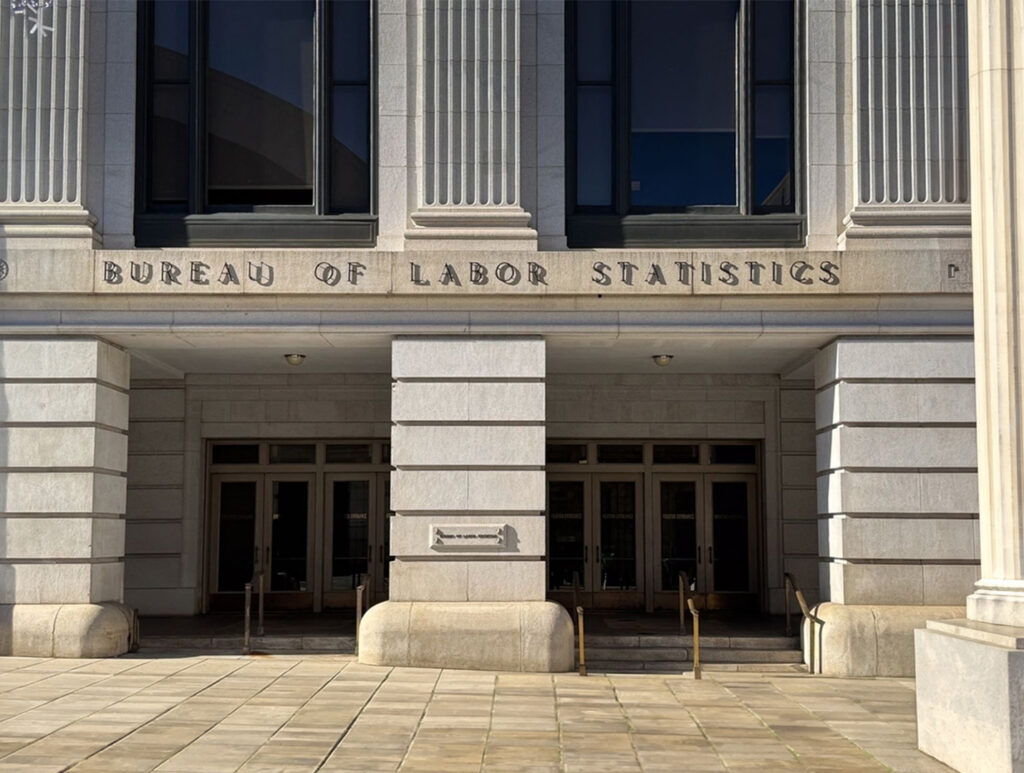
- The Bureau of Labor Statistics cut April 2024–March 2025 payrolls, revealing overstated job growth as immigration crackdowns and tariff-inflation uncertainty slowed hiring.
- Federal Reserve interest rate expectations shifted quickly after the strong data release.
Just as investors began questioning the strength of the US economy, January’s labor market report delivered a surprise.
Stronger-than-expected job growth, a lower unemployment rate, and firm wage gains challenged the slowdown narrative and quickly reshaped expectations for the Federal Reserve’s policy.
Yet beneath the headline numbers, major revisions to prior data reveal a more complex story about where the labor market truly stands heading into 2026.
Strong Job Growth Beats Forecasts
The US economy added 130,000 jobs in January, smashing expectations of 70,000, and marking a huge improvement from December where 48,000 jobs were added.
The unemployment rate also showed improvement, coming in at 4.3%, lower than its forecast of 4.4%. Average hourly earnings came in hotter-than-expected at 3.7% YoY against its forecast of 3.6%, indicating persistence in wage inflation. ⁽¹⁾
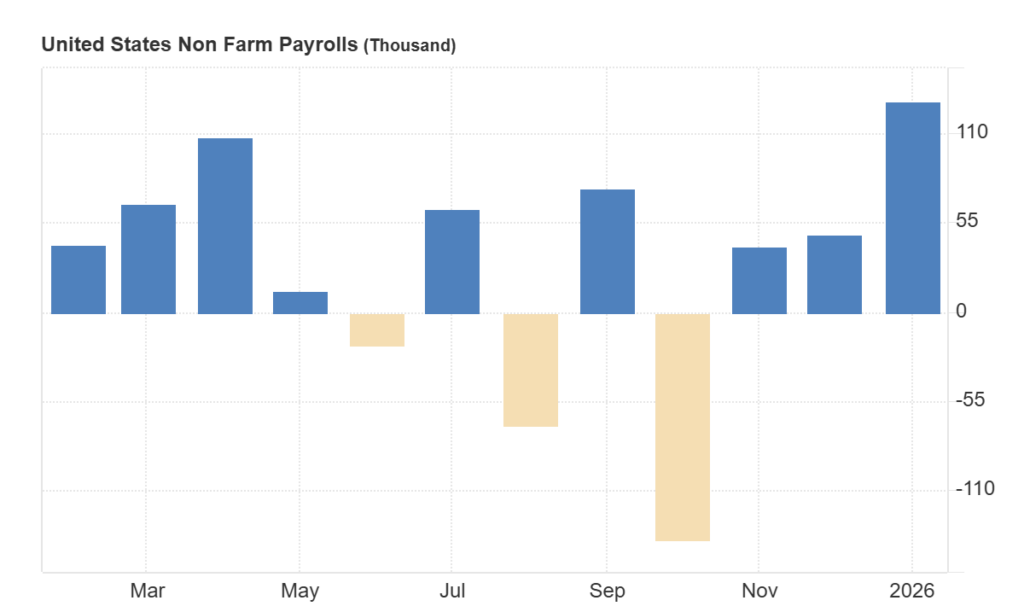
Non-Farm Payrolls Chart / Source: Trading Economics
The January jobs report came out a week after its official release due to the partial government shutdown that occurred earlier this month, and also indicated that the labor market is growing slowly.
This report showed the best month for job additions since December 2024 after the labor market witnessed a difficult year in 2025. ⁽²⁾
President Donald Trump praised the numbers as proof of a strong economy. He also renewed his calls for the Fed to lower interest rates.
Major Revisions to Previous Data
The Bureau of Labor Statistics released final revisions for job numbers from April 2024 to March 2025, as these revisions indicated that previous estimates of Nonfarm Payrolls were forecasted too high by 898,000. The slowdown in job growth in 2025 was driven by several factors. ⁽³⁾
President Trump fired the former BLS Commissioner back in August after criticizing downward adjustments to job numbers. Also, crackdowns on illegal immigration by the Trump administration reduced jobs, alongside uncertainty from tariffs and inflation, which made businesses cautious about hiring.
What This Means for Interest Rates
Federal Reserve officials who voted for a rate hold last month were likely reassured by the strong January jobs data. The Fed paused rate cuts after three consecutive reductions at the end of 2025.
The addition of 130,000 jobs in January was “good news,” according to Kansas City Fed President Jeffrey Schmid. He also noted his dissents on rate cuts at the end of last year were because he felt slow job growth was related more to changes in policies rather than weak demand for workers. ⁽⁴⁾
Traders adjusted their expectations after the labor market data was released. The CME FedWatch Tool shows a 92% chance of a rate hold in March, with markets now anticipating the next rate cut to come in July instead of June. Fed officials cited a stabilizing labor market and inflation above their target as reasons for holding rates steady. ⁽⁵⁾
Looking Ahead
Fed Governor Waller, who voted for rate cuts, had argued that the labor market last year was weakening more than expected. The revised data supports his view. The average monthly job growth for 2025 was only 15,000, which is considered a very low figure that usually indicates the start of a recession. ⁽⁶⁾
From 2010 to 2019, the US economy added an average of 183,000 jobs each month. That is more than all the job growth for the entire year of 2025 combined.
The January 2026 numbers suggest the labor market may be recovering, but officials and economists will watch the coming months closely to see if this improvement continues. ⁽⁷⁾


