ar
ar
- The US economy unexpectedly lost 23,000 jobs in July, compared with forecasts for an increase of 80,000, while the unemployment rate fell to 4.1%, mainly because 264,000 people left the labor force.
- Payroll figures for May and June were revised down by a combined 103,000 jobs.
- Traders scaled back bets on a September rate hike as the weaker-than-expected jobs report reduced the odds of an increase.
The July jobs report presented a confusing picture of the US labor market. Hiring clearly weakened, but the lower unemployment rate did not reflect stronger employment conditions. Instead, the details revealed temporary government-sector losses, slower wage growth and a shrinking workforce.
For investors and policymakers, this makes the report difficult to interpret. It reduces the urgency for another interest rate hike, but it does not settle the debate. With inflation still the Fed’s main concern, next week’s price data could ultimately matter more for September’s decision.
A Headline Number That Misleads
July’s labor market data caught economists off guard as the US economy shed 23,000 jobs, sharply missing forecasts for an increase of 80,000. Adding to the surprise, the Labor Department revised down May and June by a combined 103,000 jobs. ⁽¹⁾
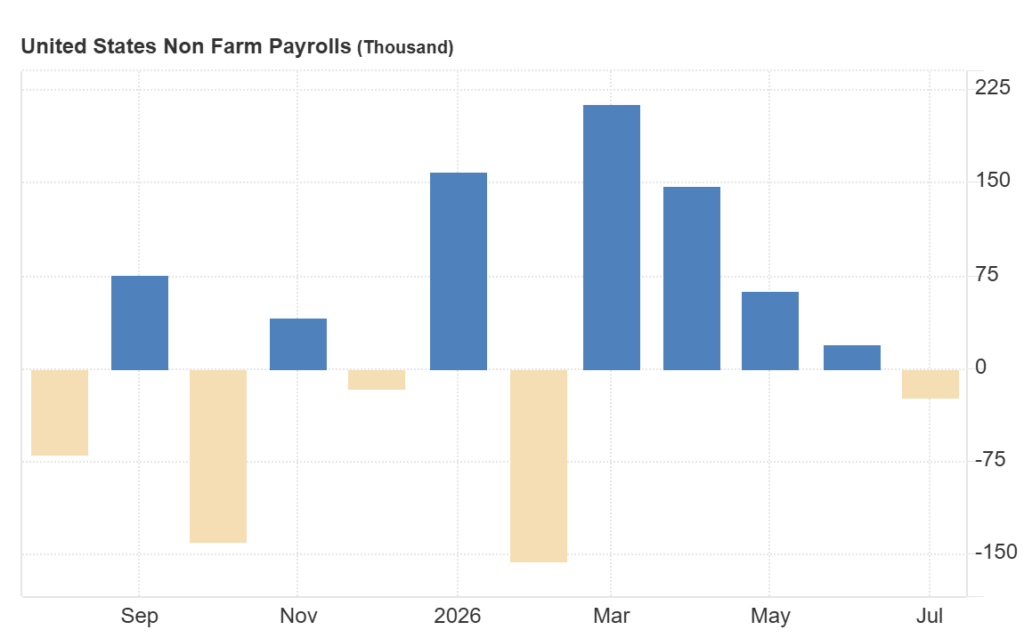
At first, the report looked troubling. However, the breakdown of the report showed more confusion. Much of the payroll decline came from local government education, where employment fell by 49,600, marking its steepest decline since October 2021. ⁽²⁾
Strip out government employment, private payrolls rose by 30,000, matching June’s pace. Economists linked the education-sector losses to seasonal adjustments around the school calendar, suggesting that some of the weaknesses may prove temporary and could reverse in August. ⁽³⁾
The unemployment rate fell to 4.1% to 4.2% mainly because 264,000 people left the labor force and were no longer counted as unemployed, rather than because more people found jobs. As a result, the labor-force participation rate declined to 61.4%, its lowest level since February 2021. ⁽⁴⁾
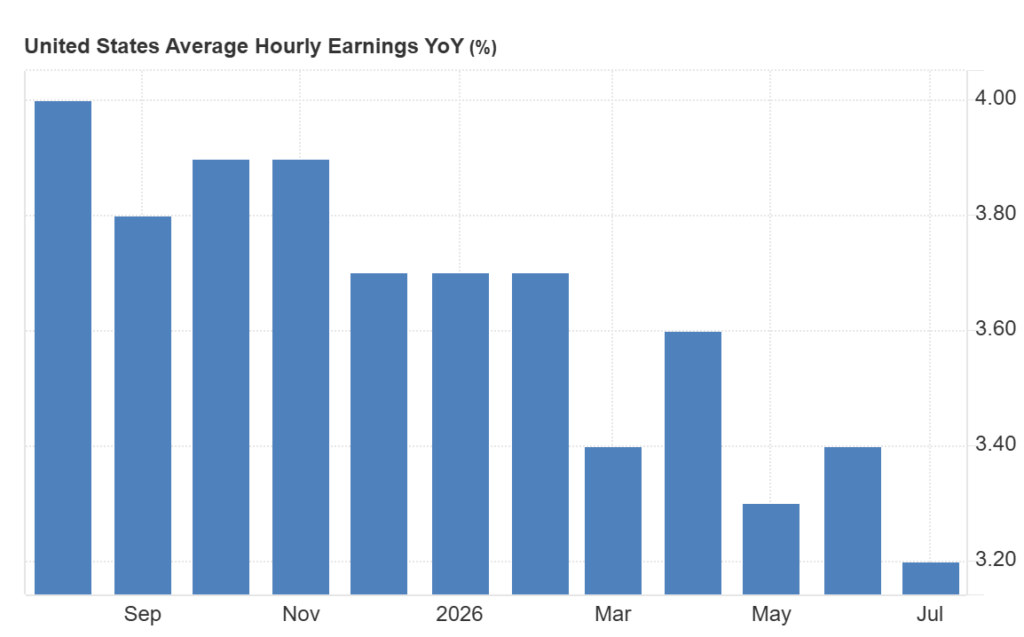
Wage growth also cooled, rising 3.2% YoY compared to 3.4% in June. Combined with soft hiring, that shift has made some economists more confident the Fed will hold off on tightening policy this year. ⁽⁵⁾
Where the Losses Piled Up
Leisure and hospitality lost 40,000 jobs, marking a second consecutive monthly decline, with restaurants and bars shedding 26,100 jobs, a trend some economists linked to a fading boost from the recent FIFA World Cup. ⁽⁶⁾
Retail trade cut 19,400 jobs, mostly at warehouse clubs and big-box stores. Together, these two sectors dragged down overall payrolls by nearly 60,000. Financial activities kept losing ground too, down 14,000 in July and off 121,000 since peaking in May 2025. ⁽⁷⁾
Construction added 22,000 jobs, while manufacturing gained 5,000, bringing its total increase this year to 31,000. Some link this growth to AI investment. Healthcare also added 22,000 jobs, but this was below its recent average. ⁽⁸⁾
The Disappearing Workforce
Perhaps the most consequential trend in this report is not the payroll number itself but the continued contraction of the labor force.
Some economists argue that tighter immigration enforcement has played a major role, stating that the labor force has fallen by roughly 228,000 people each month since January, and most of these individuals appear to be foreigners. With hundreds of thousands more immigrants expected to lose protected status, this decline could continue. ⁽⁹⁾
September Rate Hike Odds Fade
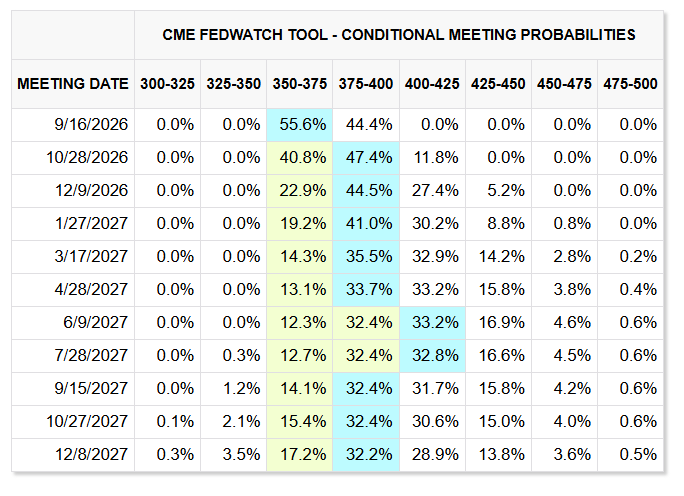
Markets moved quickly to price out a September rate hike after the report, but the picture may not be so simple. The Fed’s policy committee already saw three members dissent last week in favor of a quarter-point hike, and next week’s inflation data could shift the debate again.
CME FedWatch data captured the shift in sentiment well. The probability of the Fed holding rates steady in September jumped to 55.6% from 45% the day before, while the odds of a hike fell to 44.4% from 55%.
What the Jobs Report Really Shows
The July report points to a labor market that is weakening, but not collapsing. Government education accounted for much of the payroll decline, while private employers still added jobs.
The deeper concern is the shrinking workforce, which could keep unemployment artificially low even as hiring slows. That reduces the urgency for a September rate hike, although the upcoming inflation data could still shift the Fed’s decision.