

 ar

- Markets appear cautious as they assess economic data releases and central bank remarks that could sway the market’s outlook.
- Central bank expectations are mixed across developed economies, with the BOJ, Fed, BOE, and BOC charting different policy paths, keeping volatility elevated across major currency pairs.
- Gold rallied on data uncertainty, dovish FOMC members and mixed global sentiment.
As the week progresses, global markets are moving cautiously, with currencies, gold, and central bank commentary in the spotlight as traders reassess positioning ahead of important data releases and policy signals.
Yen Trades Near 10 Month Lows on Japan Fiscal Policy
The Japanese yen stayed near 10-month lows against the US dollar due to worries over Japan’s fiscal policy stance, while traders assessed the meeting between Prime Minister Sanae Takaichi and Bank of Japan Governor Kazuo Ueda.
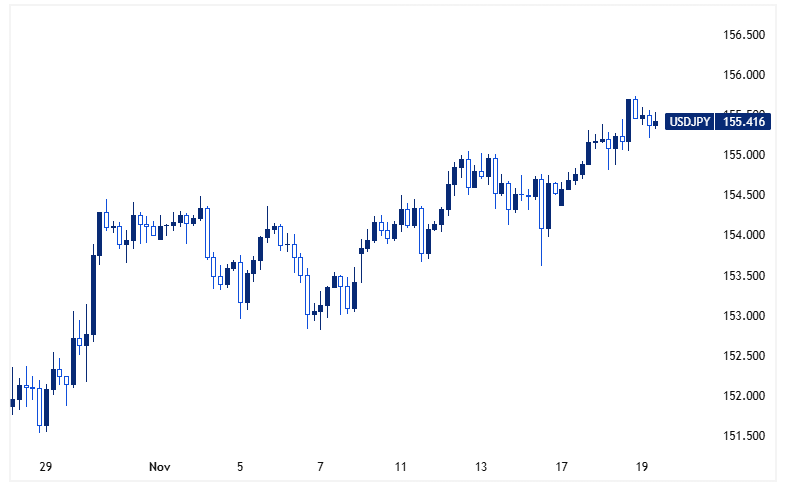
USD/JPY Chart / Source: TradingView
Governor Ueda told the prime minister that the BOJ was gradually raising interest rates to drive inflation smoothly towards its 2% target and ensure the Japanese economy achieves sustainable growth. As the timing of the next rate hike remains uncertain, Ueda stated only that the BOJ will make a decision based on upcoming data.
Prime Minister Takaichi is known for her push on expansionary fiscal and monetary policy, which has complicated the BOJ’s plans to raise rates. While Ueda has signaled the possibility of raising interest rates as soon as next month, Takaichi had voiced displeasure over the idea and urged the BOJ to cooperate with government efforts to support the economy. ⁽¹⁾
The bilateral meeting came in the wake of the yen’s decline and a GDP contraction of 1.8% in Q3 due to US tariffs that raised the alarm from Japan’s finance minister over volatile currency moves. Markets are pricing in a 24.53% chance of a 25 basis point rate hike from the BOJ in December. ⁽²⁾
US Dollar Holds Gains While Gold Rebounds
The US dollar index held steady after rising for two consecutive days, while gold recovered some of its losses from Monday. The moves followed fading expectations of a Federal Reserve rate cut in December.
Markets now await the release of delayed economic data, which could provide more insights on how the Fed could move ahead with interest rates from here.
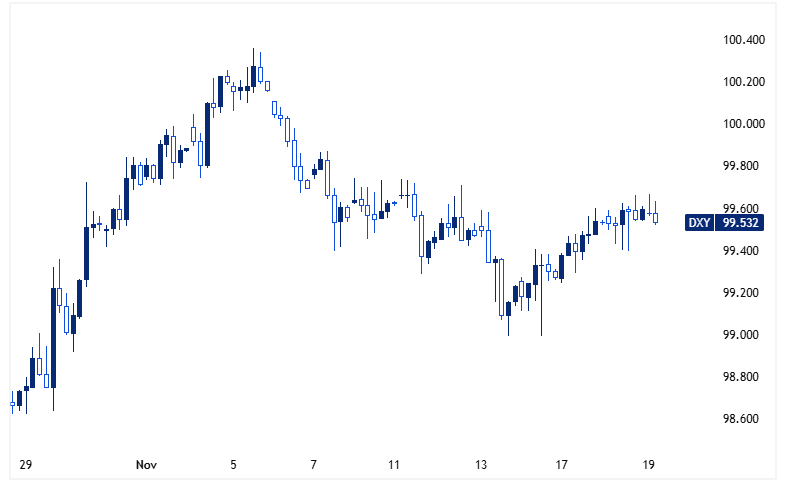
DXY Chart / Source: TradingView
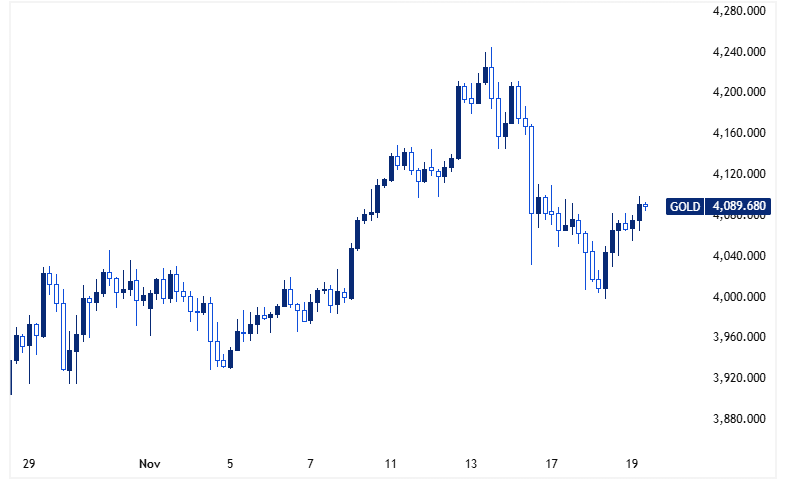
Gold Chart / Source: TradingView
Several FOMC members have cast doubt on the expectations of another rate cut in December, citing concerns of persistent inflation.
Meanwhile, Fed Governor Chris Waller and Fed Vice Chair Philip Jefferson on Monday highlighted growing risks to the labor market. Waller reaffirmed his support for a rate cut next month, while Jefferson suggested the central bank should proceed “slowly” with further reductions. ⁽³⁾
Markets are currently pricing in a 48.9% chance of a 25 basis point rate cut in December, down from over 62.9% earlier this month. ⁽⁴⁾
Markets will focus on Wednesday’s FOMC meeting minutes release, which should provide markets with interest rate guidance, along with Thursday’s September jobs report for clarity on the US economy.
Pound Pressured After Last Week’s Drop
The British pound remained under pressure after hitting April lows last week due to a soft CPI print and changes in the autumn budget. The announcement of no plans to hike income taxes in the upcoming autumn budget on November 26th has brought concerns to markets, which anticipated an increase to help fill an expected fiscal gap.
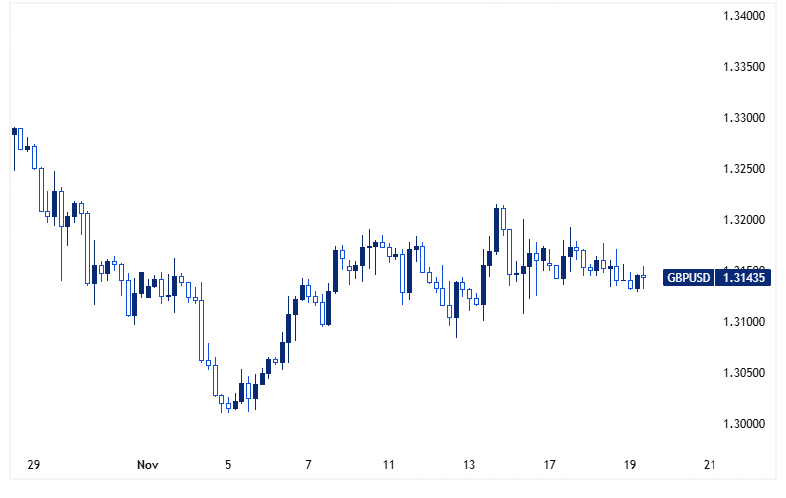
GBP/USD Chart / Source: TradingView
Last week’s change in the budget led markets to reminisce on the negative fallout from Liz Truss’ 2022 mini-budget, which had triggered sharp volatility, a plunge in the pound, and a spike in UK borrowing costs. It was later reported that this was due to the fiscal gap being smaller than initially feared. ⁽⁵⁾
UK CPI came in at 3.6% YoY, matching estimates and below the prior figure of 3.8% YoY. The BOE had previously expected inflation to peak at 4%. The Bank of England kept rates unchanged this month, resulting in a narrow vote with 4 members pushing for a rate cut. Currently, markets are pricing in a 79% of a 25 basis point rate cut in December. ⁽⁶⁾
Canadian Dollar Holds Steady After Inflation Data
The Canadian dollar extended its rally against the dollar after rebounding from seven-month lows on November 6th as markets reacted to persistent inflation against a tight labor market.
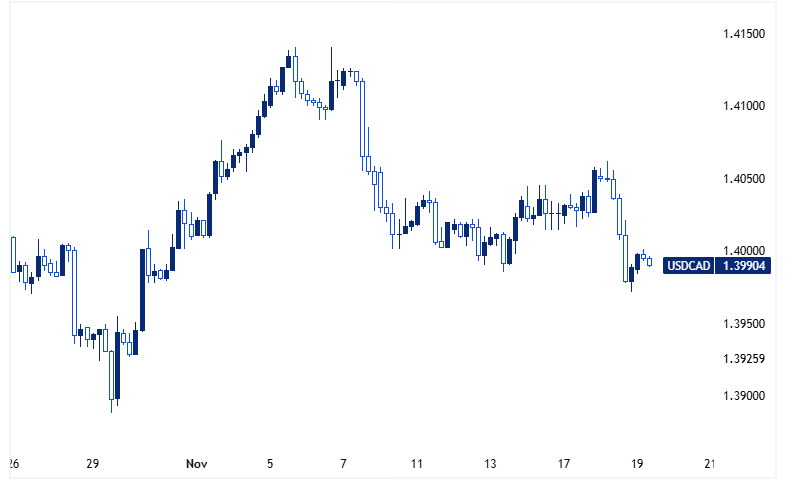
USD/CAD Chart / Source: TradingView
Core inflation in Canada, which is the Bank of Canada’s preferred inflation measure, came in at 3%, remaining close to the previous month’s peak since February 2024. ⁽⁷⁾
The data suggested that the Bank of Canada may be nearing the end of its rate-cut cycle, as policymakers indicated that if the economy remains resilient to US tariffs and core inflation stays above target, there would be no reason to cut rates further. ⁽⁸⁾
Earlier, the unemployment rate fell to 6.9% in October from the four-year high of 7.1% in September, supported by a sharp employment gain and fewer jobseekers. ⁽⁹⁾


