

 ar
- Heightened volatility is gripping markets as geopolitical tensions drive oil prices higher.
- The US dollar strengthened, reclaiming its status as a preferred safe-haven asset amid uncertainty.
- The Euro, Pound, and Yen are under pressure from rising energy costs and a stronger dollar.
Markets began the week under significant pressure as escalating tensions in the Middle East sent tremors across energies, metals and currencies.
With military rhetoric intensifying and critical trade routes at risk, investors are rapidly reassessing geopolitical risk, inflation forecasts, and the demand for safe-haven assets.
Oil Markets Caught Off Guard
The initial catalyst was swift. Following reports of military strikes in Iran by US and Israeli forces, the effects rippled through energy markets almost immediately.
Brent crude surged more than 8%. By this morning, it climbed a further 4.5%, reaching its highest point in over a year.
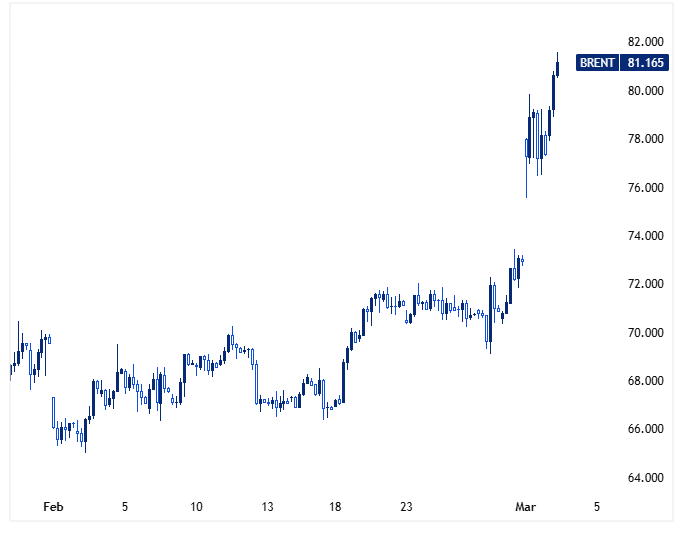
Brent Crude Oil 4H Chart / Source: TradingView
The situation intensified when Iran closed the Strait of Hormuz. The narrow waterway through which roughly a fifth of the world’s oil flows went dark overnight, sending shockwaves through an already rattled market.
As if that weren’t enough, Aramco halted operations at Saudi Arabia’s largest oil refinery at Ras Tanura after a drone strike in the area. The refinery was shut as a precaution while assessing damage, with a “limited” fire caused by debris from the interception of two drones. ⁽¹⁾
OPEC+ tried to calm nerves on Sunday, agreeing to raise output by 206,000 barrels per day in April. But the number fell far short of the 411,000–548,000 barrels previously floated. Markets noticed, and the gesture landed with a thud. ⁽²⁾
Gold Retreats After Crisis Rally
While oil markets reacted with sharp volatility, gold behaved as it traditionally does during a crisis. But today, gold dropped $120 from yesterday’s high at $5390/Oz due to a possibility of profit-taking.
Investors, concerned by the dual threats of rising energy costs and an open-ended conflict, turned to the precious metal for stability. Gold prices touched January highs before pulling back.
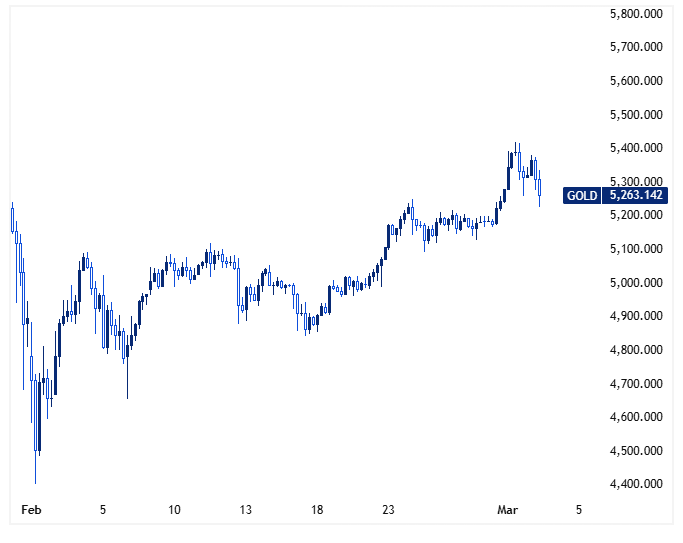
Gold 4H Chart / Source: TradingView
President Trump made it clear there would be no quick resolution. He warned that the US would continue striking Iran until it was “no longer capable of posing a threat” and that the campaign could last a month or “far longer.”
Meanwhile, Iran’s declaration to target any vessel attempting to transit the Strait has left commodity markets in an uneasy standoff. ⁽³⁾
The US Dollar Reclaims its Footing
Not long ago, the dollar’s reputation as the world’s go-to safe haven was looking shaky. When tariff-driven market turbulence erupted last year, the greenback failed to rally the way it historically had and some began to wonder whether its dominance was fading.
Those doubts are now much quieter. The dollar surged on the back of the Iran strikes, reasserting itself as the asset investors reach for when the world feels uncertain.
A senior US official’s reported warning of a significant escalation within 24 hours targeting Iran’s missile programs, drone operations, and naval assets only reinforced the bid. ⁽⁴⁾
The potential for higher inflation, driven by rising energy prices, adds another dimension. This could influence the Federal Reserve to maintain higher interest rates for a longer period, making the dollar more attractive to traders.
Euro and Sterling Face Headwinds
For Europe, the timing couldn’t be worse. Both the euro and the pound sterling slipped to their lowest levels since January as elevated energy costs add pressure to their already fragile economies.
The euro dropped to 1.17 against the dollar. While the single currency is still up around 12% over the past year, the recent trajectory has been downward.
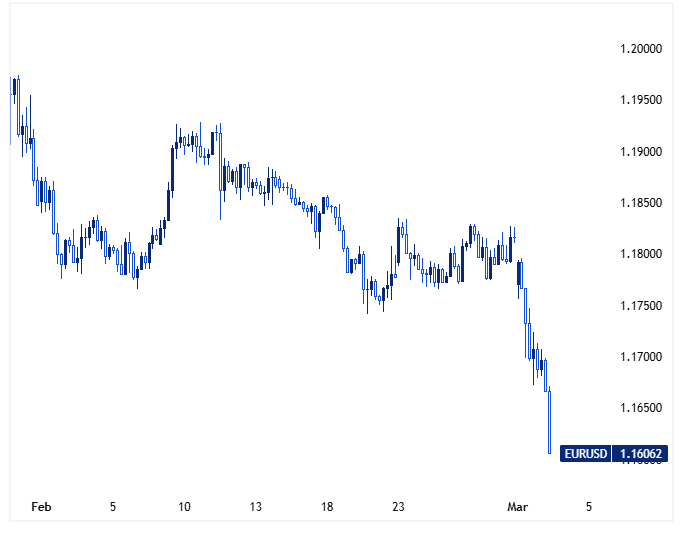
EUR/USD 4H Chart / Source: TradingView
Sterling has had its own headaches. Beyond the stronger dollar and energy shock, the pound was rattled by a domestic political surprise: Labor lost the Gorton and Denton constituency in a by-election, a seat it had held comfortably in 2024. ⁽⁵⁾
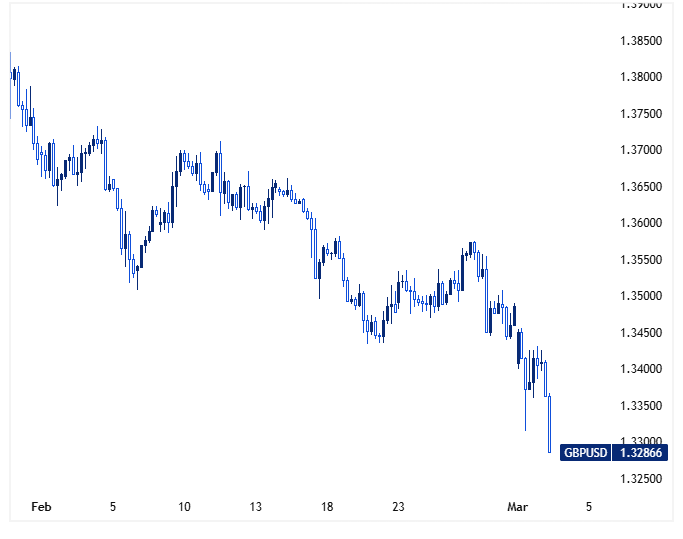
GBP/USD 4H Chart / Source: TradingView
The result sparked fresh questions about the longevity of Prime Minister Starmer and Chancellor Rachel Reeves, with markets worried that their potential replacements might favor looser spending.
Upcoming UK data on house prices, mortgage approvals, and PMI readings will offer a clearer picture of the economy’s resilience. ⁽⁶⁾
Japan’s Yen Squeezed from Every Side
Japan finds itself in a particularly tough position. The yen has fallen sharply, dropping 1% yesterday alone as energy prices climb. For a country that imports nearly all of its oil and gas, the Middle East conflict hits differently than it does for energy exporters.
Japan relies on the Middle East for 90% of its oil. They are the world’s top importer of LNG and now face significant security risks as their energy shipments come from the Strait of Hormuz and the South China Sea.
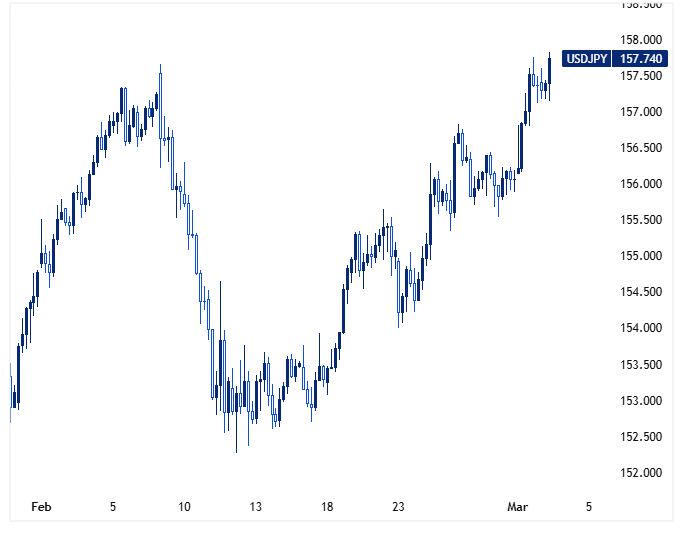
USD/JPY 4H Chart / Source: TradingView
Finance Minister Satsuki Katayama said yesterday that authorities are monitoring the yen’s decline “with a strong sense of urgency” and that currency intervention remains firmly on the table. Japan’s coordination with Washington on the matter signals how seriously both governments are taking the slide. ⁽⁷⁾
Meanwhile, the Bank of Japan is trying to balance things carefully. Deputy Governor Ryozo Himino reiterated that the central bank intends to keep raising interest rates, but without specifying when. All eyes will be on Governor Kazuo Ueda’s remarks later today for any hint at the path ahead. ⁽⁸⁾


