ar
ar
- FedEx has completed restructuring its freight division, separating two very different business models and allowing each company to operate independently.
- The move is expected to increase profitability for FedEx, with the remaining express and ground network being less capital-intensive, generating stronger cash flows.
FedEx has just completed one of the most significant corporate restructurings in the history of global logistics.
On June 1, 2026, the company formally separated its less-than-truckload freight division into an independent publicly traded company, FedEx Freight (FDXF).
The move marks the end of a long-debated chapter and the beginning of a leaner, more focused FedEx.
A Clean Break Worth $4.1 Billion
Before the separation, FedEx Freight paid cash dividends of $4.1 billion directly to its parent company, which immediately strengthened FedEx’s balance sheet, allowing flexibility to reduce its debt, buy back shares and reinvest. ⁽¹⁾
The parent company also kept its stake in FedEx Freight of 19.9%, but management plans to reduce some of that stake over the next few years. ⁽²⁾
Leadership was realigned immediately. John Smith was appointed CEO of FedEx Freight, while Claude Russ stepped in as Interim CFO of FedEx.
Each team can now pursue strategies suited to their specific business without competing for capital allocation at the parent level. ⁽³⁾

Strong Financials Underpin the Transformation
The restructuring isn’t happening immediately, as FedEx entered a new chapter from a position of strong financial strength.
In its Q3 FY2026, FedEx reported revenue of $24 billion, up 8.3% YoY and surpassed its forecast. EPS came in at $5.25, 28% higher than its estimate. ⁽⁴⁾
The Federal Express segment alone delivered 10% revenue growth and an 18% rise in adjusted operating income. US domestic package revenue reached its highest level since FY2022.
Capital expenditure guidance was reduced, from $4.5 billion to no more than $4.1 billion, reflecting tighter discipline around spending. ⁽⁵⁾
Looking further ahead, FedEx set a target of $6 billion in adjusted free cash flow by 2029, excluding the freight business.
That number signals management expects the savings from its multi-year DRIVE cost-reduction program to continue compounding. ⁽⁶⁾
Stock Performance and What Comes Next
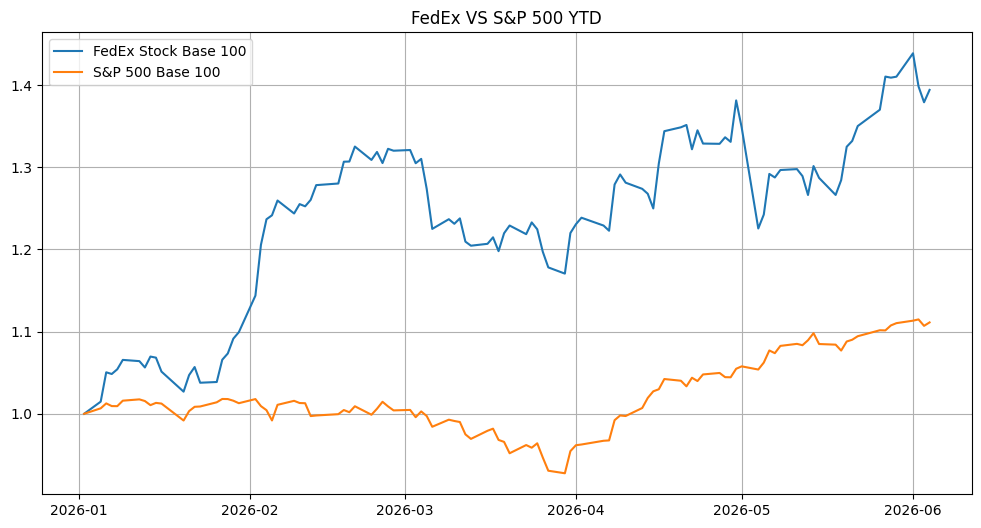
Markets have finally taken notice of FedEx’s stock, which has risen almost 50% since the start of the year, and beaten the S&P 500 so far this year, reflecting growing confidence in FedEx’s transformation and the value unlocked by the freight separation.
As for FedEx Freight, Wall Street is watching carefully.
Analysts want to see consistent double-digit earnings growth before the stock gets its ratings. For now, analyst ratings from Bank of America, JPMorgan, and Citi remain optimistic about the stock, with all three keeping their Buy ratings. ⁽⁷⁾
FedEx is also expected to announce its sixth consecutive annual dividend increase in June, with analysts forecasting a quarterly payout of approximately $1.45 per share. ⁽⁸⁾
With Q4 FY2026 earnings scheduled for June 23, investors will soon get the first clean look at what FedEx looks like without its freight division. That report will be the first real test of whether the transformation is delivering what management has promised.