ar

- Microsoft, Alphabet and Amazon’s earnings will test whether cloud growth is generating enough profit and cash to sustain their AI expansion.
- Microsoft needs more capacity to serve unmet demand, while cash-flow pressure at Alphabet and Amazon highlights the cost of building that capacity.
Big tech’s AI expansion is expected to bring in more revenue, but it’s also creating a much bigger bill to fund the expansion.
Last week, the Nasdaq 100 had its biggest one-day drop since June, as Meta and IBM disappointed on rising AI costs and CoreWeave’s financing raised concerns.
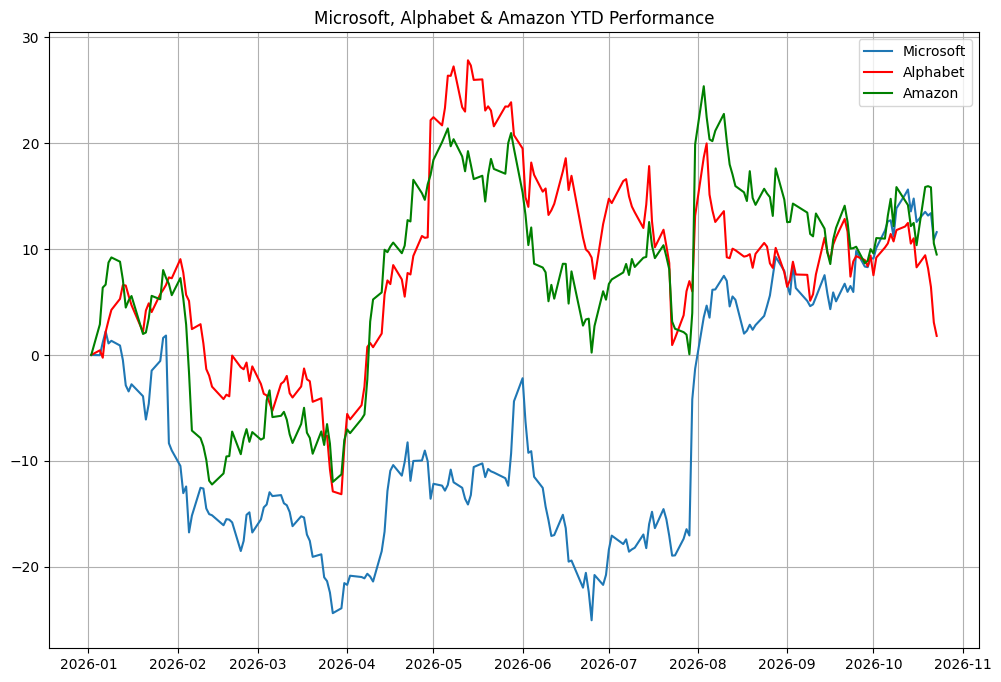
Microsoft and Alphabet will report on Wednesday, followed by Amazon on Thursday. Their results could show how demand is developing across both cloud services and the hardware supporting them.
Equipment suppliers can earn revenue as infrastructure is built, while cloud providers must turn that capacity into paying customers and sustained profits.
Microsoft: Can Azure Growth Sustain Higher Spending?
Forecasts
- Earnings per Share: $4.74, up 28% YoY
- Revenue: $90.93 billion, up 17% YoY
Microsoft expects Azure revenue to grow around 45% in its fiscal first quarter on a constant currency basis, meaning excluding the effect of exchange-rate movements.
But the company has clients it cannot fully serve yet. CFO Amy Hood stated that demand is exceeding supply, making additional computing capacity important to sustaining growth. ⁽¹⁾
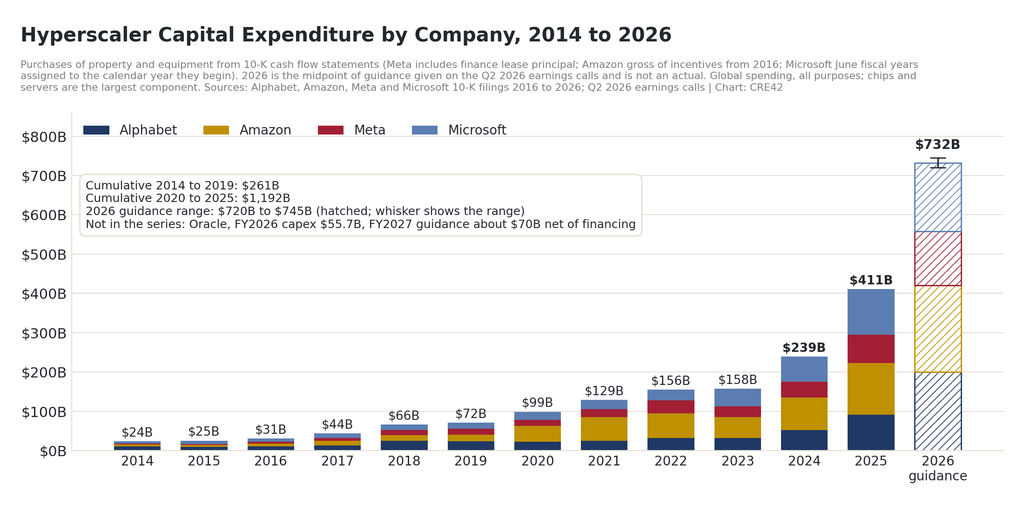
Microsoft expects capital spending of more than $50 billion for the quarter, partly reflecting changes in how it accounts for leases. This matters when comparing investment spending with past quarters. ⁽²⁾
Higher spending can hurt growth, as its value rests on how quickly the new capacity generates paid usage, supports its AI assistant Copilot adoption and contributes to earnings.
Alphabet: Cloud Growth Against a Bigger Budget
Forecasts
- Earnings per Share: $3.03, up 5.9% YoY
- Revenue: $128.8 billion, up 25% YoY
Alphabet’s previous quarter showed how quickly AI demand is expanding its cloud business. Google Cloud is driving much of the growth, with revenue surging 82% to $24.8 billion in Q2.
However, the investment bill keeps on stacking. Alphabet raised its annual capital spending plan to a range of $195 billion-$205 billion as it expanded capacity. ⁽³⁾
The investment is already affecting cash generation. Q2 purchases of property and equipment exceeded operating cash flow, leaving free cash flow negative at $5.86 billion. Its trailing 12-month figure remained positive at $53.27 billion, providing a stronger picture than the quarterly shortfall. ⁽⁴⁾
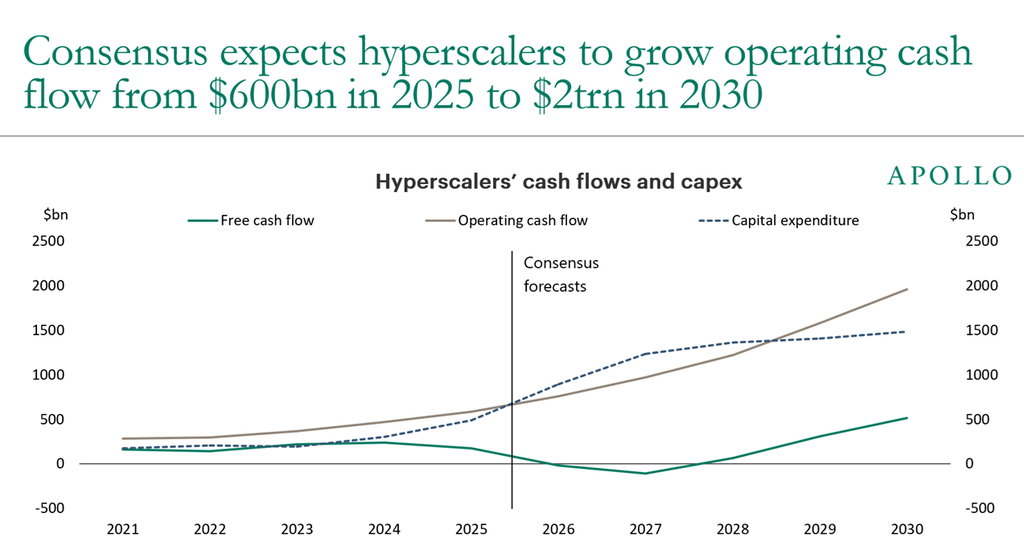
The issue is how comfortably the business can absorb a larger budget. Search advertising provides an established earnings base, while Cloud offers rapid growth. Their profitability, and any further increase in spending plans, will help explain the gap between revenue momentum and shareholder earnings.
Amazon: Stronger Sales, Almost Flat Earnings
Forecasts
- Earnings per Share: $2.00, up 2.5% YoY
- Revenue: $202.43 billion, up 12.3% YoY
AWS plays a huge role in Amazon’s profitability. In Q2, its revenue grew 37% and generated around 60% of operating profit. That makes the cloud division’s margins especially important when assessing how much benefit Amazon gets from stronger sales. ⁽⁵⁾
The EPS comparison also requires care, as last year’s third-quarter profit included $9.5 billion in pre-tax gains from Amazon’s Anthropic investment. Changes in investment valuations can influence reported earnings independently of retail and cloud performance, making operating profit a useful additional measure. ⁽⁶⁾
Cash flow adds another challenge. Amazon recorded a $7.6 billion free cash outflow in the 12 months to June 30, 2026, compared with an $18.2 billion inflow a year earlier, showing an increased investment in AI. ⁽⁷⁾
Stronger AWS profitability and retail efficiency could give the retail giant more room to finance AI expansion.