

 ar

- Wall Street banks are expected to report higher Q3 earnings, despite the recent selloff in bank stocks.
- Revenue is forecasted to grow faster than EPS at several banks, putting expenses and profitability in focus this earnings season.
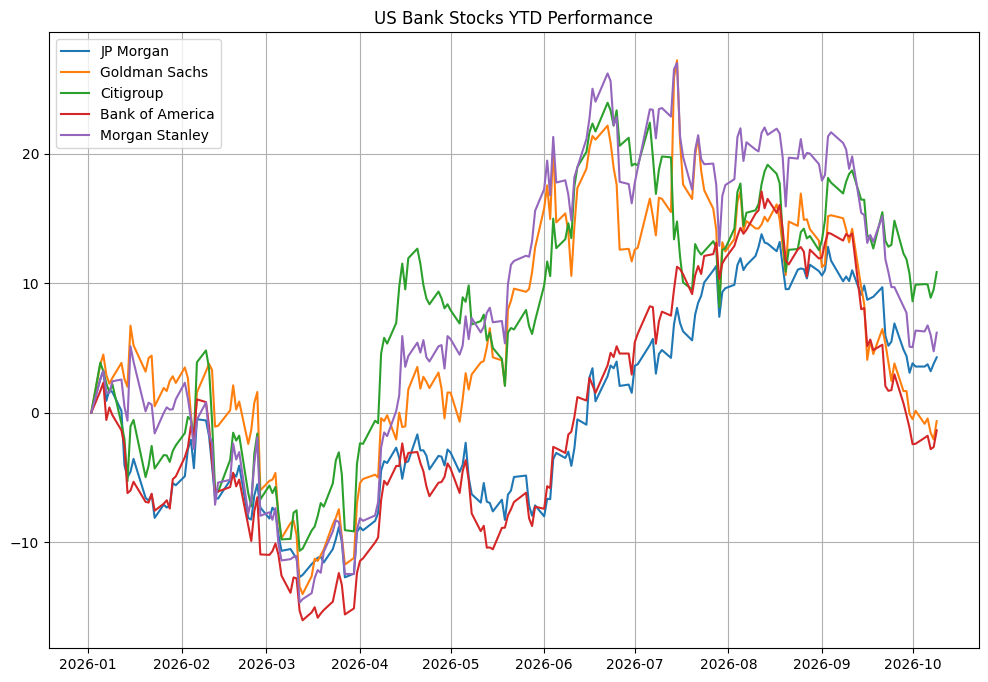
Wall Street’s biggest banks kick off Q3 earnings this week with bond yields soaring. The 10-year is trading near 5.3%, and bank stocks have fallen around 12% from their August peak. Some are in correction territory.
The lineup kicks off with JP Morgan, Goldman Sachs and Citigroup, reporting on Tuesday, then Bank of America and Morgan Stanley on Wednesday. Analysts expect growth across all five banks, yet deal-making is slowing down, plus each has a different outlook for the economy.
Higher yields cut both ways for the big banks. They lift what lenders earn on loans, but they also raise deposit costs, slow mortgages, delay deals and reduce the value of bonds banks already hold.
JP Morgan: Can Trading Revenue Outrun Rising Costs?
Forecasts
- Earnings per share: $5.96, up 17.55% YoY
- Revenue: $51.2 billion, up 8.65% YoY
JP Morgan expects investment banking fees and trading revenue to each rise by a mid-to-high teen percentage from a year ago.
That was the guidance shared by the bank’s Co-President Doug Petno at the Barclays Global Financial Services Conference back in September.
Strong deal activity and active markets support those results, and lending adds another source of income. ⁽¹⁾
However, technology spending, branch expansion and higher compensation could absorb some of those gains. Mortgage activity also faces pressure from expensive financing.
The key question in the mind of investors is whether revenue growth can stay ahead of expenses without requiring larger reserves against loan losses.
Goldman Sachs: Strong Equities, Softer Momentum
Forecasts
- Earnings per share: $12.44, up 1.55% YoY
- Revenue: $16.71 billion, up 10% YoY
Goldman CEO David Solomon has described equities trading as strong, while warning that trading in bonds, currencies and commodities has been softer. He also flagged higher transaction expenses and faster technology investment. ⁽²⁾
Mixed together, these factors make costs particularly important. Strong activity in one trading business may offer limited support if other divisions slow and spending rises.
Citigroup: Building a Leaner Bank Comes with a Cost
Forecasts
- Earnings per share: $2.66, up 18.75% YoY
- Revenue: $23.74 billion, up 7.46% YoY
Citi is using cost savings from restructuring to support its new investments. Last month, Chief Financial Officer Gonzalo Luchetti stated that the bank would bring forward around $500 million in severance costs and business spending into the remainder of this year.
He also expects annual shareholder profitability to rise just slightly above the bank’s 11% target. ⁽³⁾
The results will also show whether lower restructuring costs and stronger revenue can absorb that spending. Sustained improvement would need revenue to grow faster than expenses as Citi continues investing in its businesses.
Bank of America: Can Lending Fill the Fee Gap?
Forecasts
- Earnings per share: $1.10, up 3.77% YoY
- Revenue: $30.61 billion, up 8.39% YoY
Bank of America’s outlook looks less optimistic in investment banking. CEO Brian Moynihan expects fees to decline by at least 10%, with sales and trading revenue remaining unchanged from a year ago. ⁽⁴⁾
Higher rates can support income from loans, but clients might also demand better returns on their savings. Weaker bank fees could be a drag on performance unless loan growth sustains its growth and funding costs remain stable.
Investors are keeping an eye on whether lending growth and controlled funding costs can offset weaker fees without increasing pressure on borrowers.
Morgan Stanley: Can Wealth Management Sustain Its Momentum?
Forecasts
- Earnings per share: $2.90, up 3.57% YoY
- Revenue: $19.93 billion, up 9.38% YoY
Co-President Dan Simkowitz has described the investment banking pipeline as strong, with companies still seeking financing for artificial intelligence investment. However, he also cautioned that third-quarter activity has cooled from the second quarter. ⁽⁵⁾
Morgan Stanley’s wealth management business generated record second-quarter revenue of $8.9 billion and attracted $148 billion in net new client assets. Still, just over half those inflows came from IPOs of companies in its workplace stock plan business, creating an unusually strong comparison for the third quarter. ⁽⁶⁾
The important distinction is between deals being discussed and fees earned. A healthy pipeline offers reassurance only if transactions continue to close.


