ar
- Renewed US-Iran tensions have increased the threat of prolonged disruption to Middle Eastern crude supplies.
- Higher energy costs are fueling inflation concerns and adding pressure to global bond markets.
The latest exchange of strikes has pushed the US-Iran conflict into a more uncertain phase, weakening hopes of a quick return to calm.
Financial markets are watching for further developments or signs of renewed negotiations, either of which could determine whether the latest market shock fades or intensifies.
Crude Pushes Higher as Supply Fears Build
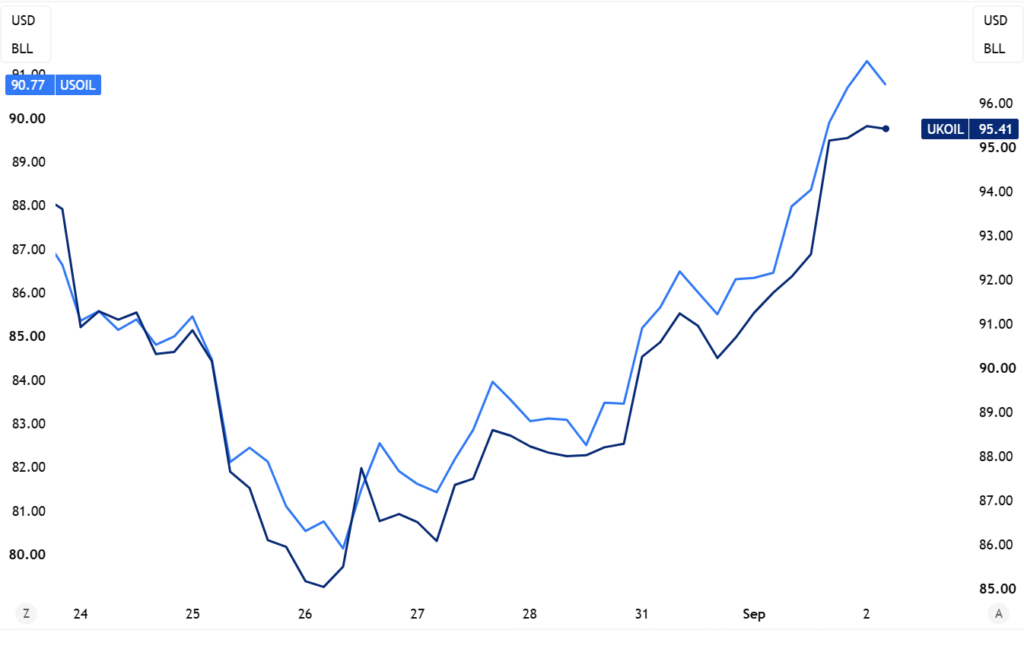
Brent crude rose 1% earlier today to $95 per barrel, extending yesterday’s 4.90% gain while WTI touched $90 per barrel, its highest level since July. Both benchmarks had already posted their biggest one-day jumps in weeks after the US launched airstrikes on Iranian targets overnight.
Tehran responded quickly, and the exchange marked the most serious escalation between the two countries in weeks. Supply concerns intensified after two tankers carrying a combined four million barrels of Saudi crude were attacked near the Strait of Hormuz.
Strait of Hormuz Under Pressure
The conflict has escalated once again and added a new strain on the Strait of Hormuz. Iran said that the latest US strikes would lead to more tightening of traffic in the strait, which it has largely been closed to commercial shipping.
Shipping data showed just four vessels passed through the strait yesterday, well below the recent ten-day average of thirteen. A similar slowdown was seen at the Bab el-Mandeb strait, another vital route for oil tankers. ⁽¹⁾
Analysts say the market is no longer simply weighing the risk of war, but pricing in the cost of a conflict that shows no sign of ending soon. ⁽²⁾
Contagion Beyond Iran
The conflict isn’t just within Iran and through the strait, but also across the Middle East, mainly US bases in Jordan and Bahrain. US Central Command confirmed it had struck Iranian air defense, communication, and radar sites in response to recent attacks on shipping and American personnel. ⁽³⁾
While the US claims that it still holds strong control over the Strait of Hormuz, President Trump isn’t in a rush to pressure Iran to get back to negotiations. He warned of further military action if Iran continued to retaliate. ⁽⁴⁾
Bond Markets Feel the Strain
The conflict has also sent global bond yields sharply higher, reaching levels not seen in years. The 10-year US Treasury yield reached 4.81%, its highest level since November 2023, while the 2-year yield reached January 2025 highs at 4.40%.
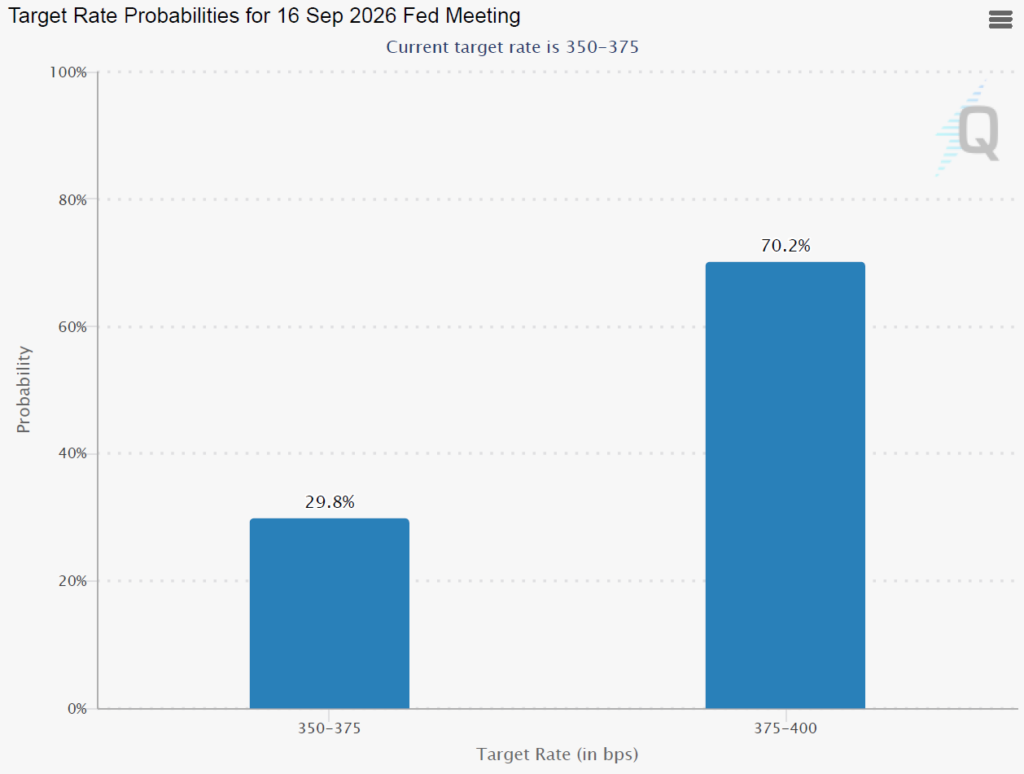
Higher energy costs are adding to inflation worries just as central banks weigh their next moves. Comments from Federal Reserve Chair Kevin Warsh last week already had traders leaning toward another rate increase, and markets are now pricing in a 70.2% chance of a Fed hike in its upcoming meeting on September 15-16. ⁽⁵⁾
Across the globe, Japan’s 10-year yield moved above 3% for the first time in three decades, while Australia’s benchmark yield reached a 15-year high. European bond yields also saw increases, with French yields touching 2008 highs and German yields reaching 2011 highs.
Markets will now be looking out for signs of further escalation, tanker traffic through the Strait of Hormuz and any signs of renewed negotiations. Continued escalation could keep oil prices volatile while maintaining upward pressure on inflation expectations and borrowing costs.