ar
ar
It’s a busy week ahead for traders, with markets tracking a fragile US-Iran ceasefire extension, a potential reopening of the Strait of Hormuz, and a full run of key economic data.
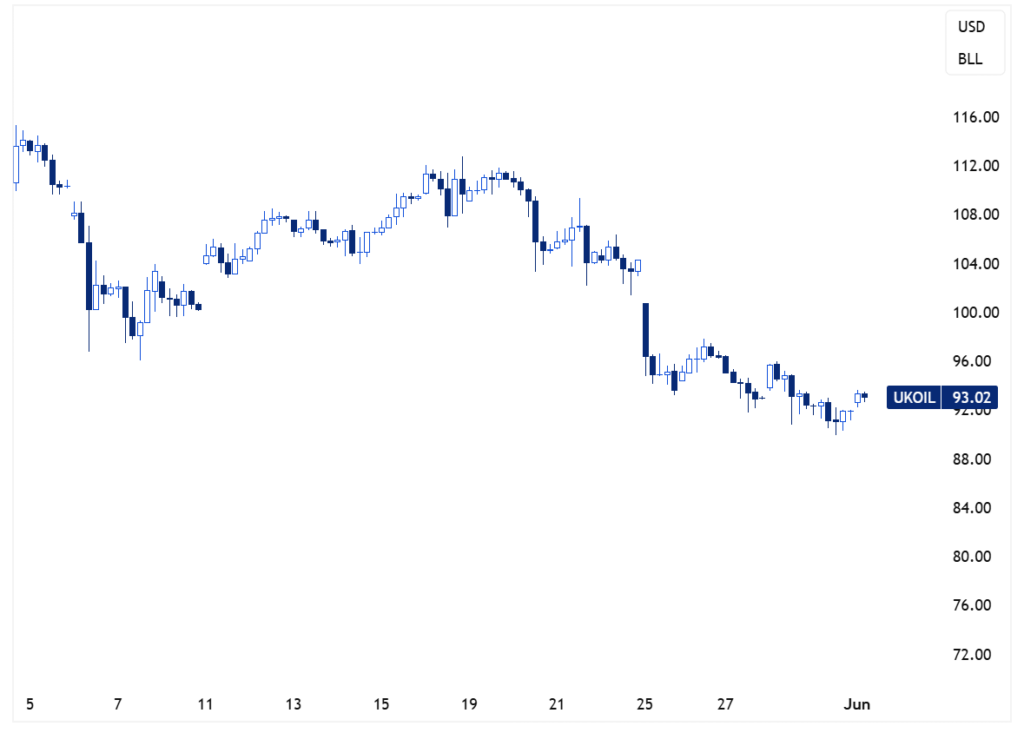
Oil prices finished May with a 17% decline due to hopes of reduced shipping disruptions, while markets also prepare for US labor market releases, eurozone inflation figures, and Australia’s GDP report.
The focus will be on whether geopolitical risks continue to ease, whether inflation pressures remain sticky, and whether US jobs data is strong enough to keep central banks cautious.
Calendar Events
- US ISM Manufacturing PMI – Jun. 1
- Eurozone Flash CPI – Jun. 2
- US JOLTS Job Openings – Jun. 2
- Australia GDP – Jun. 3
- US ADP Employment Change – Jun. 3
- US ISM Services PMI – Jun. 3
- Eurozone Q1 3rd Estimate – Jun. 5
- Canada Unemployment Change – Jun. 5
- US Non-Farm Payrolls – Jun. 5
- US Unemployment Rate – Jun. 5
- US Average Hourly Earnings – Jun. 5
Top Things to Watch
Ceasefire Extended, But Not Sealed
The US and Iran have reportedly agreed to a 60-day ceasefire extension and unrestricted shipping through the Strait of Hormuz, though neither Trump nor Tehran has officially confirmed the deal. In exchange, the US would lift its blockade of Iranian ports and ease some oil sanctions.
The agreement remains fragile, as tensions re-ignited late last week. Vice President Vance struck a cautious tone: “We’re not there yet, but we’re very close.”
Oil prices dropped on news of a potential Hormuz reopening, a strait carrying roughly one-fifth of global oil and LNG supply. Core sticking points remain: Iran demands sanctions relief and US troop withdrawal, with Washington insisting on dismantling Iran’s nuclear program.
US Labor Market Week — Payrolls, Wages, and the Fed’s Next Move
The US labor market takes center stage this week, with ISM Manufacturing, JOLTS, ADP, ISM Services, and Friday’s jobs report combining to deliver a comprehensive read on hiring demand and wage pressure.
Manufacturing activity held at 52.7 in April, though its employment component remained subdued at 46.4. JOLTS job openings came in at 6.9 million, and ADP private payrolls added a modest 109K. Services continued to outperform at 53.6, keeping the broader question open: can the economy sustain meaningful job growth into summer?
Friday’s NFP print will be the week’s defining moment. April’s payroll gain of 115K, an unemployment rate steady at 4.3%, and average hourly earnings up 0.2% MoM and 3.6% YoY set a cautious baseline. A stronger-than-expected report could reinforce the Fed’s patience on rate cuts, while any softening in hiring or wages may quickly reignite easing expectations.
Eurozone Flash CPI — A Test of ECB Conviction
Eurozone inflation returns to the spotlight after headline CPI climbed to 3.0% in April from 2.6% in March, with energy prices, up 10.8% YoY, doing most of the heavy lifting. Services inflation, by contrast, eased to 3.0% from 3.3%, offering the ECB some modest relief.
Tuesday’s flash CPI reading will be critical in determining whether this uptick reflects a temporary energy-driven distortion or the early signs of renewed stickiness. The outcome stands to move euro pairs, European bond yields, and regional equities in equal measure.
Australia GDP — Reading the RBA’s Next Signal
Australia’s GDP report lands Wednesday, offering markets a timely update on growth momentum. The economy expanded by 0.8% QoQ and 2.6% YoY in Q4 2025, with public demand driving the growth, a resilient performance against a backdrop of persistent inflation and tighter financial conditions.
The release carries direct implications for RBA rate expectations. A solid print would support the case for a prolonged hold, while any signs of cooling could shift the narrative toward easing, with knock-on effects for AUD pairs and Australian yields.