

 ar

Markets head into a critical week as central banks across major economies prepare to deliver their latest policy decisions, all while geopolitical risks surrounding energy supply continue to build.
At the same time, a packed earnings calendar, spanning big tech and energy giants, adds another layer of uncertainty, with investors watching closely for guidance on growth, margins, and how companies are navigating rising costs and global disruptions.
Across Asia, North America, and Europe, policymakers will be navigating the tension between slowing growth and persistent inflation pressures, with guidance likely to matter as much as the decisions themselves.
Let’s break down what to expect in the week ahead.
Calendar Events
- Bank of Japan Interest Rate Decision – Apr. 28
- US CB Consumer Confidence – Apr. 28
- Australia CPI – Apr. 29
- Bank of Canada Interest Rate Decision – Apr. 29
- Federal Reserve Interest Rate Decision – Apr. 29
- Eurozone Flash CPI – Apr. 30
- Eurozone Prelim Q1 GDP – Apr. 30
- Bank of England Interest Rate Decision – Apr. 30
- European Central Bank Interest Rate Decision – Apr. 30
- Canada Monthly GDP – Apr. 30
- US Advance GDP – Apr. 30
- US Core PCE Index – Apr. 30
- Japan Tokyo CPI – May 1
- US ISM Manufacturing PMI – May 1
Top Things to Watch
Federal Reserve — Holding Steady, Watching the Data
The Federal Reserve is expected to leave rates unchanged at 3.75% on Wednesday, with attention shifting to its tone ahead of key data releases. Inflation jumped above 3% in March, while growth is slowing but not collapsing, keeping the Fed in a wait-and-see mode.
With oil prices elevated and inflation risks lingering, policymakers are unlikely to signal urgency to ease, leaving markets focused on whether the Fed pushes back against expectations for easing later this year.
Oil Back in Focus as Geopolitics Drive the Market
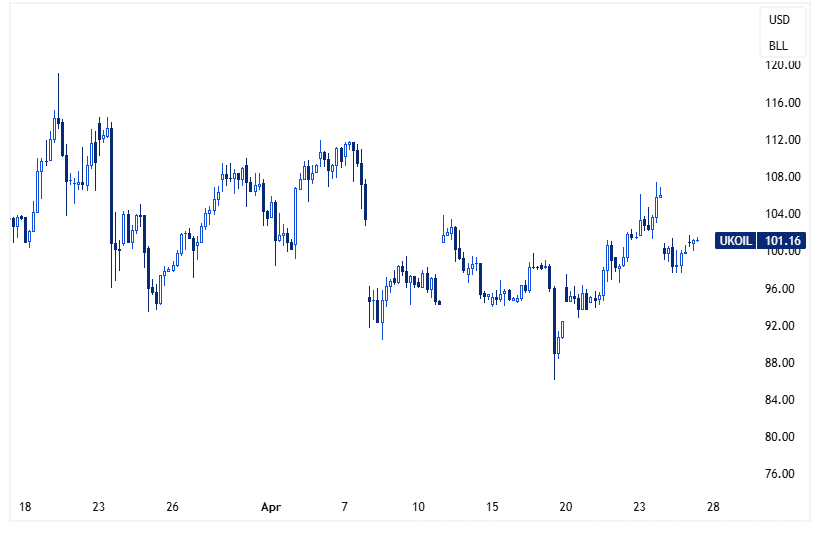
Oil markets are back in focus, with prices rebounding towards $100 per barrel as tensions around the Strait of Hormuz continue to fuel supply concerns.
The move is being driven less by demand and more by rising geopolitical risk, as traders react to the possibility of disruptions to shipping flows through one of the world’s most critical energy corridors.
With refining activity already under pressure and inflation risks creeping higher, oil has quickly re-emerged as a key stress point for global markets, keeping volatility elevated and central banks on alert.
Meanwhile, uncertainty around diplomatic efforts continues to add to the risk premium, with shifting signals on potential ceasefire talks reinforcing concerns that the situation could remain unstable for a while.
Bank of Japan — Cautious Normalization Path
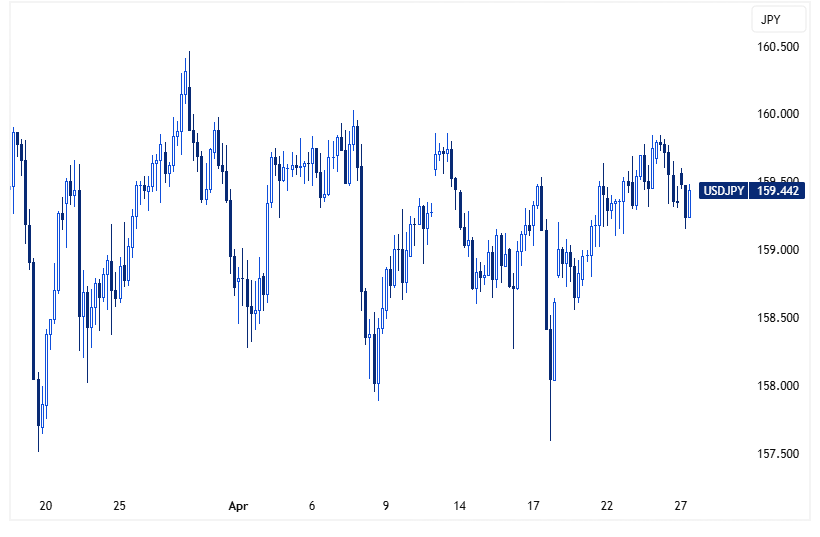
Tuesday brings the Bank of Japan’s decision, where markets broadly expect no change in policy following March’s tone to shift away from ultra-loose settings and keeping rate hikes on the table.
Policymakers have signaled a gradual normalization path, but global uncertainty, particularly energy-driven inflation and geopolitical risks, keeps the BOJ in a cautious stance. The focus remains on wage growth and domestic demand sustainability.
Big Tech & Energy — Earnings in Focus
A heavy earnings lineup will test both growth expectations and macro resilience, with Microsoft, Amazon, Meta Platforms, and Alphabet reporting midweek, followed by Apple. Markets will be watching whether AI-driven spending continues to support revenues and if corporate demand remains resilient despite tighter financial conditions.
On the energy side, Chevron and ExxonMobil will provide insight into how elevated crude prices are impacting profits, with a focus on margins, production trends, and capital spending as oil volatility remains driven by geopolitical risks.
BoE & ECB — Navigating a Tight Policy Window
The Bank of England and the European Central Bank both face a difficult balance between slowing growth and still-elevated inflation, with decisions coming at a sensitive point for their economies.
In the UK, inflation is hovering near the 3% mark, while activity indicators point to weakening demand, keeping the BOE cautious about signaling any near-term easing.
In the eurozone, inflation has moved back above the ECB’s 2% target, while growth momentum continues to lag, leaving policymakers caught between persistent price pressures and a slowing economy.
However, rising energy prices and external risks complicate the outlook further, limiting the ECB’s flexibility and making an immediate shift toward easing unlikely. As a result, policymakers are expected to hold steady for now, with markets closely watching for any shift in tone around the timing of future rate adjustments.


