

 ar

With a new trading week comes new opportunities.
So, we’ve gathered insights for the week ahead that highlight the current trends, scheduled events and potential movers to watch. Let’s get started.
Calendar Events
- China Manufacturing PMI – Mar. 2
- US ISM Manufacturing PMI – Mar. 2
- Eurozone Flash CPI – Mar. 3
- UK Annual Budget Release – Mar. 3
- Australia Q4 GDP – Mar. 4
- China Services Manufacturing PMI – Mar. 4
- Switzerland CPI – Mar. 4
- US ADP Employment Change – Mar. 4
- US ISM Services PMI – Mar. 4
- Australia Trade Balance – Mar. 4
- Eurozone Revised Q4 GDP – Mar. 4
- US Non-Farm Payrolls – Mar. 4
- US Unemployment Rate – Mar. 4
- US Average Hourly Earnings – Mar. 4
- US Retail Sales – Mar. 4
Top Things to Watch
When Conflict Escalates, Markets Reprice Risk
The US–Israel strike on Iran has sharply increased geopolitical risk, lifting oil on fears of supply disruption through the Strait of Hormuz, a critical artery for global energy flows. Any prolonged halt in shipping could tighten supply conditions and push energy prices higher.
At the same time, gold and silver are attracting safe haven flows as investors hedge against uncertainty, while equities face renewed volatility. Defensive assets are gaining traction, pricing not just the attack itself, but the risk of a broader regional escalation.
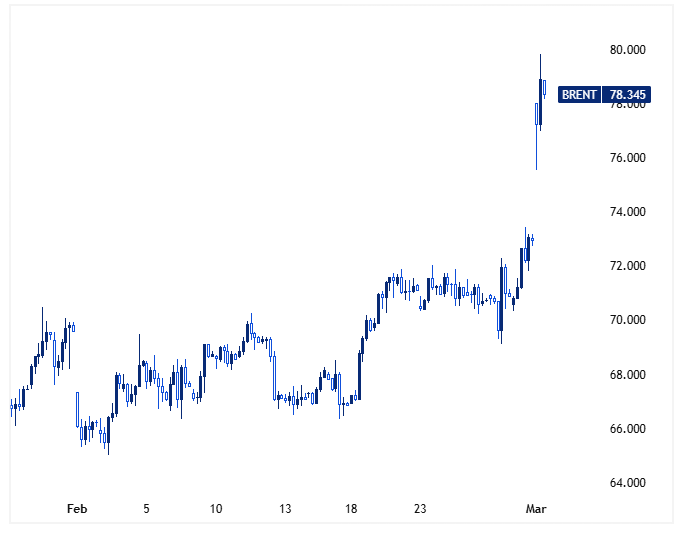
Brent Crude Oil 4H Chart / Source: TradingView
US Data in Focus: Jobs and Growth Take Center Stage
In the US, markets will closely track ISM PMI, ADP Employment Change throughout the week, alongside Friday’s highly anticipated Nonfarm Payrolls (NFP) report for fresh signals on economic momentum and labor market resilience. Together, these releases will help shape expectations around the strength of economic growth and the Federal Reserve’s next policy moves, making it a pivotal week for dollar and rate-sensitive assets.
A Low-Key Spring Statement, But Sterling Still in Play
UK Chancellor Rachel Reeves has stressed that her March 3rd spring statement will be a brief, low-key update, keeping the autumn budget as the only major fiscal event of the year. The statement is not designed to introduce major tax changes unlike last November’s budget, which lifted the tax burden to a record high share of GDP.
Still, even a “quiet” statement can shift expectations around future taxes and spending. Any changes to fiscal forecasts or borrowing projections could influence gilt yields and move the pound, particularly if investors reassess the UK’s growth and deficit outlook.
Inflation First, Growth Next – Europe’s Policy Signals Ahead
European Flash CPI on Tuesday and revised Q4 GDP on Friday will offer a crucial read on inflation momentum and broader economic performance across the bloc. Together, the releases could reshape expectations around the European Central Bank and whether policymakers lean toward patience or further easing in the months ahead.
Australia’s Growth Test Ahead
Australia’s Q4 GDP will be closely watched as investors gauge the strength of economic momentum and its implications for domestic demand and inflation trends. The data could play a key role in shaping expectations around the Reserve Bank of Australia and the future direction of monetary policy, particularly if growth either continues to the upside or signals a broader slowdown.


