ar
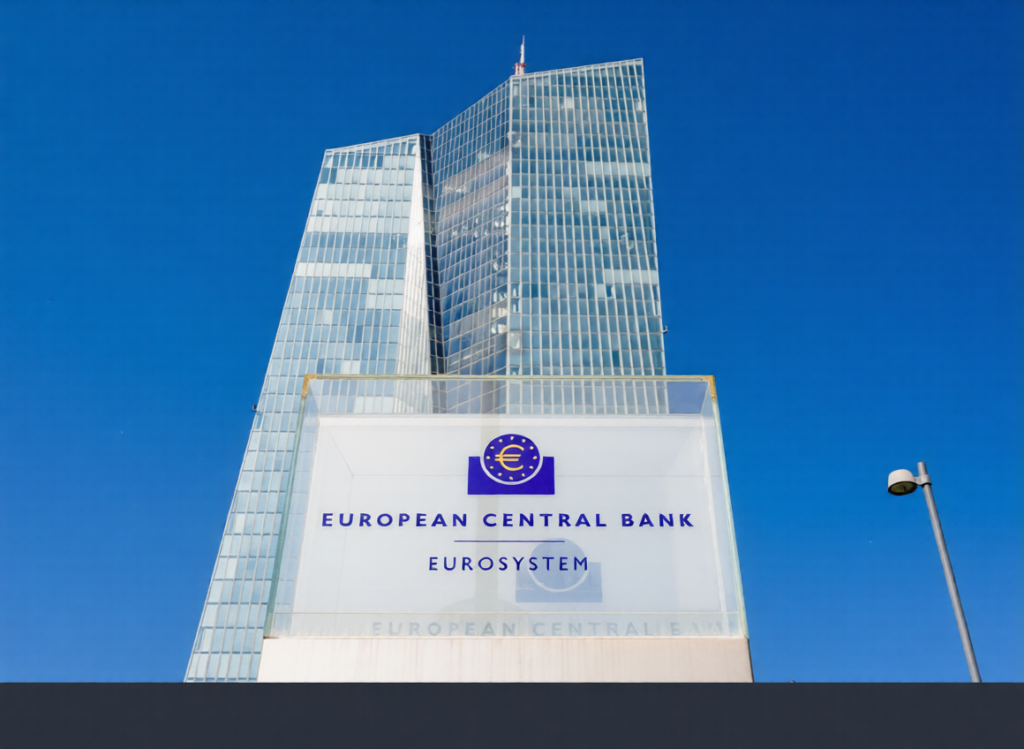
- The ECB sold some of its US dollar reserves in early 2025 and reinvested the proceeds into Japanese yen as part of a routine portfolio rebalancing.
- The bank reported a financial loss of 1.3 billion euros for 2025, linked to long-term bond purchases programs.
- Inflation in the eurozone has fallen sharply from its 2022 peak and is now close to the ECB’s 2% target, though many people still feel prices are rising faster than official data shows.
Last year, the European Central Bank made some large changes in its FX reserves, marking a shift from US dollars to Japanese yen.
Despite this change, the central bank still reported another year of financial losses, but seems to be improving from the years before, as the ECB is still dealing with long-term costs caused by its past loose monetary policy and stimulus programs.
Selling Dollars, Buying Yen
Back in Q1 2025, the ECB sold some of its holdings in US dollar and used the funds to buy Japanese yen. The central bank described this as a standard rebalancing of its reserves.
The transactions even came before the announcement of “Liberation Day” in April 2025. The ECB generated 909 million euros in profits (around $1.07 billion). ⁽¹⁾
Data from the ECB showed that its holdings in US dollars fell to almost $51 billion last year, down from $52 billion in 2024. Meanwhile, yen holdings rose from 1.5 trillion to 2.1 trillion yen.
The share of dollars in the ECB’s total foreign currency assets dropped from 83% to 78%, although part of this change is likely due to the dollar losing value. ⁽²⁾
Another Year of Losses
The ECB reported a financial loss of 1.3 billion euros last year, marking a significant improvement from 2024’s financial loss of 7.9 billion euros, but it doesn’t mean that the bank is profitable. ⁽³⁾
These losses occurred when the ECB issued large bond-buying programs for 10 years prior and during 2020. Many of those bonds are still on the ECB’s books.
Because interest rates have risen sharply since then, the bank now must pay large amounts of interest on the money it created during that period. Excess liquidity in the financial system currently stands at around 2.4 trillion euros.
The ECB is carrying forward about 10.5 billion euros in accumulated losses, with its financial provisions reduced to zero. Even if the bank returns to profit this year or next, as it predicts, it could take years to clear these losses and rebuild reserves. ⁽⁴⁾
The ECB is not alone. Most bonds from the stimulus programs are held by national central banks across the eurozone. Germany’s Bundesbank has suffered the biggest losses, while the central banks of the Netherlands and Belgium have also been affected. ⁽⁵⁾
It is important to note that central banks work differently from ordinary banks. A central bank can operate with large losses or even negative equity for long periods. Its main job is to set monetary policy and keep prices stable, not to make a profit.
Inflation Falling, But Public Perception Lags Behind
Inflation has been brought down to its 2% target in the Eurozone after peaking at 10.6% in late 2022. Inflation now stands at 1.7% in January.
Despite inflation falling, consumers are still feeling that prices are still rising, but at a faster pace. ECB President Christine Lagarde acknowledged this gap between measured and perceived inflation, calling it a historical and global pattern that affects economic behavior and trust in institutions. ⁽⁶⁾
Lagarde said food inflation is expected to stabilize slightly above 2% late this year. She also added that the Eurozone economy expanded by 0.3% in Q4 2025 and by 1.5% for the whole year, beating estimates. ⁽⁷⁾
Looking Ahead
Growth is expected to continue, driven by higher wages, a strong labor market, and investment in defense, infrastructure, and digital technology.
However, challenges still remain. Higher tariffs, a stronger euro, and an unpredictable global trade environment could weigh on activity.
The ECB remains cautious but optimistic. It expects inflation to return to its 2% target over the medium term, supported by easing wage growth and steady economic conditions.