

 ar

With a new trading week comes new opportunities. So, we’ve gathered insights for the week ahead that highlight the current trends, scheduled events and potential movers to watch. Let’s get started.
Calendar Events
- US Durable Goods – Jan. 26
- US CB Consumer Confidence – Jan. 27
- Australia CPI – Jan. 28
- Bank of Canada Interest Rate Decision – Jan. 28
- Federal Reserve Interest Rate Decision – Jan. 28
- Japan Tokyo CPI – Jan. 30
- Germany Flash CPI – Jan. 30
- Eurozone Q4 Flash GDP – Jan. 30
- Canada GDP – Jan. 30
- US PPI (December) – Jan. 30
Top Things to Watch
Earnings Season Heats Up Across Big Tech, Autos, and Energy
Earnings take center stage this week, with results due from Boeing and General Motors on Tuesday; Microsoft, Meta Platforms, Tesla, and IBM on Wednesday; and Apple on Thursday, alongside a busy slate of other major releases.
Beyond the headline numbers, markets will be closely watching forward guidance, profit margins, and demand signals, as investors assess whether earnings momentum can hold amid slowing growth and tighter financial conditions. Attention will be on big tech spending trends, auto demand, pricing power, and energy-sector profitability, which could shape broader market sentiment.
Fed Meeting Approaches with Guidance in the Spotlight
All eyes are on the Federal Reserve this week, as officials are anticipated to maintain current interest rates while evaluating economic strength and cooling inflation. Investors are particularly eager to dissect Chair Jerome Powell’s remarks and the official policy statement for clues regarding a potential shift toward rate cuts later this year.
The market’s reaction will likely hinge on the Fed’s assessment of employment trends and price stability, as these insights will dictate the future trajectory of monetary policy and overall investor confidence.
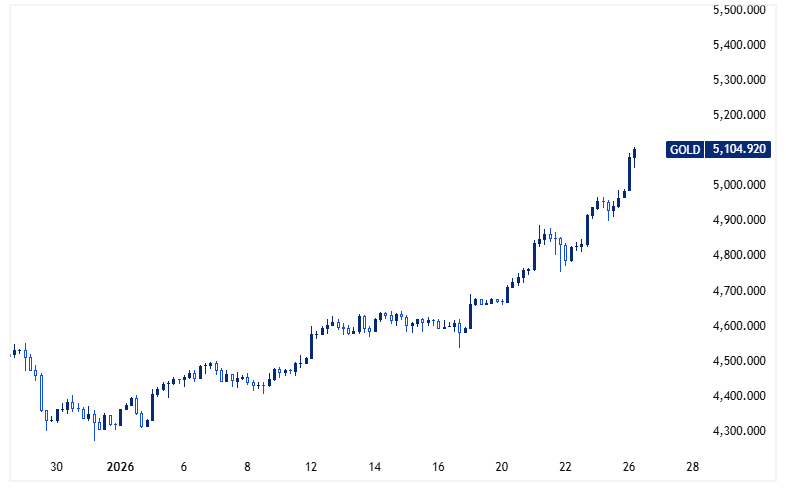
Gold 4H Chart / Source: TradingView
Aussie Dollar Powered by Jobs and Rate-Hike Bets
The Australian dollar surged near sixteen-month highs, after strong jobs data and upbeat PMI figures reinforced expectations of near-term rate hikes. The unemployment rate unexpectedly fell to a seven-month low, while composite PMI climbed to 55.5, its strongest reading since April 2022.
With inflation still sticky and the Reserve Bank sounding increasingly hawkish, markets now price a 55.7% chance of a February hike, rising to over 80% by May. Attention now shifts to next week’s quarterly inflation data, a key test for policy expectations.
BOC Decision in the Spotlight as Markets Expect a Pause
The Bank of Canada will also announce its interest rate decision, with markets widely expecting policymakers to hold rates steady as inflation shows further signs of cooling while growth remains uneven.
With the decision largely priced in, attention will turn to Governor Macklem’s guidance and statement tone, particularly on inflation progress, labor-market softening, and how sensitive households remain to higher borrowing costs, key factors shaping expectations for the timing of any future policy shift.
Swiss Franc Holds Firm as Safe-Haven Demand Lingers
The Swiss franc remained steady near its strongest level since 2011, supported by subdued but persistent safe-haven flows despite easing US–Europe tensions. While President Trump withdrew threatened tariffs after a NATO meeting and outlined a vague Greenland framework, uncertainty remains over unresolved details and broader geopolitical risks.
Meanwhile, the Swiss National Bank signaled policy stability, with President Martin Schlegel downplaying potential negative inflation readings and warning that cuts below 0% carry risks. With rates on hold, neither hikes nor cuts are expected in the near term.


