

 ar
- The US dollar surged to three-month highs, supported by hawkish Fed and faded rate cut hopes in December.
- RBA kept rates unchanged and maintained a cautious stance.
- The pound remained pressured ahead of the BOE meeting.
- Commodities weakened as sentiment declined.
Global markets saw some heavy changes at the start of the week as traders reacted to central bank policy decisions, policy comments, and new data releases.
The US dollar reached three-month highs while the Australian dollar extended its decline. The pound and euro remained under pressure, while the yen recovered some losses.
In commodities, gold and oil prices slipped as investor sentiment cooled across global markets.
USD Hits Three-Month High
The US dollar index rose to 100, reaching a three-month high due to faded rate cut hopes. Federal Reserve Chairman Powell stated that last week’s rate cut might be the last one this year, as Fed officials remain divided on their opinions on the economy and risks ahead.
The government shutdown, which is the second-longest on record, is still delaying data releases, making it hard for markets and policymakers to forecast economic trends.
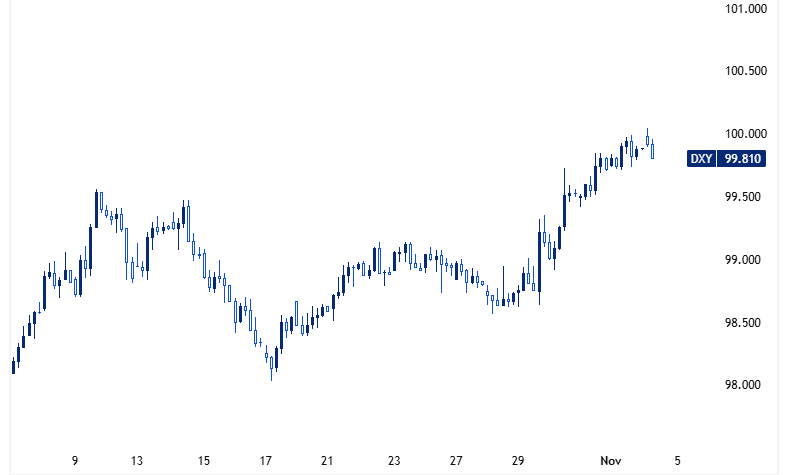
Source: DXY Chart / TradingView
Fed Governor Lisa Cook noted growing risks in the job market, but she did not support a December cut. Chicago Fed President Austan Goolsbee said inflation is still his main worry. Their comments came after Powell warned that another cut in December is uncertain. ⁽¹⁾
Traders are pricing in a 65% chance of a rate cut in December, down from 94% just a week ago. ⁽²⁾
Markets will now look at private sources of data releases like the ADP employment change, which is forecasted at 24k and set to be released on Wednesday, November 5th.
Aussie Dollar Extends Declines, Cautious RBA
The Australian dollar extended declines for five straight sessions after the Reserve Bank of Australia kept rates unchanged at 3.6% amid persistent inflation and economic uncertainty. ⁽³⁾
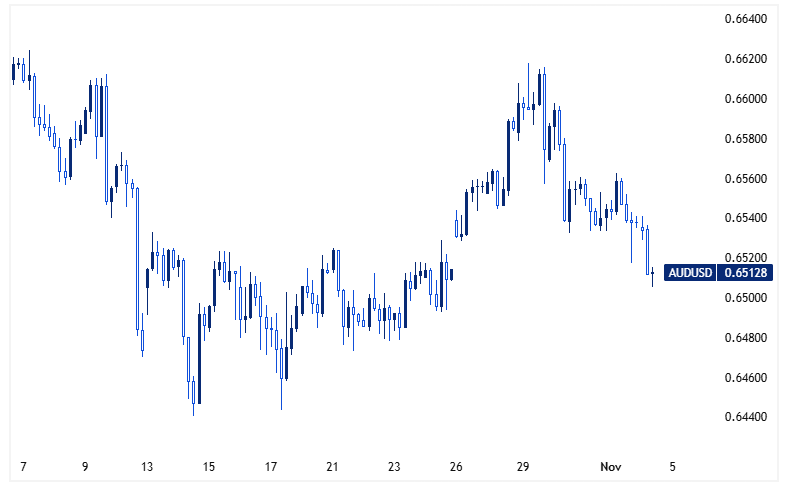
Source: AUD/USD Chart / TradingView
RBA Governor Michele Bullock has been signaling a cautious approach in previous meetings, noting that any monetary policy changes would depend on incoming data. Q3 CPI came in higher than expected and above the target range of 2-3%, which complicates the RBA’s outlook and makes them more cautious on interest rates. ⁽⁴⁾
The RBA also noted that global uncertainties, such as trade risks, could slow demand and weaken Australia’s labor market.
Sterling and Euro Remain Pressured
The pound sterling remains pressured ahead of the Bank of England’s rate decision on Thursday, where the central bank is expected to hold rates at 4%. The latest manufacturing PMI data showed contraction in October at 49.7, indicating a decline in economic activity in the manufacturing sector for an eighth straight month. ⁽⁵⁾
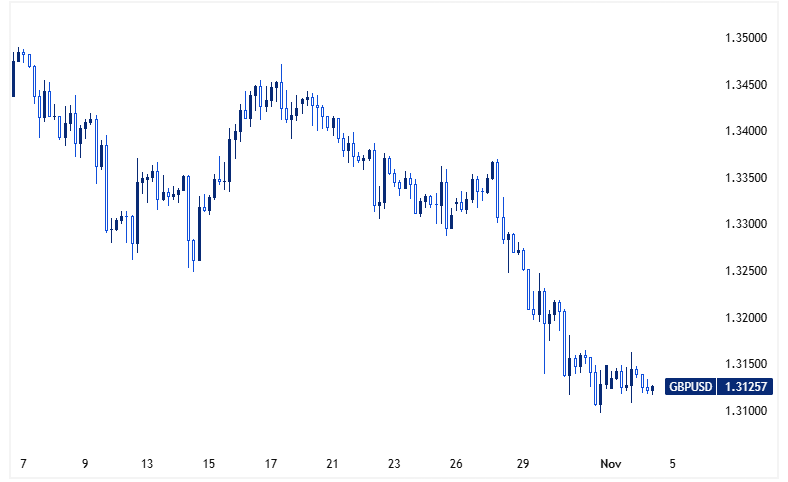
Source: GBP/USD Chart / TradingView
The BOE might strike a cautious tone in its guidance as the upcoming UK Autumn Budget on November 26th could impact the outlook.
The euro remained pressured despite the ECB’s rate hold last week, noting that the inflation outlook was broadly stable as the economy continues to grow. Eurozone inflation remains slightly above the ECB’s 2% target, while Q3 GDP growth exceeded expectations, with business sentiment also showing improvement. ⁽⁶⁾
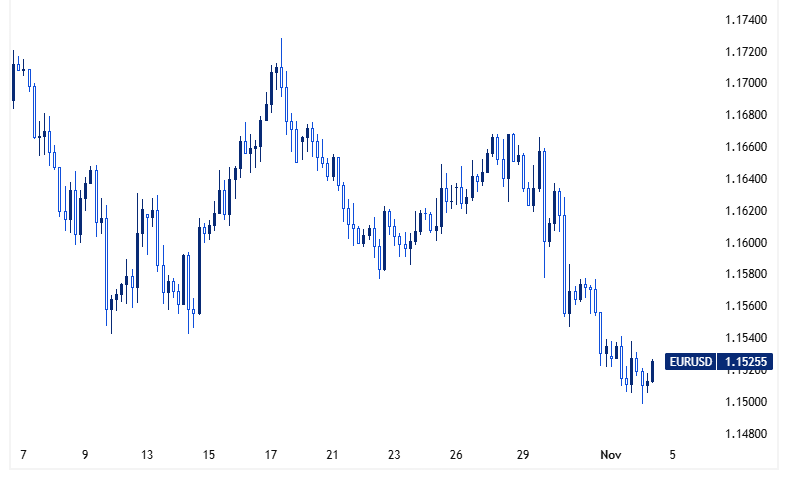
Source: EUR/USD Chart / TradingView
Japanese Yen Rises on Finance Minister’s Comments
The Japanese yen rebounded from nine-month lows after Japan’s Finance Minister Katayama stated that authorities are monitoring the volatility in the FX markets. Katayama also suggested that the fair value for the yen was around 120-130. ⁽⁷⁾
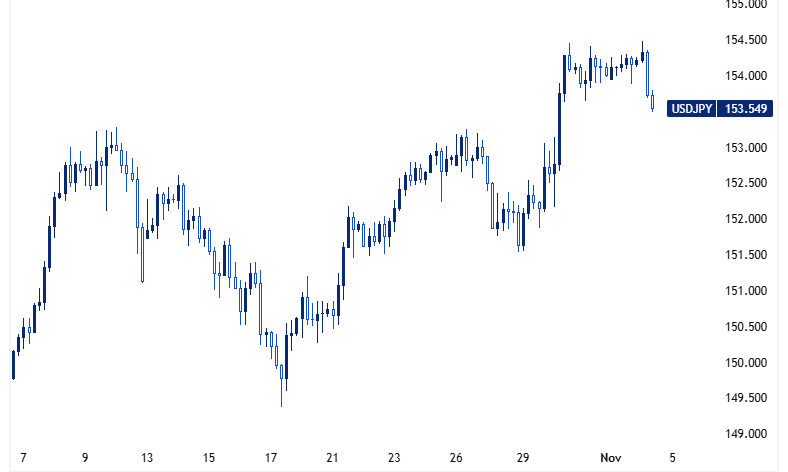
Source: USD/JPY Chart / TradingView
Prime Minister Sanae Takaichi said Japan has yet to achieve sustainable inflation supported by wage growth, signaling caution toward further rate hikes. She told parliament that consumer inflation remains near 3% due to elevated food prices, but noted the country is still halfway to achieving stable price growth driven by stronger wages. ⁽⁸⁾
Gold and Oil Prices Fall
Gold prices dropped below $4,000 per ounce. Lower rate cut hopes reduced safe-haven demand, while last week’s US-China meeting eased tensions.
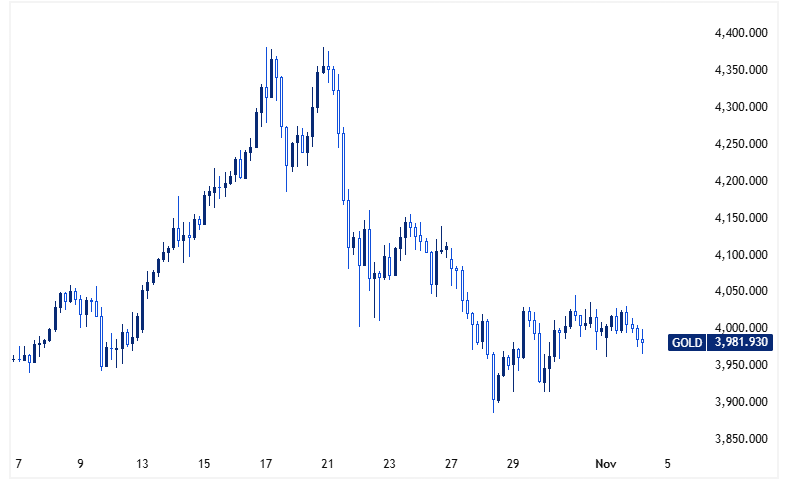
Source: Gold Chart / TradingView
Oil snapped four days of gains after OPEC+ announced it would raise output modestly in December, but halt increases from January to March 2026 due to seasonal demand. A surplus is expected next year, and risks remain from US sanctions on Russian oil and attacks on infrastructure. ⁽⁹⁾
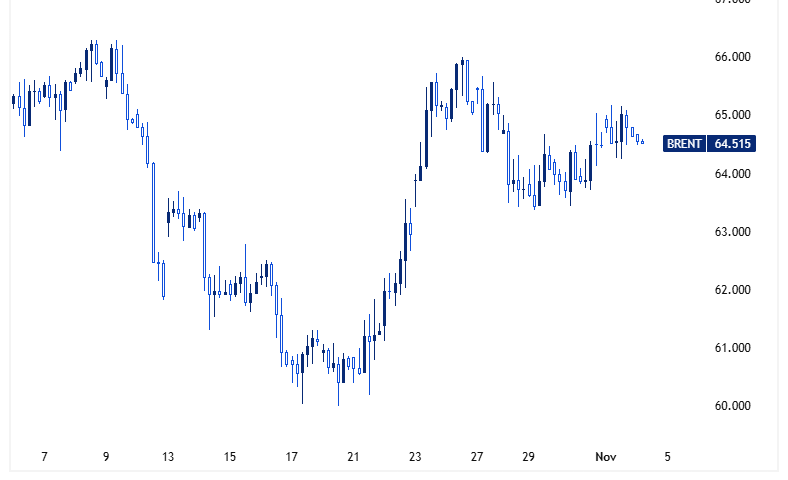
Source: Brent Crude Oil Chart / TradingView


