

 ar
- The yen reached a seven-month high as markets have nearly fully priced in a September BOJ rate hike following hawkish signals from Japanese policymakers and growing US support for tighter policy.
- Rising Japanese bond yields could draw more domestic capital home, supporting the yen while reducing Japanese demand for overseas government debt.
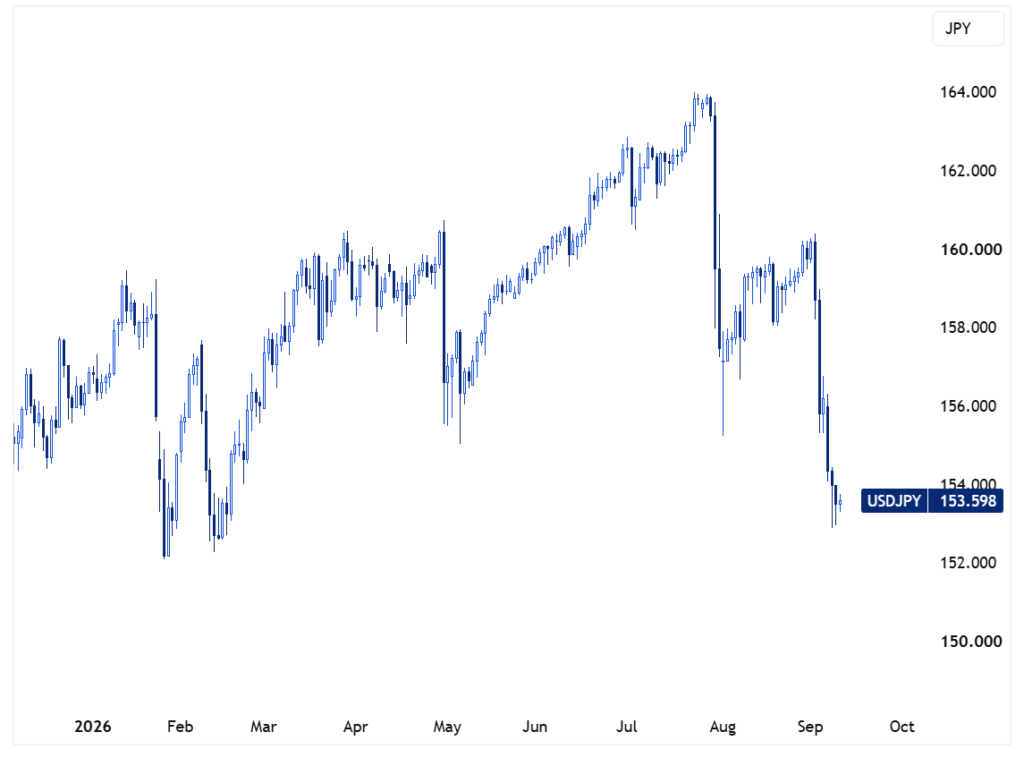
After months of persistent weakness, the Japanese yen may be approaching an important turning point, having recently climbed to a seven-month high against the dollar at 153.
The recovery wasn’t only supported by rate hike bets alone, but by a joint intervention from Japan and the US, conducting an operation worth ¥15.4 trillion or $96.4 billion in August after the yen weakened to 40-year lows around ¥164 per dollar.
The question now is whether its recovery represents a lasting change in direction or a temporary rally before the BOJ’s widely expected decision next week, when policymakers could raise the policy rate to 1.25%.
A Rate Hike Comes Into Focus
Bank of Japan Governor Kazuo Ueda said the central bank would debate whether to raise interest rates at its September 17-18 meeting, while assessing whether inflation risks were increasing.
Ueda noted that the BOJ has hiked five times and must weigh the effect of these rate changes on the economy, even as it stays alert to prices moving above target. His comments were delivered after the G20 finance leaders’ meeting in the US and where his final scheduled remarks before the BOJ entered its pre-meeting blackout period. ⁽¹⁾
BOJ board member Hajime Takata went further, calling for a more flexible approach to tightening rather than a fixed schedule, warning that inflation could accelerate if the central bank moves too slowly. ⁽²⁾

Adding to the hawkish stance, BOJ board member Kazuyuki Masu warned that the central bank might eventually need to raise interest rates rapidly if inflation accelerates, noting that underlying inflation is now very close to the BOJ’s 2% target while financial conditions remain loose. ⁽³⁾
Washington Adds Pressure
Support for tighter policy is not coming only from Tokyo. US Treasury Secretary Scott Bessent met with Ueda during the G20 summit and expressed strong support for “decisive” monetary measures to address the yen’s weakness.
Bessent reinforced that message on Tuesday by warning traders against betting on renewed yen weakness. “I am the house now,” he said, arguing that Washington’s involvement in the earlier joint intervention gave him insight into how the BOJ and Japanese policymakers might respond in the future. The unusually direct warning reinforced expectations that the US remains committed to supporting the yen. ⁽⁴⁾
Japan’s Finance Minister Satsuki Katayama took a more measured position, focusing on currency stability and continued coordination with the US Treasury to maintain orderly market movements.
Bond Yields Send a Signal
Beyond the currency, Japan’s bond market is also flashing signs of change.
The two-year Japanese government bond yield jumped to 1.83%, reaching its highest since 1995, as traders moved closer to fully pricing in a quarter-point hike this month. The narrowing yield gap with the US reduces the reward from borrowing in yen to invest in higher-yielding dollar assets, providing further support for the Japanese currency.
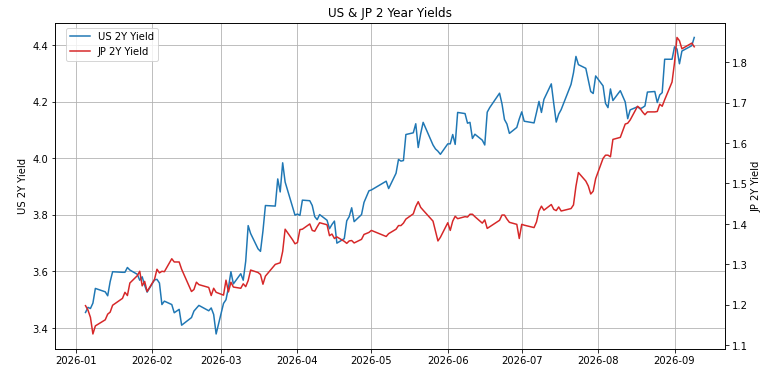
The shift extends beyond short-term bonds. Japan’s 10-year government bond yield touched 3% last week for the first time since 1996, more than tripling over the past two years. Higher long-term yields make JGBs more competitive with currency-hedged foreign bonds and could weaken Japanese demand for overseas debt. ⁽⁵⁾
Japanese investors are major holders of US, French and Australian government bonds, even a gradual reduction in overseas purchases could affect global yields. Rising fiscal spending under Prime Minister Sanae Takaichi has also contributed to upward pressure on JGB yields. ⁽⁶⁾
Volatile Week Ahead
With inflation risks rising, US support for tighter Japanese policy growing, the Fed’s decision approaching and JGB yields at multi-decade highs, the BOJ faces a pivotal decision next week.
However, with a September hike already nearly fully priced in, the decision alone may not be enough to extend the yen’s rally.
The currency’s next move will depend on whether Ueda signals further tightening, what the Fed decides at its own meeting and whether rising Japanese yields begin drawing more capital home.


