

 ar

Markets head into the week balancing geopolitical risks, a heavy slate of labor market data, and key corporate earnings, all while central banks continue to navigate an uncertain inflation backdrop.
Oil remains in the spotlight as tensions persist, while upcoming US employment data could reshape expectations for monetary policy. At the same time, the Reserve Bank of Australia’s meeting and earnings from key tech names add another layer to the outlook.
Here’s what to watch in the days ahead.
Calendar Events
- Reserve Bank of Australia Interest Rate Decision – May 5
- US ISM Services – May 5
- JOLTS Job Openings – May 5
- New Zealand Unemployment Rate – May 6
- ADP Employment Change – May 6
- Non-farm Payrolls – May 8
- Unemployment Rate – May 8
- Average Hourly Earnings – May 8
- Canada Unemployment Rate – May 8
Top Things to Watch
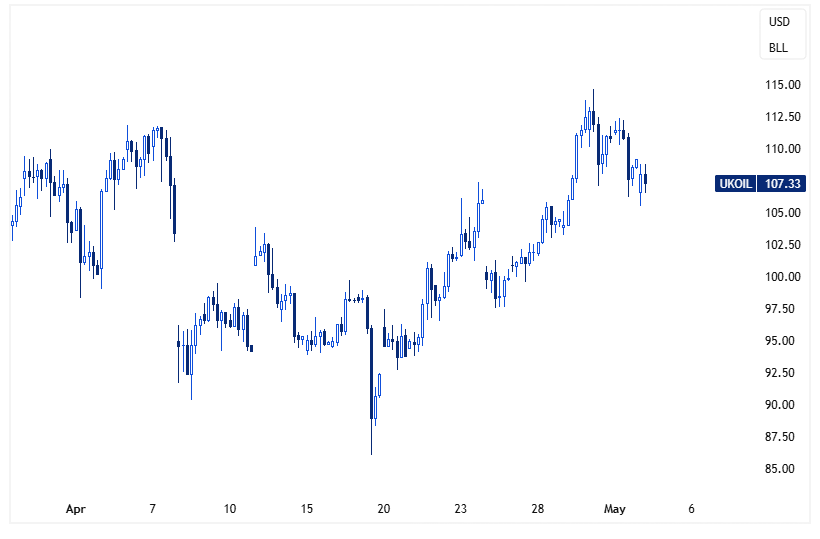
Oil & the Strait of Hormuz — This Is No Longer Just a Risk Premium
This has moved well beyond geopolitical uncertainty. The Strait of Hormuz is still closed since late February, with Brent climbing to $126 per barrel last week, reaching 2022 highs.
Tensions between the US and Iran remain elevated as the US plans to resume military action, while the blockade remains in place until a nuclear deal is reached.
Global supply is expected to fall this year, according to the US Energy Information Administration. For markets, this is a simultaneous growth and inflation shock, and central banks have no clean playbook for it.
US Labor Market — Looking Beyond a Single Print
April’s job payrolls report is due on Friday after two wildly inconsistent months. February shed 92K jobs, then March bounced back with 178K, nearly three times the 60K consensus.
The problem is inconsistency and uncertainty, with most of March’s gains driven by healthcare workers returning from strike action, making the underlying trend harder to interpret than the headline suggests.
Markets will also be watching JOLTS and ADP earlier in the week to assess the situation before Friday’s report is released.
USD/JPY Shock Move — Intervention Risk Is Back on the Table
USD/JPY saw a sharp reversal after briefly pushing above the psychologically important 160 level, with the yen staging its biggest one-day rally in more than three years.
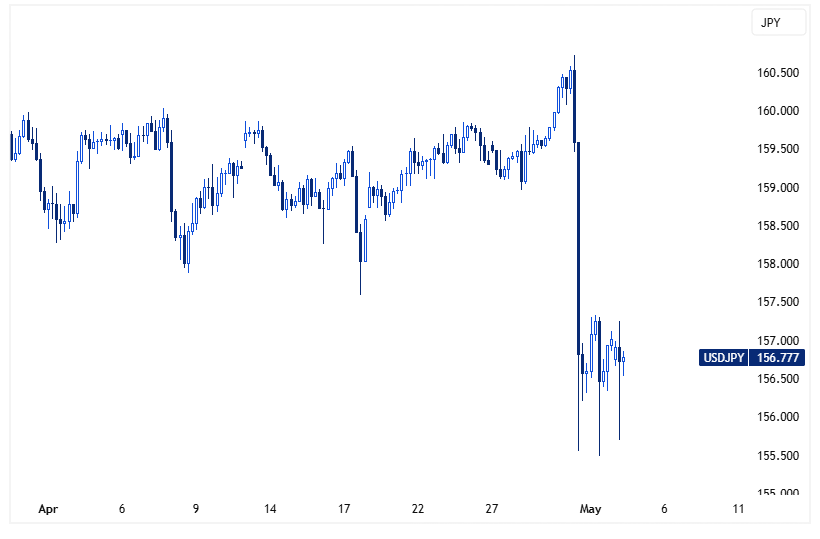
The move triggered strong market speculation that Japanese authorities stepped in to support the currency, especially after officials warned that “decisive action” was approaching.
For traders, the key question now is whether this was a one-off reset or the start of a more sustained move lower in USD/JPY.
Without a hawkish shift from the Bank of Japan or softer US yields, rallies in the pair may still attract buyers, but volatility is likely to remain elevated near these levels.
RBA’s Third Hike on the Table
The Reserve Bank of Australia already hiked interest rates by 25 basis points in March in a 5-4 vote, and Tuesday’s meeting won’t offer much relief.
Australia’s inflation hit 4.6% in March, one of its highest readings in three years, and markets are currently pricing a 62% chance of another hike to 4.35%.
The AUD is caught between opposing forces: a rate hike could support it, but concerns about global growth may weigh on it. Governor Bullock’s tone at the press conference could matter just as much as the decision itself.
AMD and Palantir Earnings – AI Theme Faces Revenue Test
Palantir reports on Monday, followed by AMD on Tuesday, two back-to-back earnings that could shape sentiment around the AI trade. Palantir needs to deliver strong results after recent weakness, leaving little room for disappointment.
Meanwhile, AMD will be closely watched for updates on its data center business and AI partnerships. Together, these releases will help determine whether enterprise AI spending is still gaining momentum or starting to slow.


