

 ar

- The US economy is showing real strength, with services growing at their fastest pace since 2022 and hiring rebounding sharply in February.
- Escalating conflict in the Middle East pushed oil prices higher after the survey closed, threatening to reignite inflation and delay Federal Reserve rate cuts.
- Job growth is concentrated in just a few sectors, and businesses are still paying higher prices, leaving the outlook promising but fragile.
The US services sector just surprised to the upside, printing its strongest reading in nearly three years.
However, the survey was taken before oil jumped and Middle East tensions unsettled markets, meaning the data captures strength before the latest wave of uncertainty.
The Services Sector Is Quietly Booming
The Institute for Supply Management’s services index hit 56.1 in February, up from 53.8 in January and well above the 53.5 analysts had expected. That’s the highest reading since July 2022. ⁽¹⁾
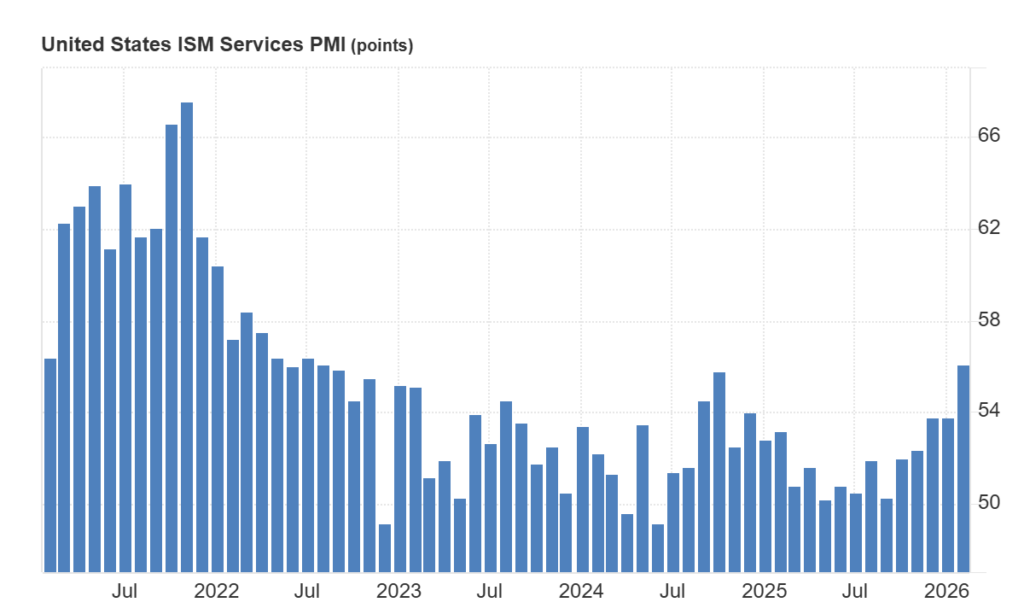
Because services account for more than two-thirds of the US economy, this data matters. New orders surged to 58.6, their highest level since September 2024, signaling that businesses aren’t just holding steady, they’re actively buying more. ⁽²⁾
The Middle East War Is a Concern
Here’s where things get complicated. The ISM survey wrapped up before the US and Israel launched attacks on Iran, an event that sent oil prices higher and rattled global financial markets. ⁽³⁾
Economists at Wells Fargo estimate that a sustained 10% rise in oil prices could add roughly 0.3% to inflation across the second and third quarters, not a catastrophe on its own, but enough for the Fed to reconsider its policy path. With producer inflation already running hotter than expected, the window for rate cuts is narrowing. ⁽⁴⁾
Prices Remain Stubbornly High
Businesses are still paying a lot for what they need. The ISM’s prices index came in at 63.0 in February, slightly cooler than January’s 66.6, but still elevated.
In manufacturing, steel and aluminum costs are pushing factory prices sharply higher, compounded by the bite of tariffs on imported goods. ⁽⁵⁾
The Supreme Court recently struck down President Trump’s broad emergency tariffs, but Trump responded by implementing a 10% global tariff for 150 days, with plans to raise it to 15%.
Hiring Rebounded, But Unevenly
Private employers added 63,000 jobs in February, according to ADP, a strong recovery from January’s revised figure of just 11,000.
That sounds encouraging, and in some ways it is. But dig into the numbers and the picture gets more complicated. Education and health services accounted for 58,000 of those jobs, and construction added another 19,000. ⁽⁶⁾
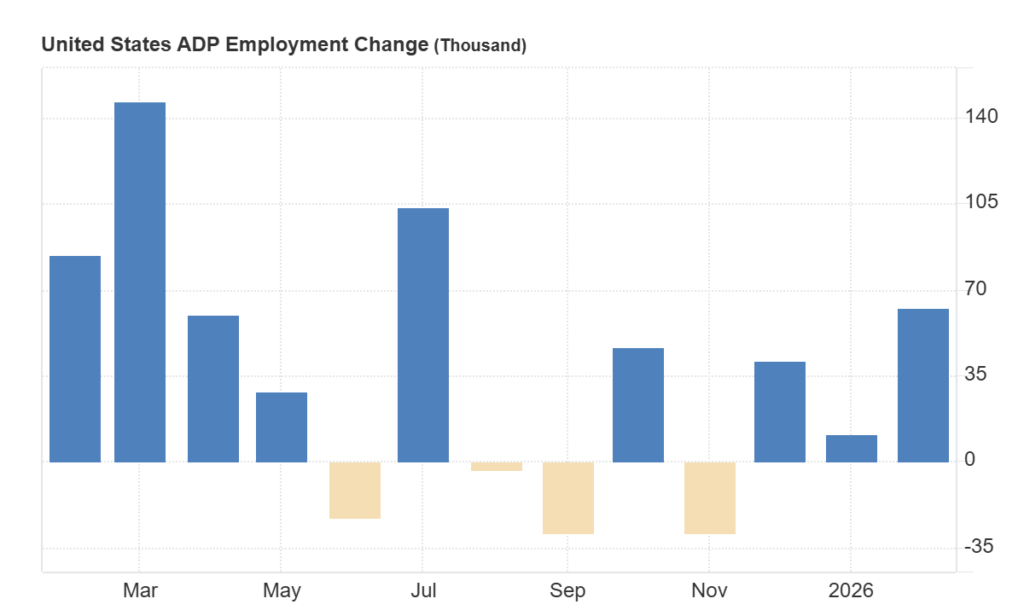
Nearly every other sector was flat or shrinking. Professional and business services cut 30,000 positions, and manufacturing, despite being the centerpiece of the administration’s tariff strategy, shed 5,000 jobs. Workers who stayed in their roles saw wages grow 4.5%, while job-switchers earned 6.3% more, a slight slowdown from the month before. ⁽⁷⁾
What to Watch Next
The Fed is watching the situation closely. Officials say the labor market appears to be stabilizing, but they are also worried that higher oil prices could push inflation back up.
Markets now expect the next interest rate cut to come no earlier than July, with the chances of a second cut this year also falling.
Tomorrow’s official jobs report from the Bureau of Labor Statistics is expected to show an increase of around 53K jobs in February, with the unemployment rate holding steady at 4.3%. ⁽⁸⁾


