

 ar
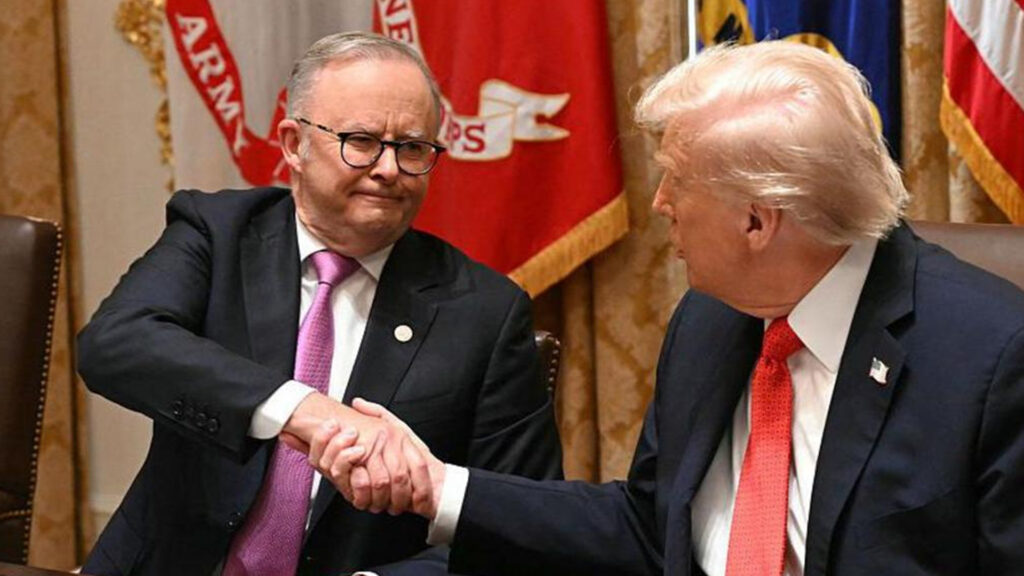
- President Trump and Prime Minister Albanese reached an agreement of $6 billion to mine and process rare earth materials, reducing reliance on China
- Aimed at countering China’s dominance in rare earth elements, the deal might complicate trading ties between Australia and China but marks a major step toward securing Western mineral independence.
A landmark agreement between the US and Australia was signed at the White House, marking a major step toward strengthening economic and strategic ties between the two nations.
Signed by US President Donald Trump and Australian Prime Minister Anthony Albanese, the deal centers on critical minerals and rare earth elements, seen as essential materials for modern technology and defense industries, and aims to secure supply chains across the Pacific.
Deepening its cooperation with Australia, Washington seeks to reduce its dependence on Beijing and counter China’s dominance in the global rare earths market.
The deal is also part of Trump’s strategy to gain access to rare earth elements that are important for defense materials, semiconductors and electric vehicles.
What was in the Agreement?
The US-Australia deal aims to focus on mining and processing critical rare earth elements. Both countries will invest $6 billion over six months. Prime Minister Albanese has stated that there are plans for projects worth $8.5 billion.
The White House subsequently issued a fact sheet that said the countries would invest more than $3 billion in critical mineral projects over the next six months. It described the agreement as a “framework.” ⁽¹⁾
The US Export-Import Bank announced $2.2 billion in letters of interest in Australian firms involved in rare earth, lithium and nickel. The partnership aims to build supply chains for defense, tech and electric vehicles. The agreement sets a price floor for minerals and cuts permitting times. It includes mapping resources and restricts sales on national security grounds. ⁽²⁾
Specific Projects and Countering China’s Dominance
The Pentagon also plans to build a gallium (type of metal) refinery in Western Australia with 100 tons per year being extracted. This factor follows China’s export block on gallium last December. The US is willing to fund the process in Australia, including a joint venture in Japan. ⁽³⁾
Trump said that there will be lots of minerals a year from now as the deal targets deposits worth $53 billion, which could support the re-industrialization of US manufacturing to counter China’s dominance. ⁽⁴⁾
China currently controls around 70% of rare earth mining globally and processes roughly 90% of these materials. China’s dominance in rare earth elements has left US companies vulnerable to trade risks and recent restrictions imposed by China in response to Trump’s latest tariff threat. The deal is intended to mitigate such risks by ensuring a more secure supply chain for essential minerals. ⁽⁵⁾
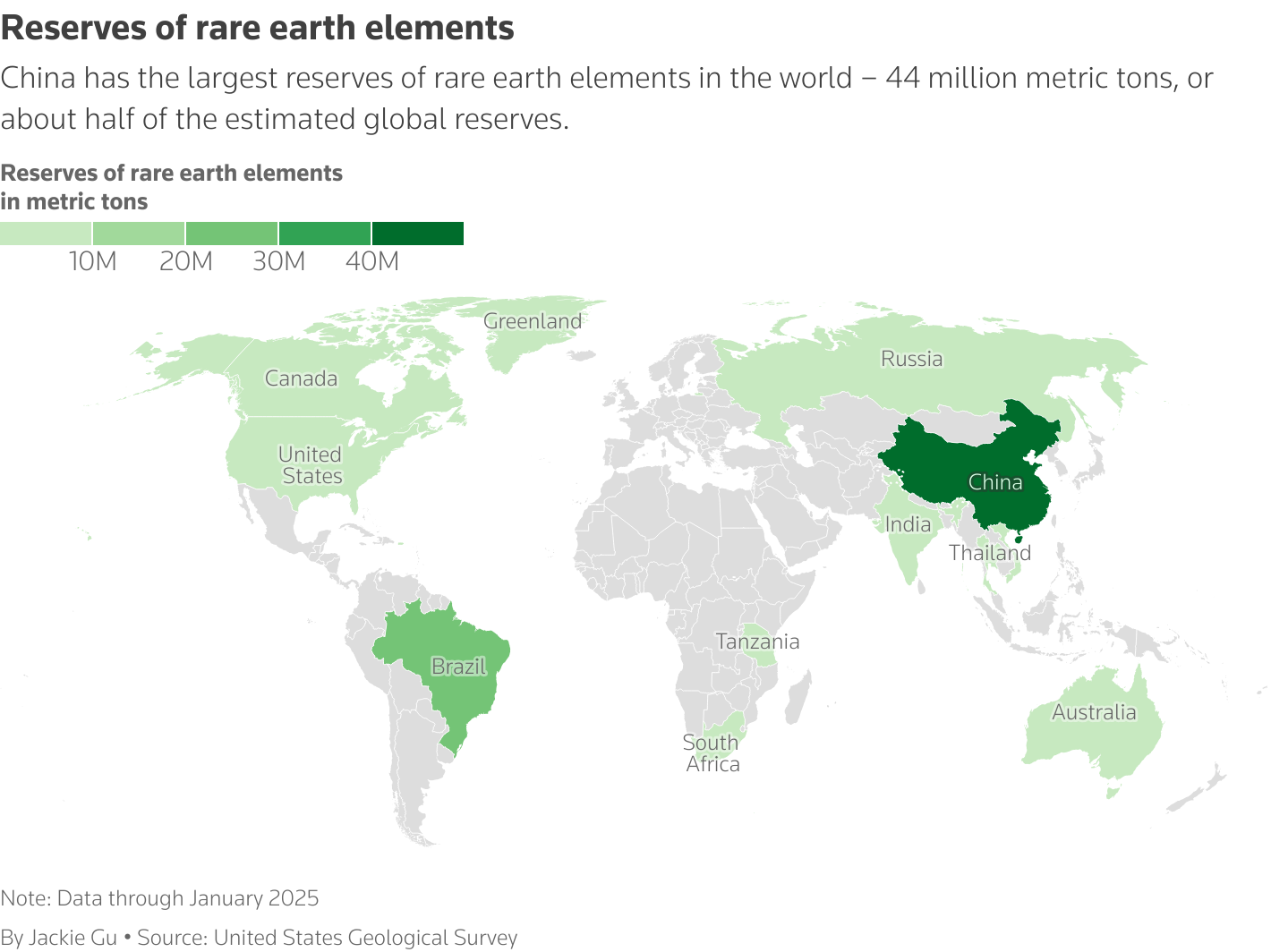
Source: Reuters Chart of Reserves of Rare Earth Elements
Looking Ahead
Despite the hype coming from the deal, the White House has not yet released more details about the agreement, due to its sensitive nature and geopolitical / trade issues involved.
While Australia is a major source of critical minerals, it still depends on China alongside the US for processing, adding complexity to efforts to reduce reliance on Beijing. China is still Australia’s largest trading partner, and this deal could complicate strategic ties between the two trading partners.
The US-Australia partnership signals a new phase in global competition over critical minerals, reflecting both countries’ determination to secure supply chains independent of China.


