

 ar
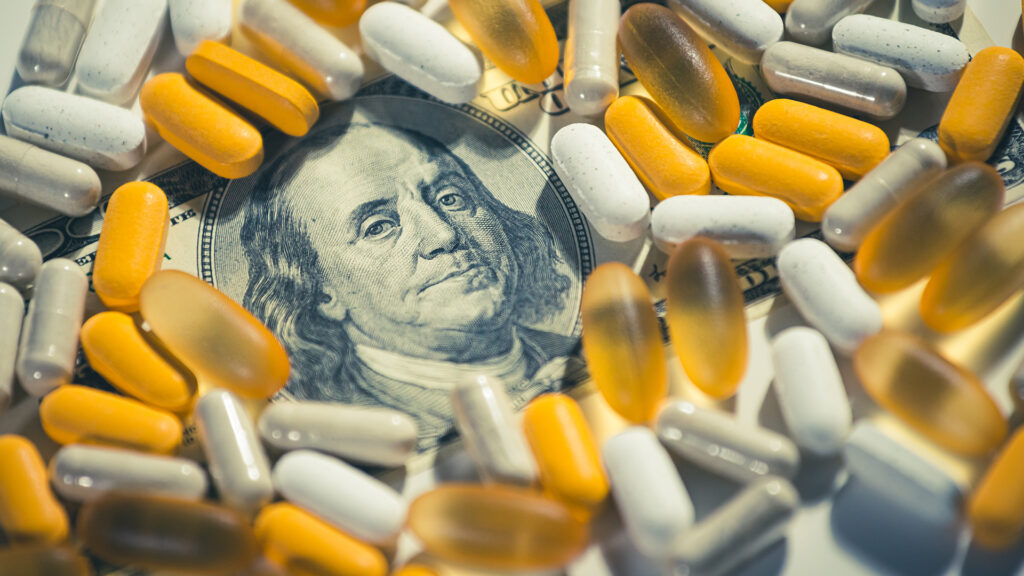
US President Trump has made a new announcement on tariffs last week, now imposing a 100% tariff rate on imported pharmaceuticals to be set in motion on October 1st. Trump’s aim here is to bring back drug manufacturing to the US to boost jobs and national security.
Pharma companies building plants in the US will be exempt from tariffs. But the announcement has still brought concerns over higher drug prices and disrupted supply chains.
The plan is part of Trump’s strategy to support US manufacturing.
Tariff Breakdown
Drugs that are marketed under trade names and covered by patents or other intellectual property rights are the main targets from the pharmaceutical tariffs. Trump stated on Truth Social that no tariff will be applied if a company is building a manufacturing plant in the US. Companies announcing new US plants can gain exemptions after a review and approval process from the Department of Commerce. ⁽¹⁾
The 100% levy is lower than the 250% tariff rate Trump floated in August. He initially proposed a small tariff, increasing to 150% and then 250% within a year or two.
Risks to the Drug Supply Chain
US pharmaceutical imports have surged, reaching $213 billion in 2024, nearly triple the amount from a decade ago. In April, the Trump administration launched an investigation to assess how these imports impact national security. This authority was previously used for tariffs on cars and aluminum, now is targeting pharmaceuticals. ⁽²⁾
Pharma companies warn that tariffs could raise costs and disrupt supply chains. Many rely on global networks for production steps, and tariffs could hurt this system. In May, Eli Lilly told the government that tariffs would divert funds from innovation and reshoring efforts to cover the new costs. This was among hundreds of comments submitted to the Department of Commerce during its investigation on pharmaceutical companies. ⁽³⁾
Industry Efforts to Shift Manufacturing
Trump’s tariffs aim to encourage drugmakers to move their operations to the US, where domestic manufacturing has declined over decades. Companies like Eli Lilly, Johnson & Johnson, and AbbVie are already investing in US facilities. In March, J&J announced a $55 billion plan for US manufacturing, research, and development over four years. Eli Lilly recently committed $6.5 billion for a plant in Houston and $5 billion for one near Richmond, Virginia. ⁽⁴⁾
Broader Tariff Policy and Trade Deals
This tariff is part of Trump’s evolving strategy to boost US manufacturing. On Wednesday, the Department of Commerce launched national security probes into imports of robotics, industrial machinery, medical devices, and personal protective equipment like masks and syringes. ⁽⁵⁾
The European Union and Japan, however, secured deals limiting their exposure. A White House official clarified that the pharma tariffs won’t apply to countries with drug provisions in trade agreements. EU drug tariffs are at 15%, and Japan’s rates align with its pact. Britain’s pharma firms, like GlaxoSmithKline, may face the full 100% duty, as their deal lacks specific drug provisions, despite a $30 billion US investment pledge. ⁽⁶⁾


