

 ar
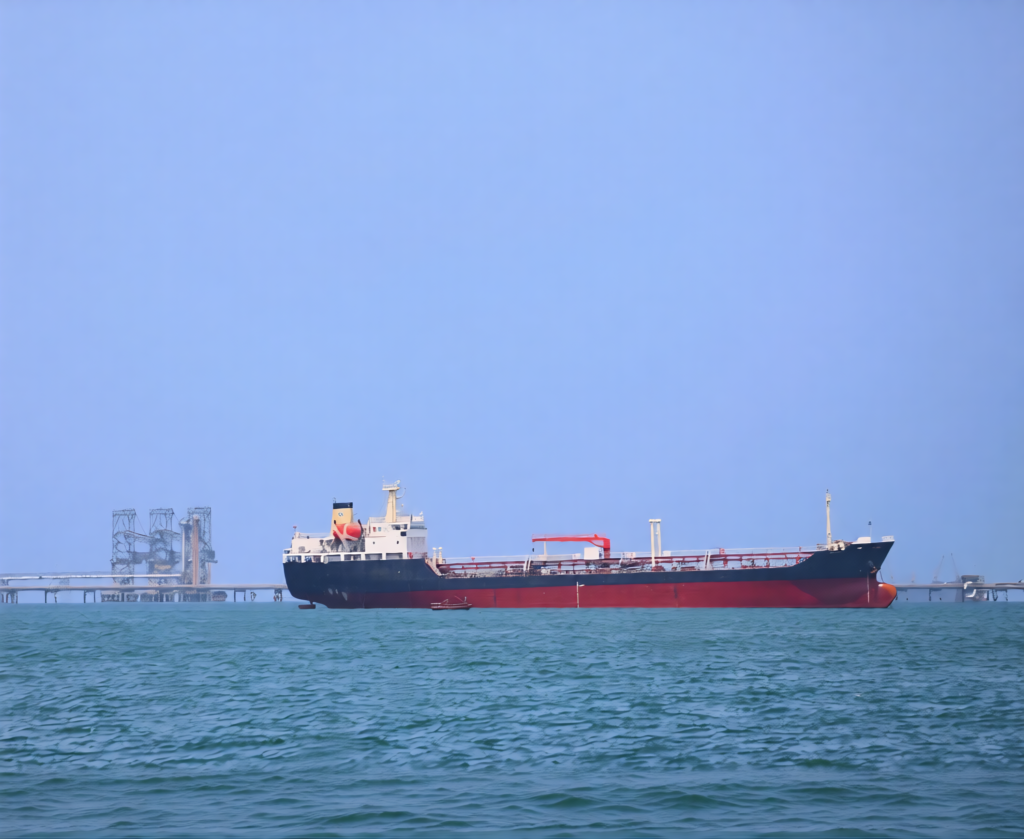
- Brent and WTI climbed $100 as renewed tensions in the Middle East increased supply risks.
- Disruption around Bab el-Mandeb has put Saudi Arabia’s alternative Red Sea export route under pressure, leaving two export corridors in question instead of one.
Oil’s return above $100 marks an important shift for financial markets.
At these levels, higher energy costs could intensify inflation, pressure consumers and complicate upcoming interest-rate decisions next week.
Prices Climb on Supply Fears
Brent crude and WTI both gained 4%, rising $105 and $100 respectively yesterday, as both benchmarks extended their rallies from late August, when renewed fighting weakened hopes for diplomacy between the US and Iran.
Traffic through the Strait of Hormuz has slowed sharply, with only seven vessels passing through on Wednesday, compared with the ten-day average. ⁽¹⁾
Saudi Arabia’s Alternative Oil Route Faces New Risks
With traffic through the Strait of Hormuz sharply reduced, Saudi Arabia has routed more crude through its Red Sea port of Yanbu. Loadings have averaged more than 4 million barrels per day since June, over four times the level recorded during the same period last year. ⁽²⁾
However, oil shipped from Yanbu to Asian markets must pass through Bab el-Mandeb. Rising security risks along Yemen’s Red Sea coast could disrupt this route, leaving the market focused on two critical export routes rather than one. ⁽³⁾
Trump’s Timeline Faces Doubt
President Trump expects the conflict to end immediately after the November midterm elections, claiming that Iran is trying to influence the vote. However, he has previously set deadlines that passed without an agreement.
The president also renewed threats to strike Pickaxe Mountain, a fortified site linked to Iran’s nuclear program. Iran said it attacked ten ships near the Strait of Hormuz this week after US forces struck five Iranian oil tankers, and its Revolutionary Guard has warned of further retaliation. ⁽⁴⁾
Demand Outlook Mixed as China Watches Closely
Despite the supply disruptions, OPEC has lowered its 2026 global oil demand growth forecast to 380,000 barrels per day, marking its fifth consecutive downward revision. ⁽⁵⁾
Still, the group raised its 2027 demand forecast and continues to expect a smaller hit to consumption than other forecasters, including the International Energy Agency. ⁽⁶⁾
Much of the rally’s staying power may depend on China, the world’s top oil importer. Purchases by Chinese refiners have picked up in recent weeks.
However, the increase may reflect inventory rebuilding and stronger refining margins rather than a sustained recovery in domestic consumption. ⁽⁷⁾
A slowdown in Chinese purchases, on the other hand, could ease some of the pressure building in the market.
With fighting spreading across both the Persian Gulf and the Red Sea, traders are bracing for continued volatility as long as diplomatic efforts remain stalled.
Rate Path Clouded by Rising Oil
Wednesday’s FOMC now carries the weight. With oil above $100, policymakers are now facing fresh inflation pressure just as some officials had expected.
Markets are now pricing in nearly a 70% chance of a rate hike next week after yesterday’s PPI data and Warsh’s Jackson Hole speech reinforced the hawkish tone. ⁽⁸⁾
Fed Chair Kevin Warsh’s post-decision conference and economic projections will be heavily watched for any statements related to energy prices and monetary policy outlook.


