

 ar

- European Central Bank is expected to keep rates unchanged on Thursday as it monitors the Eurozone’s economic performance.
- Inflation remains near target, but the ECB is eyeing risks from tariffs and other regional challenges.
- Renewed trade developments and stronger euro continue to pressure inflation due to lower exports and weak growth.
- Policymakers remain cautious but open to future rate cuts if weakness deepens.
The European Central Bank (ECB) will meet and announce its interest rate decision on Thursday at 17:15 (GMT+4).
The central bank appears set on keeping rates on hold at 2.15% as they evaluate the Eurozone’s economy, which continues to face pressure from tariffs and a weak outlook.
The ECB remains focused on inflation as it remains close to their target. Upcoming data releases, including GDP figures and business surveys, will provide a clearer picture of the economy’s performance.
Banks Tighten Credit Access
Eurozone banks have tightened access to corporate credit in Q3 due to fears over the economic outlook and tariffs. Lending has slowed this year as the ECB remained cautious on interest rates. Meanwhile tariff uncertainty could lead to more weakness in economic growth. ⁽¹⁾
Perceived risks to the outlook made credit standards tighter. Banks cited high geopolitical uncertainty and trade risks.
Germany saw much of the deterioration. Credit standards stayed the same in France, Italy, and Spain. Corporate loan demand grew but was below expectations and weak overall. ⁽²⁾
Upcoming Economic Data and ECB Meeting
Thursday is filled with high impact economic data from the Eurozone, which could show the impact of US tariffs on growth and inflation. GDP data for Q3 is due on Thursday alongside consumer confidence and the unemployment rate in the Eurozone. These data points will be released just before the ECB’s meeting.
The ECB will meet in Florence instead of their usual meetings in Frankfurt. Inflation remains around the ECB’s 2% target, and forecasts indicate a rebound in Q4. ⁽³⁾
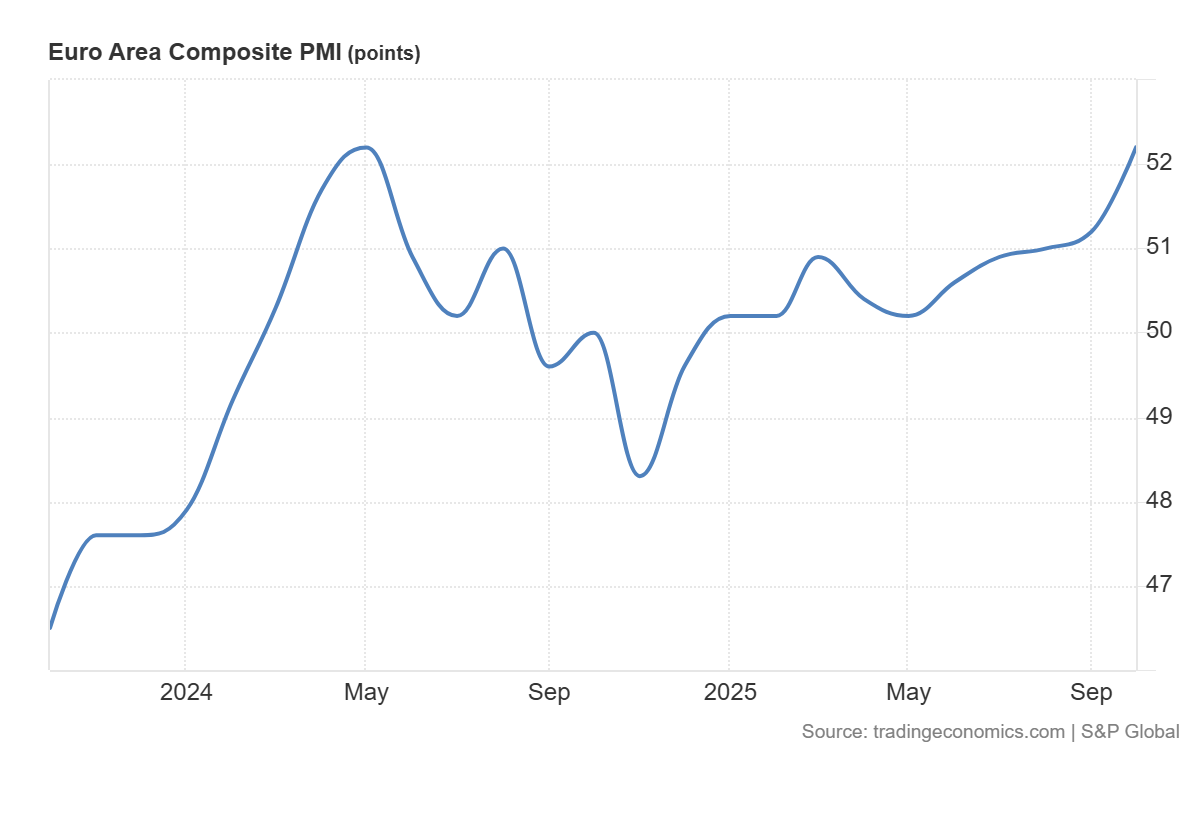
As private sector activity reached its highest levels since May 2024, PMI surveys showed optimism. With intentions to spend heavily on defense and infrastructure, Germany was the largest contributor. Political unrest caused France to show weakness in the private sector. ⁽⁴⁾
Consumer confidence in September was low despite a strong labor market. Upcoming GDP figures will show if the recovery in private consumption continues to fail. With weak domestic demand, external headwinds and low manufacturing capacity, investment may recover slowly. ⁽⁵⁾
Focus on Germany and France
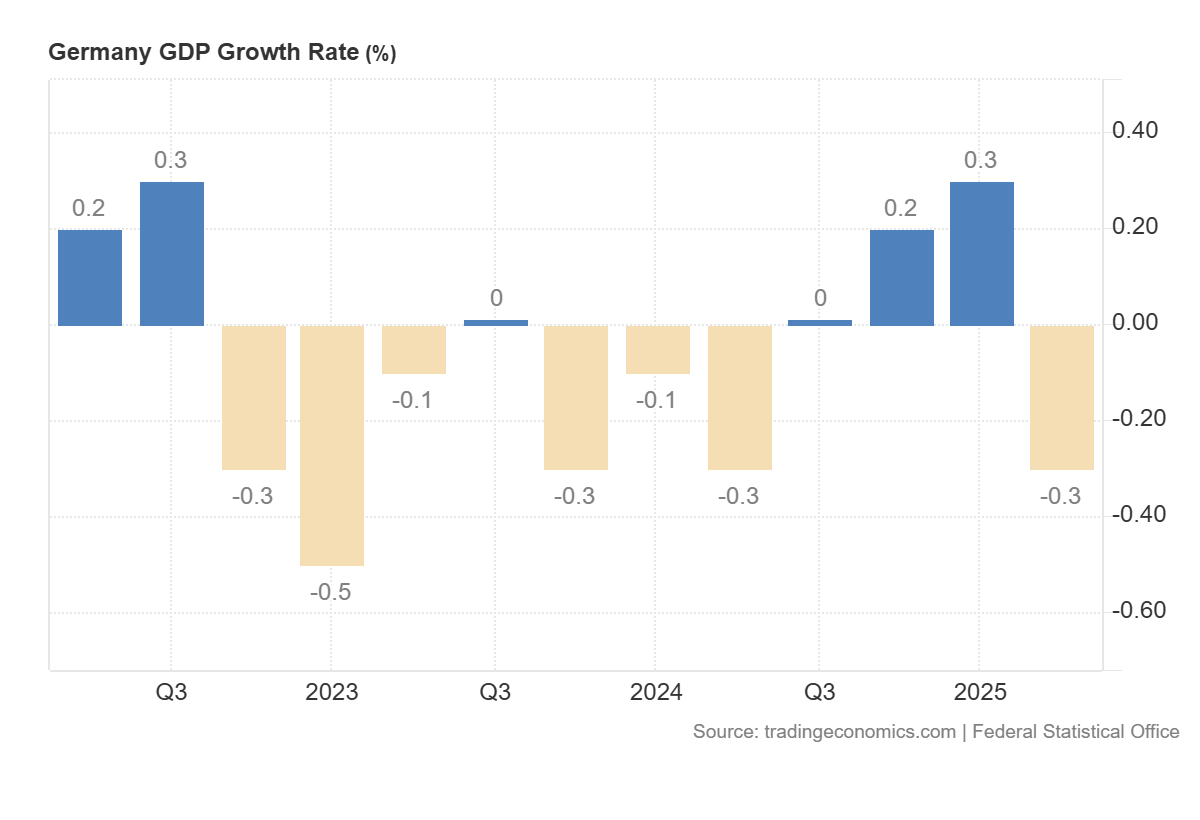
Germany, which is Europe’s largest economy, remains in the spotlight as Chancellor Merz is willing to support the German economy from a two-year economic contraction. The Bundesbank, Germany’s national bank, warns that Q3 growth could flatten. Another quarter of contraction in growth would lead to recession. ⁽⁶⁾
France faces risks from fractured politics and budget deficit disputes. It remains a major risk for the Eurozone’s outlook. However, unless the situation escalates further, France’s budget uncertainty may not impact the ECB’s decision.
Inflation Trends
Eurozone inflation came in at 2.2% in September. This was above the 2% target for the first time since April. Services prices rose, and energy prices halted declines.
The ECB sees inflation dropping to 1.7% next year and will stay below target through mid-2027. Policymakers see inflation risks as balanced, but the meeting minutes from September suggest more worry about weaker inflation. ⁽⁷⁾
A slowdown would confirm price growth is at target now.
Investors are looking for signs of weaker inflation ahead. The ECB expects inflation to decline below its target next year. But if prices continues to drop, rate cut discussions could be brought back to the table. ⁽⁸⁾
Trade Tensions and Outlook
Renewed US-China trade tensions has kept financial markets cautious after US President Trump added levies on Chinese imports. However, strong data and signs of progress towards a new trade deal could lead traders to scale back their bets. Trump hopes to close a deal this week, a reminder of why the ECB has not closed the door on further cuts. ⁽⁹⁾
ECB President Christine Lagarde will speak at a press conference shortly after the decision announcement. Lagarde will provide insights on the current economic performance and outlook in the Eurozone, and possibly discuss other factors such as tariff impacts and geopolitical developments.


