

 ar
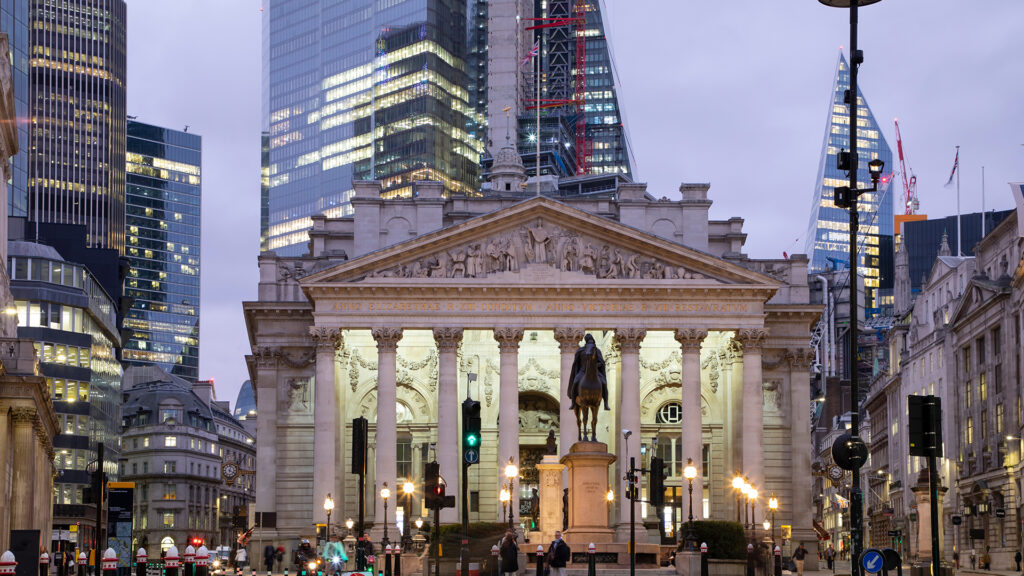
- The Bank of England will announce its rate decision on Thursday and is expected to keep rates unchanged.
- A divided MPC aims to balance high inflation and weak growth.
- Markets expect no moves this week, though traders continue to monitor signals on rate cut timelines.
- Upcoming Autumn Budget could impact future policy decisions, with Chancellor Reeves prioritizing debt control, public services and cost of living.
The Bank of England is set to keep rates unchanged during its meeting on Thursday due to high inflation and a soft labor market.
The upcoming Autumn Budget also adds uncertainty to the UK’s economic outlook, as markets see a smaller chance of a rate cut, but speculate a larger rate cut size in 2026.
The Monetary Policy Committee remains divided on how interest rates should be set.
Uncertainty Grows Over the BOE’s Next Move
The Bank of England has cut rates five times since August 2024, each resulting in a 25-basis point cut. The latest one was in August, bringing rates down to 4%. The vote was passed narrowly with a result of 5-4 after two rounds. BOE Governor Andrew Bailey said that the pace of rate cuts is now more uncertain. ⁽¹⁾
Markets are not just pricing in a rate hold. Some participants have priced in a 34.46% probability of a 25-basis point rate cut, along with more reductions in 2026 as weak data ripples through the UK economy despite high inflation. ⁽²⁾
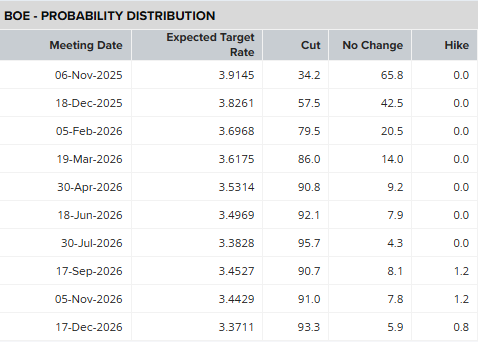
Source: BOE Interest Rate Probabilities / Eikon Refinitiv
The Monetary Policy Committee (MPC) remains divided. Some members, like Chief Economist Huw Pill and Catherine Mann, worry about inflation remaining near 4%. They fear it could hurt confidence in reaching the central bank’s 2% target. Others focus on falling employment and slower wages, as they see less pressure for pay rises. ⁽³⁾
Governor Bailey says recent wage data shows labor pressures are easing. Deputy Governor Sarah Breeden warned in September that holding rates too tight for too long hurts output and jobs. External member Megan Greene notes weaker worker bargaining but wants a slower cut pace due to high inflation. ⁽⁴⁾
Inflation and Economy Update
UK consumer price inflation is 3.8%. This is the highest among major advanced economies. It is above 2.1% in the eurozone and 3% in the US. The BOE expected 4% in September, but it stayed lower. Services inflation slowed more than predicted while wage growth is cooling. Unemployment rose to 4.8% and GDP growth remains sluggish. ⁽⁵⁾

Source: Inflation Rate Chart in the UK / Trading Economics
The UK expanded at a slower pace in Q2, coming in at 0.3% QoQ, down from Q1’s 0.7% as inflation remains high and investment has been weaker. Most importantly, the UK has been deeply impacted by recent trade tensions.
The UK economy is a trade-dependent nation, also impacted by weak demand from the Eurozone and China, which hurt exports and manufacturing. ⁽⁶⁾
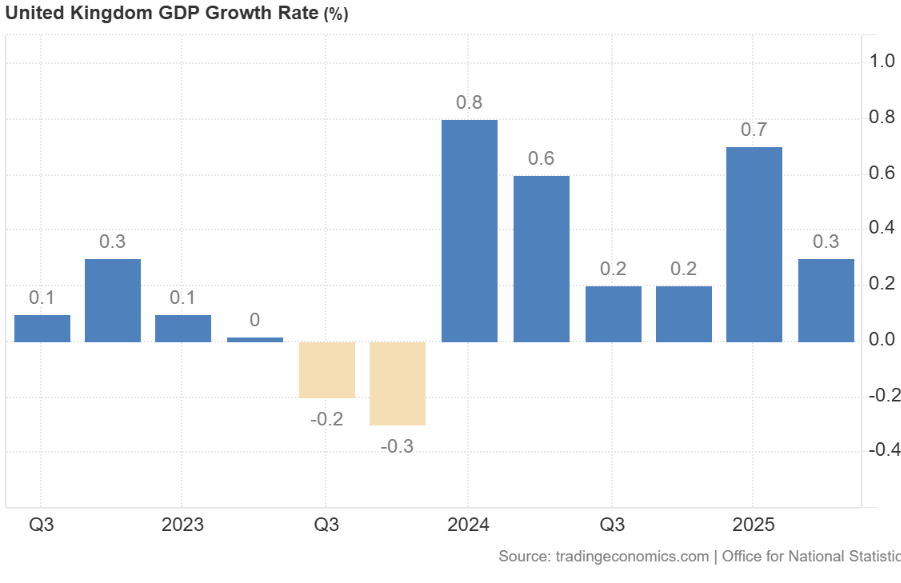
Source: GDP Growth Rate Chart in the UK / Trading Economics
Autumn Budget Impact
Chancellor Rachel Reeves will present the Autumn Budget on November 26 and is expected to include tax rises. The Labour Party pledged no increases in income tax, VAT, or employee national insurance. But the last Budget raised employer contributions by £40 billion, which are payments a company makes on benefits for its employees.
She spoke from Downing Street on Tuesday, saying that the Budget will focus on fairness, opportunity and fixing public finances. Priorities include the NHS (National Health Service), cutting debt, and the cost of living. She wants to help inflation fall and support rate cuts for growth. ⁽⁷⁾
Some MPC members may wait for Budget details before acting. A cut could come in December or early 2025 instead. The government vows to control inflation and avoid repeating last year’s price pressures. ⁽⁸⁾
Looking Ahead
Thursday’s decision will be a close one. A hold appears likely, but a split vote is still possible. Analysts expect policymakers to proceed with caution as the meeting tests the central bank’s balance between fighting inflation and supporting growth.


