

 ar
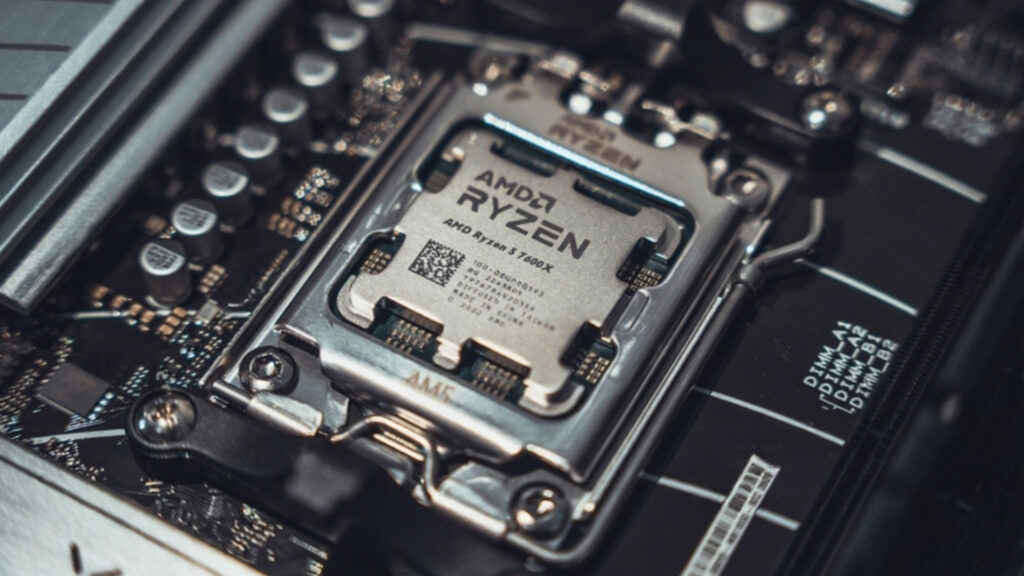
- AMD stock soars 24% after announcing partnership with OpenAI
- AMD boosts its position in AI race against Nvidia and Intel
- Partnership highlights pivotal moment for AMD’s growth
AMD stock soared on Monday after the chipmaker agreed to a deal with OpenAI.
As part of the deal, OpenAI will take a stake in the chipmaker and deploy its products by using AMD chips. The deal positions AMD as a titan in AI innovation, trying to remove some of Nvidia’s and Intel’s market share within the industry.
The deal shows how strategic innovation and leadership under AMD’s CEO Lisa Su has led the company to the forefront of global tech.
OpenAI Partnership
AMD’s stock jumped 24% on Monday after the announcement, with markets responding to the news. OpenAI will buy tens of thousands of AMD’s Instinct GPUs to support 6 gigawatts of computing capacity for AI inference, starting with a 1-gigawatt rollout in 2026. ⁽¹⁾
OpenAI will also receive around 160 million shares in AMD, amounting to a 10% stake in the chipmaker. The deal positions AMD as a core strategic partner to OpenAI, marking one of the largest GPU deployment agreements in the AI industry. ⁽²⁾
Competing with Nvidia
Nvidia remains a leader in AI and semiconductors, with a market cap of $4.5 trillion. However, AMD’s chips are cheaper, increasingly efficient and available for use, which shows some of Nvidia’s supply issues. ⁽³⁾
OpenAI might also be reducing its reliance on Nvidia, as OpenAI is also in talks with Broadcom to build custom chips for its next generation of models.
OpenAI unveiled a landmark $100 billion equity-and-supply agreement with Nvidia
on September 22, establishing the chip giant’s role in powering the next generation of OpenAI models. That arrangement combined capital investment with long-term hardware supply, though in Nvidia’s case, it was the chipmaker taking an ownership stake in OpenAI. ⁽⁴⁾
Outperforming its Main Rival Intel
AMD has been consistently gaining market share from Intel, its longtime rival, by leveraging popular GPU design for gaming consoles and CPUs for PC. While Intel struggled with its chip-fabrication business, which generated no profits, AMD spun off its manufacturing business in 2009, now known as GlobalFoundries. ⁽⁵⁾
Intel has continued to pour money into its unprofitable foundry segment even as it fell further behind more technologically advanced rivals such as Taiwan Semiconductor Manufacturing.
Looking Ahead
AMD’s rise was a difficult one, but the transformation from a $3 billion to $330 billion market cap has highlighted Lisa Su’s impact in taking the company to a new level over the years.
AMD’s deal with OpenAI shows an important moment in technology. It positions AMD to innovate further, and more than likely, to aim its sights on Nvidia’s crown.


