ar

- Anthropic’s $81.3 billion IPO created substantial paper wealth for employees and investors, with shares closing 17.1% above their offer price.
- The debut failed to revive the wider AI trade as computing costs, financing commitments and government restrictions remained concerns.
Anthropic’s Nasdaq debut drew strong demand, but the opening surge gave way to profit-taking as investors continue to question the economics of the AI boom.
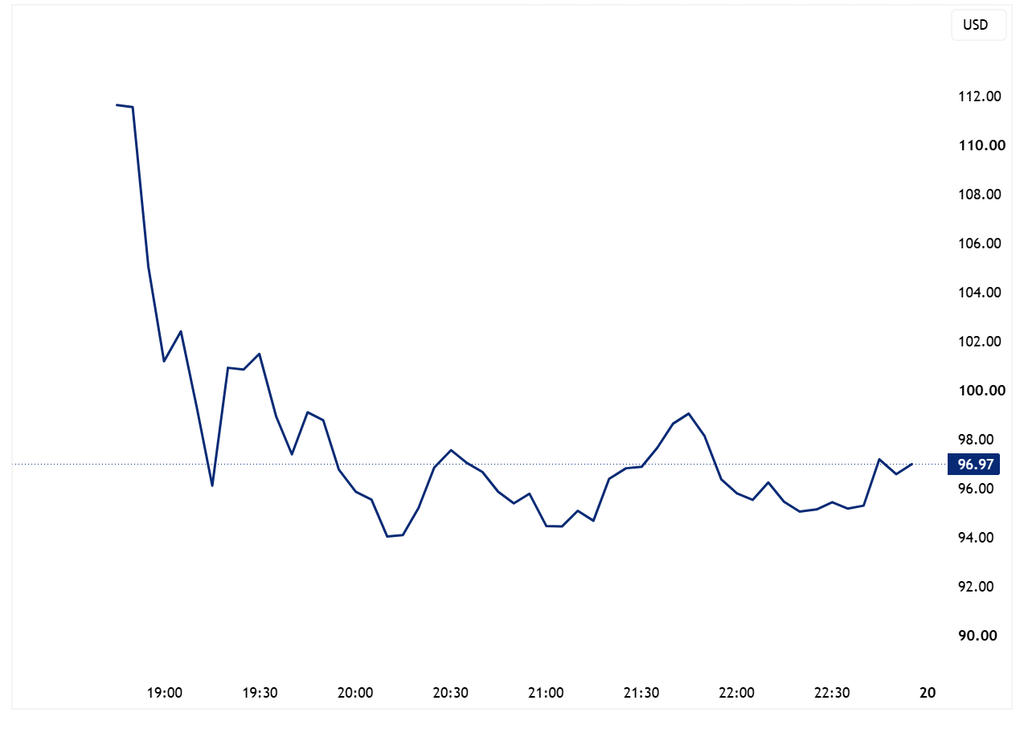
Trading under ANT, shares opened at $111.50, 34% above their $83 IPO price, before closing at $97.17, a gain of 17.1%. The opening price briefly gave Anthropic a fully diluted valuation of about $2 trillion, including stock options and restricted stock awards.
A Record IPO Supported by Big Tech
Anthropic’s offering reached $81.3 billion, surpassing SpaceX’s June listing of $75 billion as the largest IPO on record. The company and selling shareholders offered almost 980 million shares at $83 each, above the initial range of $70-78. ⁽¹⁾
Big tech committed another $26 billion. Google, Microsoft, Nvidia, AMD, Broadcom, Micron and TSMC joined in a private placement. Including that transaction, the combined deal totals $107.3 billion, further deepening Anthropic’s financial ties with its technology partners. ⁽²⁾
Anthropic Employees & Investors Reap Huge Gains
The stock market debut is also expected to make the majority of Anthropic’s roughly 5,300 employees millionaires, who helped transform this startup into an AI powerhouse. ⁽³⁾
Around 5,100 of Anthropic’s staff hold equity above $1 million, according to estimates from private-share marketplace Hill.com. That includes about 2,800 with stakes above $10 million and 600 above $100 million.
Large venture-capital investors also benefit. Anthropic’s largest VC backers held stakes worth a combined $150 billion at the IPO price. ⁽⁴⁾
Business Clients Drive Anthropic’s Rise
Anthropic was founded in 2021 by former OpenAI researchers, including siblings Dario and Daniela Amodei, following disagreements over governance and AI safety.

Its focus on business customers and coding helped drive adoption, with Claude Code becoming an important growth driver. Revenue comes from usage-based access to its models and subscriptions to products such as Claude Pro and Max.
Although some major venture-capital investors initially questioned its ability to compete with larger rivals, Anthropic subsequently attracted substantial funding. It raised $30 billion in February and $65 billion in May, bringing those two private rounds to $95 billion ahead of the IPO. ⁽⁵⁾
Revenue Surges Alongside Computing Costs
Revenue jumped, but the company still reported operating losses. Q3 revenue reached $16.96 billion, up 47% from Q2. Anthropic reported operating losses of $567 million, following a $974 million operating profit in Q2. ⁽⁶⁾
Its filing attributes the reversal mainly to $5 billion in short-term computing costs and $2 billion in non-cash donation-matching charges. ⁽⁷⁾
CEO Dario Amodei told CNBC that Anthropic hopes eventually to obtain an investment-grade credit rating and use debt financing. He said its approximately $900 billion in computing commitments extend over several years. His comments outlined potential future financing options. ⁽⁸⁾
The Wider AI Trade Remains Under Pressure
Despite the hype on the IPO, the listing failed to lift the wider AI sector. The Dow Jones fell 1,101 points to close below 50,000, while the Nasdaq 100 and the S&P 500 fell 2% each.
Nvidia and other AI-linked shares also weakened as concerns persisted over infrastructure spending, financing requirements and the returns those investments will generate.
Strong demand for Anthropic shares coexisted with ongoing concerns about infrastructure costs, financing and investment returns across the sector.
Government Dispute Adds Uncertainty
Claude had been deployed across US defense and intelligence agencies before a dispute over safeguards concerning domestic mass surveillance and fully autonomous weapons.
Relations fell out in February 2026 over the Pentagon’s demand to use Anthropic’s models for all lawful purposes. On February 27, President Trump directed federal agencies to stop using its technology, while Defense Secretary Pete Hegseth announced a supply-chain risk designation.
Subsequent court decisions had different results. In August, a California court enjoined one designation and the more general prohibition on Pentagon contractors working with Anthropic. In September, the DC Circuit validated a different designation that permitted the Pentagon to exclude Anthropic from its systems. ⁽⁹⁾
Anthropic’s IPO filing says it has requested further review and continues working with government agencies, while warning that the dispute could affect future sales and customer relationships.