ar

- Japan’s new PM Takaichi’s fiscal plans and UK’s rising borrowing weighed on both the Yen and Pound
- Oil rose on lower US inventory, while gold and silver crashed on profit taking.
- Optimism over US-China and US-Australia developments lifted sentiment across markets.
As the week progresses, currencies and commodities have shown mixed movements following a new wave of developments such as political changes in Japan, fiscal concerns in the UK, and trade deals between the US and Australia, all of which have shifted financial markets.
Alongside these factors, eased US-China trade tensions also brought volatility to the US dollar, precious metals and oil.
Japanese Yen Hits 1-Week Low
The Japanese yen fell to a 1 week low following the victory of Sanae Takaichi to become Japan’s first female prime minister. Takaichi won the lower house vote on October 21, with support from the right-wing opposition party Ishin as expected.
Takaichi is preparing an economic stimulus package expected to exceed last year’s $92 billion to help households tackle inflation. The package of more than 13.9 trillion yen ($92.19 billion) marks Takaichi’s first major economic initiative since taking office on Tuesday. ⁽¹⁾
Traders speculate that Takaichi’s government could lead to unclear interest rate outlooks and more fiscal spending due to her dovish stance, as this would complicate the Bank of Japan’s rate hike path, potentially placing more pressure on the yen. ⁽²⁾
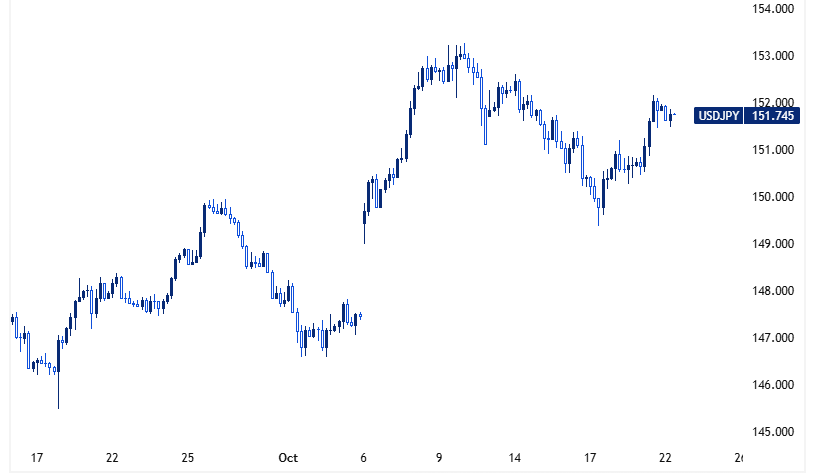
Source: TradingView USD/JPY Chart
US Dollar Rebounds Ahead of CPI Data
The US dollar index rose as other major currencies weakened amid the US government shutdown and trade developments.
President Trump said he remains hopeful about reaching a trade deal with China. Meanwhile, National Economic Council Director Kevin Hassett suggested recently that the US government shutdown could end this week, offering some relief to markets. ⁽³⁾
Markets are now focused on Friday’s CPI data for September. The inflation report was postponed due to the shutdown alongside other data. The report remains crucial ahead of the Federal Reserve meeting on October 29, where the central bank is expected to cut rates.
UK Sterling Weakens on Borrowing Data
The Pound sterling came under renewed pressure from ongoing fiscal risks, with the UK government borrowing reaching a five-year high of £20.2 billion, up from £1.6 billion a year ago. In the first half of 2025, borrowing surpassed forecasts by £7.2 billion. The budget deficit reached £99.8 billion, above the estimates made by the Office for Budget Responsibility. ⁽⁴⁾
Debt interest costs continue to rise, driven by high inflation, rising welfare costs, and weak tax receipts. Chancellor Rachel Reeves might need to cut spending by up to £35 billion or hike taxes. Economists warned that borrowing could reach 5% of GDP this year, possibly leading to weaker confidence. ⁽⁵⁾
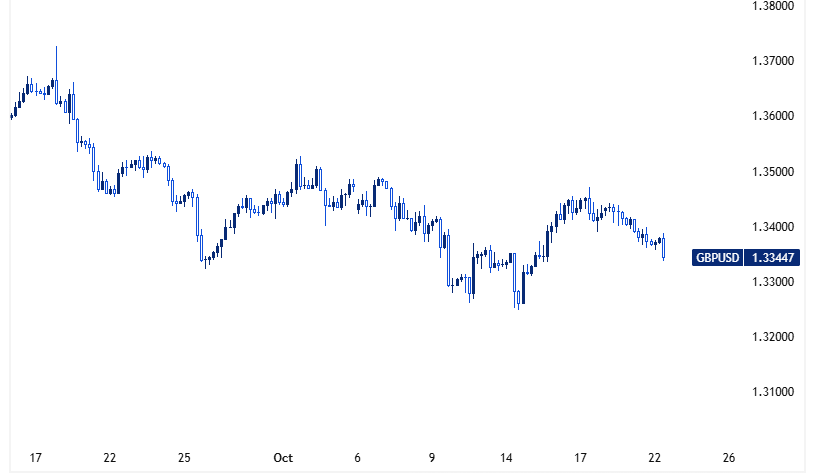
Source: TradingView GBP/USD Chart
UK CPI came in at 3.8% YoY in September, below the forecast of 4% and matching August’s figure. Core CPI came in at 3.5%, missing the forecast of 3.7%. Bank of England Governor Andrew Bailey said the economy is underperforming, with unemployment rising at 4.8%, possibly leading to a more dovish stance and could support more rate cuts.
Australian Dollar Slips Despite Trade Deal
The Australian dollar halted gains after rising for two days straight, despite optimism over a US-Australia trade agreement, where the two countries signed a critical minerals partnership.
US President Donald Trump and Australian Prime Minister Anthony Albanese called it a step to reduce US dependence on China. This follows China’s tighter export controls on minerals. Markets await flash PMI data and Reserve Bank of Australia speeches this week. ⁽⁶⁾
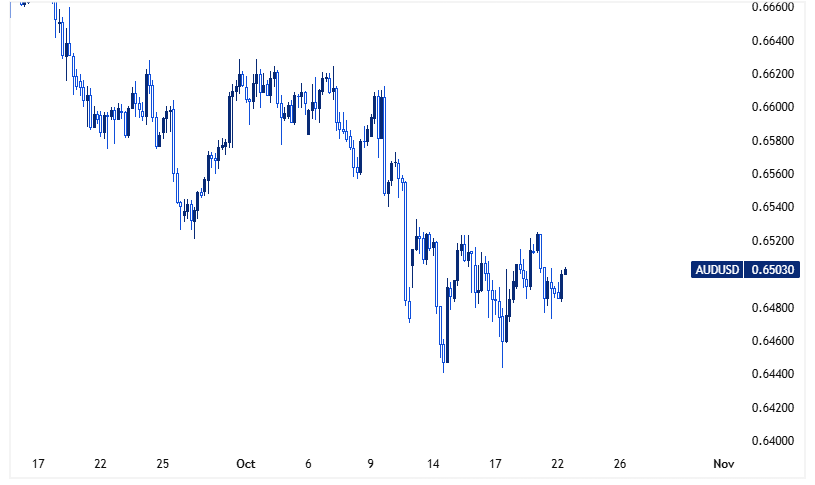
Source: TradingView AUD/USD Chart
Commodities: Oil Rises, Metals Fall
Brent crude oil rebounded from 4-year lows, supported by sanctions-related supply risk and hope of a US-China trade deal. API data showed that US inventories fell by 3 million barrels last week, the first decline in four weeks. ⁽⁷⁾
The US could also substantially slash tariffs on Indian exports as the two countries near a trade deal that could see New Delhi cutting oil purchases from Russia.
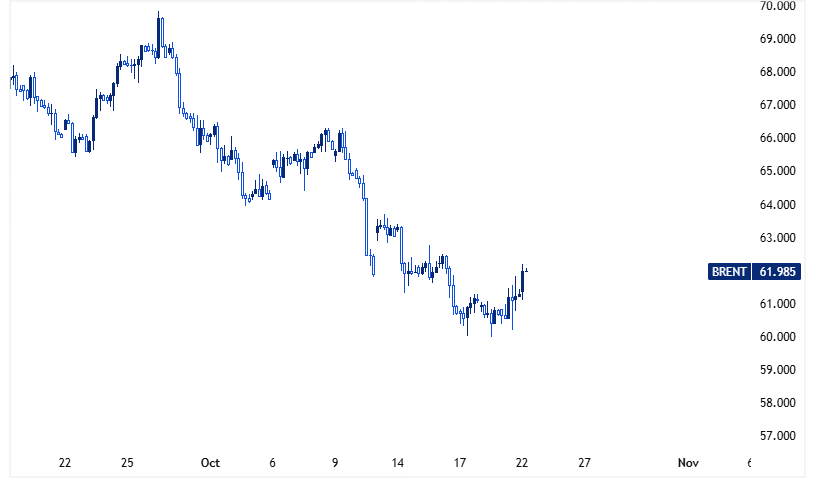
Source: TradingView Brent Crude Oil Chart
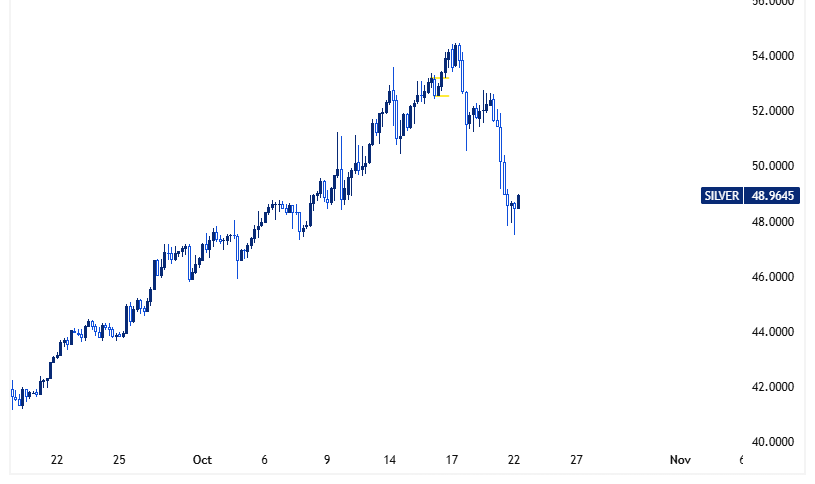
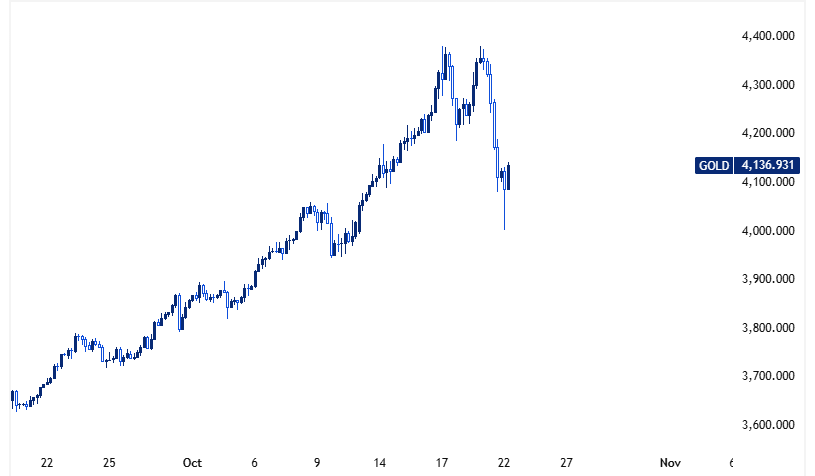
Gold prices witnessed their biggest drop since 2013. The precious metal declined more than 7% alongside silver’s decline of 8% due to profit taking and US-China trade hopes that reduced safe-haven appeal. ⁽⁸⁾
Source: TradingView Silver Chart
Source: TradingView Gold Chart
Last week’s tensions pushed precious metals to all-time highs amid a silver liquidity crisis that occurred in London and strong demand from India, but progress in talks reversed that. Trump expects a fair deal with China’s Xi Jinping at their South Korea meeting.